
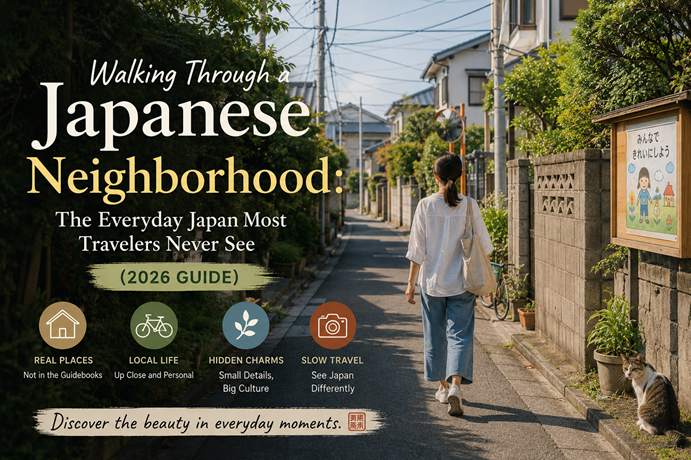
🌏 Introduction
When people visit Japan for the first time, they naturally head to famous places. They cross the busy streets of Shibuya, admire the ancient temples of Kyoto, explore Osaka’s vibrant nightlife, or take photographs of Mount Fuji. These places deserve their reputation, and they offer unforgettable memories.
Yet if you ask someone who has actually lived in Japan what they remember most, the answer is often surprisingly different.
It is the quiet residential streets.
The small roads lined with modest houses.
The bicycles resting outside front doors.
The tiny neighborhood shrine hidden between homes.
The elderly couple watering flowers in the morning.
The sound of children walking home from school.
These are not places that appear in guidebooks. There are no admission tickets, no famous landmarks, and often no tourists at all. At first glance, they may even seem ordinary.
But ordinary is exactly what makes them extraordinary.
I’ve lived in several countries, including the United States, Canada, Mexico, and Thailand, and I’ve had the opportunity to visit many others across Europe, the Middle East, and Asia. Whenever I traveled, I found myself leaving the tourist areas and wandering into residential neighborhoods. That was where I felt I could truly understand a country. The way houses were built, how people used public spaces, how children played, and how neighbors interacted often revealed far more than famous monuments ever could.
Ironically, it was only after walking through neighborhoods overseas that I began to appreciate how unique Japanese neighborhoods really are.
If you want to understand Japan beyond its temples, sushi, and cherry blossoms, take a walk through an ordinary neighborhood. You may discover that the real Japan quietly exists just around the next corner.
🏡 The Japan Most Visitors Never See
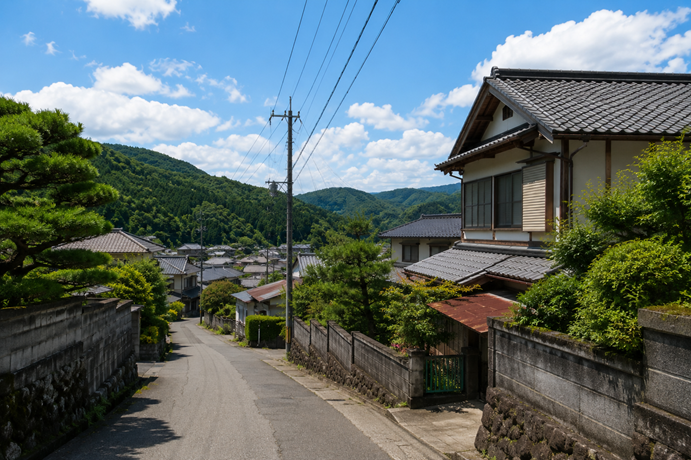
Tourism naturally focuses on places designed to impress visitors. Historic castles, famous shrines, shopping districts, and spectacular viewpoints all showcase the best-known side of Japan.
Residential neighborhoods tell a completely different story.
Here, life follows its normal rhythm. People leave for work, children walk to school, neighbors greet each other, and laundry dries in the afternoon sun. Nothing is arranged for tourists. Nothing is performed for cameras.
That authenticity makes these streets fascinating.
Every country has famous attractions, but neighborhoods reveal everyday values. They show what people consider important when nobody is watching.
In Japan, those values appear everywhere.
You notice how carefully bicycles are parked. You see flowerpots decorating entrances. Streets remain surprisingly clean despite the absence of trash cans. Cars drive slowly through narrow roads. Tiny parks are tucked between houses. Small shrines continue to receive fresh flowers even though few tourists ever find them.
None of these things exist by accident.
Each reflects decisions made over generations about how people should live together.
🚶 Why Walking Is the Best Way to Understand Japan
Japan is often experienced through trains. The railway system is efficient, comfortable, and connects almost every major destination.
But trains skip what lies between stations.
Walking reveals everything that maps cannot.
As you leave the shopping streets behind, the atmosphere changes almost immediately. The noise fades. Buildings become smaller. Side streets begin to twist in unexpected directions. Convenience stores suddenly appear on quiet corners. Cats sleep peacefully beside garden walls.
The pace of life slows down.
Unlike many cities where residential districts simply exist beside commercial areas, Japanese neighborhoods often feel like their own small communities. Schools, clinics, convenience stores, shrines, parks, and local shops are usually within walking distance. Daily life is designed around proximity rather than long commutes by car.
For visitors accustomed to driving everywhere, this can feel surprisingly refreshing.
Walking allows you to notice details that would disappear from a car window. The smell of freshly cooked rice drifting from an open kitchen. Wind chimes gently ringing on a summer afternoon. The sound of a neighborhood announcement echoing through loudspeakers. Even these small experiences become part of understanding Japan.
🌿 Small Streets Tell Bigger Stories
One of the first things many foreign visitors notice is how narrow Japanese residential streets are.
At first, this seems inconvenient. Cars often slow to let each other pass. Side mirrors almost touch walls. Some roads seem barely wide enough for modern vehicles.
Why weren’t they built wider?
The answer lies in history.
Many neighborhoods developed long before automobiles became common. Streets were originally designed for people walking, pulling carts, or riding bicycles. As Japan modernized, the roads remained largely unchanged because rebuilding entire neighborhoods would have required enormous cost and disruption.
Rather than replacing history, Japan adapted around it.
Interestingly, these narrow streets create unexpected benefits.
Cars naturally travel more slowly, making neighborhoods safer for pedestrians. Children frequently walk to school without parents accompanying them. Residents comfortably use the streets as part of everyday life instead of viewing them simply as roads for traffic.
The streets quietly encourage careful behavior.
Sometimes what appears inefficient actually creates a better environment for people.
🏠 Why Do Japanese Homes Have Walls?
After living overseas, this difference immediately caught my attention.
In countries such as Canada or parts of the United States, front gardens often flow openly toward the street. There may be lawns, flower beds, or low decorative fences, but the boundary between public and private space often feels gentle.
Japan is different.
Many houses have walls, fences, or hedges separating the property from the street.
Some visitors assume this means Japanese people are private or distant.
The reality is much more practical.
Japanese homes are usually built much closer together because land is limited. Clearly defining property boundaries helps everyone respect each other’s space. Walls also provide privacy without requiring large front gardens.
Rather than separating neighbors, these boundaries often help neighbors live comfortably beside one another.
In a densely populated country, respecting personal space becomes one way of showing consideration for others.
The walls are less about keeping people out and more about allowing everyone to live peacefully together.
⚡ The Utility Poles Everyone Notices
Another feature that surprises many visitors is the number of utility poles.
Photographs of Japan often show power lines stretching across the sky.
Some people wonder why such a technologically advanced country still has so many overhead cables.
Again, the answer reflects Japan’s geography rather than its technology.
Japan experiences frequent earthquakes, powerful typhoons, and heavy rainfall. While underground cables offer cleaner scenery, they can also be more difficult and expensive to inspect or repair after major disasters depending on the situation.
Overhead systems allow damaged sections to be located and restored more quickly in many areas.
In other words, these utility poles are not simply leftovers from the past.
They also represent practical decisions shaped by living in one of the world’s most disaster-prone countries.
Sometimes what looks imperfect has been chosen because it works.
🌸 Silence That Feels Different
One of the first things many visitors notice after leaving Japan’s busy city centers is the silence.
Of course, Japan is not actually quiet all the time. Anyone who has stood in the middle of Shibuya Crossing during rush hour or ridden a crowded commuter train knows that Japanese cities can be just as noisy as any other major city.
The difference is where the noise exists.
Commercial districts are lively, energetic, and constantly moving. Residential neighborhoods, however, seem to follow an unspoken agreement that home is a place where people should be able to rest.
You rarely hear loud conversations spilling into the street. Music blasting from open windows is uncommon. Car horns are almost never used unless absolutely necessary. Even construction work often feels surprisingly orderly compared to what many visitors expect.
This quietness is not enforced by strict laws. Instead, it reflects a shared understanding that everyone is living close together.
When homes are separated by only a few meters, respecting your neighbors becomes part of everyday life.
That doesn’t mean Japanese people dislike having fun or expressing themselves. Festivals can be wonderfully loud, fireworks fill summer skies with sound, and children laugh loudly in parks after school.
The difference is that people naturally adjust their behavior depending on where they are.
Public space and private space each have their own atmosphere, and understanding that balance is one of the subtle lessons visitors discover while walking through Japanese neighborhoods.
🥛 The Vending Machine Around Every Corner
It is almost impossible to walk far in Japan without finding a vending machine.
They appear beside apartment buildings, outside tiny shops, near schools, beside quiet residential roads, and sometimes even in places that seem surprisingly remote.
Many visitors are amazed not only by their number but also by what they represent.
A vending machine filled with drinks would be difficult to maintain in many parts of the world without heavy security. Yet in Japan, these machines often stand outside day and night with little protection.
The reason goes beyond convenience.
Their presence reflects a society built on a relatively high level of public trust. While crime certainly exists in Japan, petty vandalism and theft remain comparatively uncommon. Businesses can confidently place vending machines almost anywhere because they generally expect them to remain untouched.
For local residents, vending machines have become so ordinary that they are almost invisible.
For visitors, however, they quietly demonstrate something much deeper than efficient retail. They reveal the level of trust that allows everyday life to function smoothly.
Sometimes the most ordinary object says the most about a society.
👕 Laundry Hanging Outside
Another scene that surprises many travelers is the sight of laundry hanging outside homes and apartment balconies.
In some countries, outdoor laundry is associated with older neighborhoods or lower-income areas. In Japan, it is simply part of daily life.
On sunny mornings, balconies fill with white shirts, towels, futons, and children’s clothes gently moving in the breeze.
There are practical reasons for this. Japan’s distinct seasons make sunshine a valuable natural dryer, especially during spring and autumn. Air-drying also helps save electricity and keeps fabrics in good condition.
But there is something else happening here.
Laundry becomes part of the neighborhood’s rhythm.
Looking down a quiet residential street, you can often tell what kind of day it is simply by seeing rows of freshly washed clothes drying in the sun.
It reminds visitors that these streets are not museum exhibits.
People are raising children, preparing dinner, cleaning their homes, and living ordinary lives.
That ordinary life is exactly what gives Japanese neighborhoods their warmth.
⛩️ Tiny Shrines Hidden Between Houses
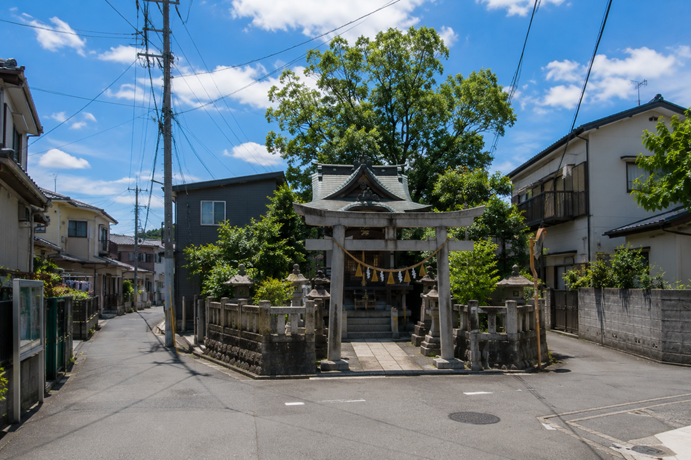
While famous shrines attract millions of visitors every year, some of Japan’s most meaningful sacred spaces are almost invisible.
As you wander through residential neighborhoods, you may suddenly notice a small torii gate standing quietly between two houses. A narrow path leads to a tiny shrine surrounded by trees. Fresh flowers sit beside the entrance. Someone has recently swept away the fallen leaves.
No admission fee.
No souvenir shop.
No crowds.
These neighborhood shrines often serve local communities rather than tourists.
Many have protected the same area for generations, quietly watching families grow, children become adults, and neighborhoods change around them.
Even residents who rarely visit large temples may still stop briefly at a neighborhood shrine during New Year or local festivals.
Religion in Japan is often woven into daily life rather than separated from it.
These small shrines remind visitors that spirituality does not always need grand buildings.
Sometimes it quietly exists just a few steps from someone’s front door.
🌼 The Beauty of Small Gardens
Land in Japan is expensive, especially in urban areas.
Yet even where space is limited, people often find room for flowers.
Tiny flowerpots line narrow entrances.
Seasonal plants decorate apartment balconies.
Carefully trimmed shrubs soften concrete walls.
These gardens are rarely large enough to impress anyone.
That is not their purpose.
Instead, they demonstrate an appreciation for small moments of beauty.
Japanese aesthetics have long valued simplicity and subtlety over grandeur. Rather than creating dramatic landscapes, people often enjoy changing flowers that reflect the passing seasons.
Spring brings colorful blossoms.
Summer fills neighborhoods with green leaves.
Autumn introduces warm reds and oranges.
Winter reveals simple evergreen plants that quietly survive the cold.
Walking through residential streets becomes a gentle reminder that nature remains part of daily life, even in densely populated cities.
🚶 Every Street Has Its Own Story
Perhaps the greatest lesson Japanese neighborhoods offer is that culture is rarely found in spectacular moments.
It appears in habits.
In routines.
In choices people make every single day.
The narrow streets speak about history.
The walls speak about privacy and respect.
The utility poles speak about resilience.
The vending machines speak about trust.
The shrines speak about tradition.
The flowers speak about beauty.
The silence speaks about consideration for others.
Individually, each detail may seem small.
Together, they create something uniquely Japanese.
When visitors only travel between famous attractions, they naturally experience Japan’s highlights.
But when they spend an hour wandering through an ordinary neighborhood without a destination, they begin to experience something much deeper.
They begin to understand how Japanese society quietly works.
That understanding cannot easily be found in guidebooks.
It is discovered one street at a time.
🌏 Conclusion
If you’re planning a trip to Japan, don’t spend every day chasing famous landmarks.
Leave the station.
Turn down a side street.
Walk without a destination.
Listen to the sounds around you.
Notice the houses, the gardens, the bicycles, the neighborhood shrines, and the everyday routines unfolding around you.
You may not find the perfect photo for social media.
But you will discover something far more valuable.
You’ll discover the Japan that millions of people simply call home.
And perhaps that quiet, ordinary experience will become one of the most memorable parts of your journey.
Because the real heart of Japan isn’t only found in its famous temples or busy city centers.
Sometimes, it’s waiting in the neighborhood just around the corner.
Continue Exploring the Real Japan
If you enjoyed discovering everyday Japanese neighborhoods, you might also like these articles from Real Japan Navigator.
👉 Why Are There So Many Utility Poles in Japan? The Surprising Reason They Haven’t Disappeared (2026 Guide)
👉 Why Do Japanese Neighborhoods Spend Weeks Preparing for Festivals? (2026 Guide)
👉 What Happens Behind a Bon Odori Festival? How Japanese Neighborhoods Build a Summer Gathering Place (2026 Guide)
👉 Why Are Clothes Often Dried Outside in Japan? (2026 Guide)
👉 How to Use Japanese Vending Machines: More Than Just Drinks (2026 Guide)
👉 Why Does Japan Feel So Calm Even in Big Cities? The Hidden Rhythm Behind Urban Life (2026 Guide)
👉 Why Is Shade So Important in Japan? (2026 Guide)
👉 How to Use Japanese Public Baths and Sento (2026 Guide)