
🌏Introduction
If you ask Japanese adults about their most unforgettable school memories, many will mention two things:
sports day and the school trip.
In Japan, the school trip is called Shūgaku Ryokō (修学旅行).
At first glance, it may look like a simple class trip.
But in reality, it is something much more meaningful.
It is part education, part adventure, and part childhood milestone.
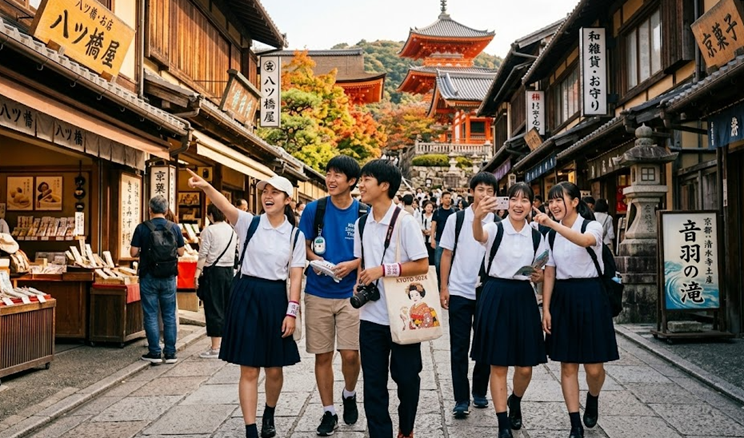
For many students, it is one of the first times traveling away from home for several days with classmates, teachers, and friends.
And while the official purpose is learning, the memories often go far beyond the classroom.
I still remember mine.
Before one trip, we studied traditional Japanese crafts in advance. I learned about waraji, traditional straw sandals, and during the trip, we actually made them ourselves.
On another trip, we studied Kyoto’s historical buildings before departure, then visited those places in person to understand their meaning more deeply.
But if I am being honest, some of the strongest memories happened after lights out.
Quietly talking with friends, secretly playing card games, and trying not to get caught by teachers became part of the adventure too.
That combination of learning, freedom, friendship, and small rebellion is exactly what makes Shūgaku Ryokō unforgettable.
🎯Quick Answer
A Japanese school trip is a multi-day educational trip where students travel together with classmates and teachers.
The goal is not simply sightseeing.
It is designed to combine:
- education
- cultural experience
- teamwork
- independence
- shared memories
For many Japanese people, it becomes one of the most important memories of student life.
🏫1. What Is Shūgaku Ryokō?
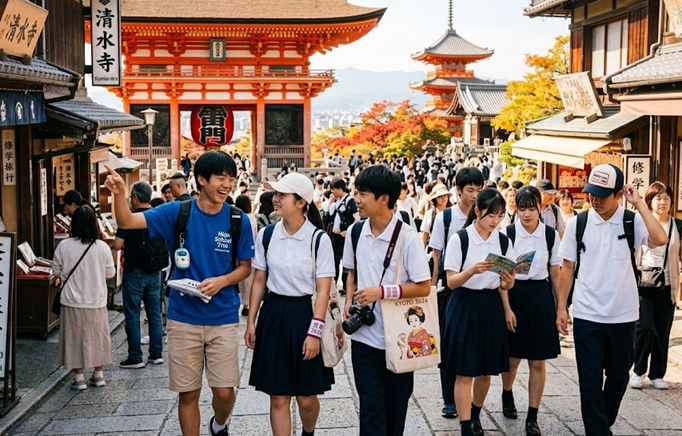
Shūgaku Ryokō literally means “educational trip.”
It is a school-organized journey where students travel as a group to learn through direct experience.
Unlike a casual excursion, these trips are structured as part of education.
Students usually travel for:
- 2 nights / 3 days
or - 3 nights / 4 days
depending on the school.
Many schools organize these trips during upper elementary school, junior high school, or high school.
For many students, this is their first major trip without parents.
That alone makes it feel special.
🗾2. Where Do Students Go?
Destinations depend on where students live.
For example:
- students from the Tokyo area often visit Kyoto or Nara
- students from western Japan may visit Tokyo
- some schools visit Hiroshima, Okinawa, or Hokkaido
The destination is chosen not simply for fun, but for educational value.
Students may explore:
- historical cities
- traditional crafts
- museums
- science facilities
- cultural heritage sites
This makes the trip feel different from a normal vacation.
Some schools also visit Hiroshima, Nagasaki, or Okinawa for peace education programs.
📚3. Learning Before the Trip
One unique aspect of Japanese school trips is preparation.
Students do not simply board a bus and leave.
Before departure, many schools assign research and study activities.
This might include:
- learning local history
- researching famous landmarks
- studying traditional industries
- preparing group presentations
The idea is simple:
the trip becomes more meaningful if students already understand what they are about to experience.
Then, when they arrive, learning becomes real.
This approach reflects a broader pattern in Japanese education:
experience is often connected to preparation and reflection.
🛠️4. Learning by Doing
Shūgaku Ryokō is not only about seeing places.
It often includes hands-on experiences.
Examples include:
- making traditional crafts
- trying local cultural activities
- historical workshops
- museum programs
This transforms abstract knowledge into lived experience.
Making something with your own hands creates a different kind of memory.
For me, making traditional straw sandals remains one of the most vivid memories.
🛏️5. Friendship Matters Just as Much
Of course, if you ask former students what they remember most, many will not say “educational objectives.”
They will talk about friends.
Because for many students, this is one of the first times:
- sleeping away from home
- sharing rooms with classmates
- spending entire days together outside normal school life
This creates a different atmosphere.
People talk more.
Laugh more.
Show different sides of themselves.
And yes, students often try to stay awake long after bedtime.
Quiet conversations, card games, and trying not to attract the teacher’s attention are universal school-trip memories.
That unofficial side is part of what makes the trip so memorable.
🌱6. A Step Toward Independence
For younger students especially, Shūgaku Ryokō is also a lesson in independence.
Students are expected to:
- follow schedules
- manage belongings
- behave responsibly
- cooperate with others
This is not only about fun.
It is part of learning how to function as a member of a group.
That may sound serious, but in practice, it feels like adventure.
💭7. Why It Stays in Memory
Many school events are forgotten over time.
Shūgaku Ryokō often is not.
Why?
Because it combines multiple emotions at once:
- excitement
- nervousness
- friendship
- learning
- freedom
- responsibility
That emotional mix makes memories stronger.
For many Japanese adults, simply hearing the words “Shūgaku Ryokō” immediately brings back vivid scenes.
🇯🇵 Conclusion
A Japanese school trip is much more than travel.
It is education, friendship, adventure, and growing independence all at once.
For many students, it becomes one of the defining memories of childhood.
You may forget the schedule.
You may forget some lessons.
But somehow, you never forget laughing with friends after lights out.
School trips may look simple from the outside, but for many Japanese people, they become memories that last for life.
What about your school life? Did you have a special event, unforgettable trip, or unique tradition that still stays with you today?
It would be fascinating to hear what school memories people around the world share.
🔗Discover more about Japan
・Japanese Convenience Stores (Konbini): Why They’re Open 24/7 and How They’re Changing in 2026
・Tempura in Japan: History, Origins, and Why It Tastes So Light
・Ekiben in Japan: Why Bento on Trains Is Special (Where You Can Eat It)
🔗Discover More About Japanese School Culture
👉 Why Is Japanese Sports Day Such a Powerful Childhood Memory? Understanding Undokai
👉 What Is Japanese School Lunch? Why Kyushoku Is More Than Just Food (2026 Guide)
👉 Why Is Summer Vacation in Japan So Different? School Life, Homework & Cultural Surprises
👉 Why Do Japanese Students Spend So Much Time in School Clubs?
👉 Why Do Japanese Students Clean Their Own Classrooms? The Lesson Behind School Cleaning Time
👉 Why Do Japanese Schools Have Entrance Ceremonies? (2026 Guide)
👉 Why Do Japanese Schools Have Swimming Classes? (2026 Guide)
👉 Why Do Japanese Children Walk to School by Themselves? (2026 Guide)
👉 School Uniforms in Japan: More Than Just a Dress Code (2026 Guide)