
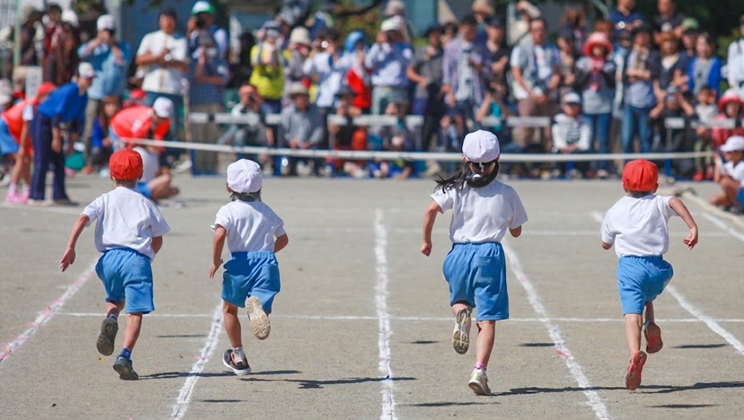
🏃 Introduction
Ask almost any Japanese person about childhood school memories, and there is a good chance one event will come up:
Undokai — Japanese school sports day.
For many visitors, it may look like a simple school event with running races and games.
But in Japan, Undokai is much more than that.
It is one of the most memorable annual events of childhood, combining competition, teamwork, school spirit, and shared memories that stay with people for life.
From kindergarten to high school, millions of Japanese students experience sports day every year.
Some schools hold it in spring, while others continue the traditional autumn schedule.
And for many adults, the memories remain vivid decades later.
I still remember mine.
From first grade in elementary school to the final year of junior high school, I was chosen as a relay runner representing my class.
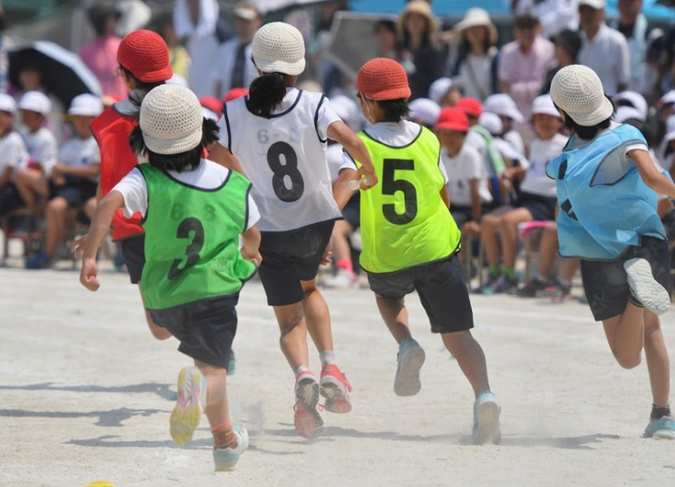
The relay race was always the final highlight of the day.
The fastest boys and girls from each class were selected to compete in a dramatic class-versus-class race. Since everyone chosen was already fast, I was not always among the strongest runners—but I remember one thing clearly:
I ran as hard as possible, determined not to let anyone pass me.
That feeling—pressure, excitement, teamwork, pride—is something many Japanese people understand immediately.
So what makes Undokai such an important part of Japanese life?
🎯 Quick Answer
Undokai is Japan’s annual school sports day, held from kindergarten through high school.
It is not just about athletic ability.
It is about:
- teamwork
- participation
- school spirit
- shared memories
Every student participates, making it one of the most widely shared childhood experiences in Japan.
🏫 1. What Is Undokai?
Undokai literally means “sports meeting.”
It is an annual school event where students compete in athletic games and team competitions.
Most schools hold it once a year, usually in spring or autumn depending on the region and school schedule.
Unlike some countries where only athletes participate in school sports events, Japanese Undokai involves everyone.
Every student takes part.
This is an important difference.
The goal is not only to identify the fastest or strongest students.
It is to create a shared school experience.
🏁 2. How Does It Work?
The structure varies by school, but the basic idea is similar.
Students are divided into competing teams.
Common examples include:
- Red Team vs White Team
- East vs West
- Four-team divisions such as North / South / East / West
Throughout the day, teams compete in different events and earn points.
At the end, one team wins.
The competitive structure creates excitement, but the event remains inclusive.
Even students who are not athletic still participate and contribute.
🏃 3. Typical Events
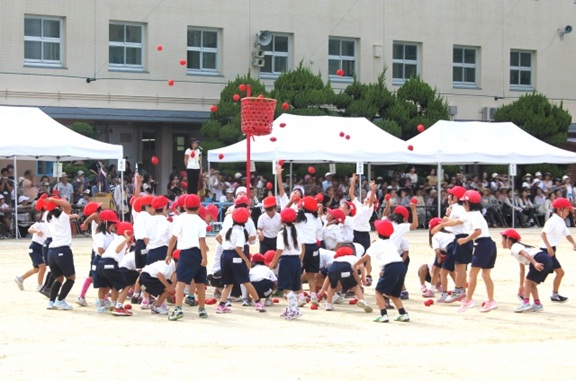
Japanese sports day includes a wide variety of activities.
Some are familiar internationally, while others are uniquely Japanese.
Common events include:
- sprint races
- relay races
- tug-of-war
- ball toss games (tamaire)
- cavalry battle (kibasen)
- pole toppling (botaoshi)
Some schools also include dance performances or group exercises.
The exact events vary, but the atmosphere is always energetic.
One of the most anticipated moments is often the final relay.
This is the “star event.”
Fast runners are selected from each class to compete in a dramatic race that often determines the final result.
For many students, this is one of the most exciting moments of the entire school year.
🤝 4. More Than Competition
What makes Undokai special is that it is not simply about winning.
It builds teamwork.
Students practice together.
They prepare chants.
They support classmates.
They celebrate effort, not only victory.
By the end of the event, many students feel closer to their classmates.
This sense of group unity is an important part of Japanese school culture.
👉 The event teaches cooperation as much as competition.
👨👩👧 5. A Community Event
Undokai is not only for students.
Parents often attend.
Families bring cameras, food, and picnic lunches.
For younger children especially, sports day becomes a major family event.
This creates memories not only for students, but for parents as well.
For many Japanese adults, remembering Undokai also means remembering family support.
🧠 6. What It Says About Japanese School Culture
Undokai reflects several broader cultural values.
For example:
Participation matters
Everyone joins.
Group identity matters
Students compete as teams, not just individuals.
Effort matters
Trying your best is often celebrated as much as winning.
This does not mean every student loves sports day.
Some students feel nervous.
Others dislike competition.
But even that becomes part of the shared experience.
🌏 7. Is This Unique to Japan?
Many countries have school sports events.
But Japanese Undokai stands out because of its scale, inclusiveness, and emotional importance.
It is not only an athletic event.
It is part of growing up.
That is why even adults often remember it vividly.
🇯🇵 Conclusion
For many Japanese people, Undokai is much more than a school event.
It is a childhood memory shared across generations.
It combines excitement, pressure, teamwork, and celebration in a way that becomes unforgettable.
Even years later, people remember:
the cheering
the nervousness before a race
the effort not to let teammates down
I still remember trying not to be overtaken in the relay.
That feeling has never completely disappeared.
👉 In Japan, sports day is not just about running—it is about belonging.
For many Japanese people, Undokai is one of those childhood memories that never really fades.
But every country has its own school traditions and unforgettable moments.
Did your school have a special event like this? A sports day, a school festival, or something uniquely memorable?
It would be fascinating to hear what childhood school memories people around the world share.
🔗Discover more about Japan
・Why Do Japanese People Value Harmony So Much? The Hidden Logic of “Wa” (2026 Guide)
・How to Visit a Japanese Shrine: Etiquette Guide for First-Time Visitors
🔗Discover More About Japanese School Culture
👉 What Is a Japanese School Trip? Why Shūgaku Ryokō Becomes a Lifetime Memory (2026 Guide)
👉 What Is Japanese School Lunch? Why Kyushoku Is More Than Just Food (2026 Guide)
👉 Why Is Summer Vacation in Japan So Different? School Life, Homework & Cultural Surprises
👉 Why Do Japanese Students Spend So Much Time in School Clubs?
👉 Why Do Japanese Students Clean Their Own Classrooms? The Lesson Behind School Cleaning Time
👉 Why Do Japanese Schools Have Entrance Ceremonies? (2026 Guide)
👉 Why Do Japanese Schools Have Swimming Classes? (2026 Guide)
👉 Why Do Japanese Children Walk to School by Themselves? (2026 Guide)
👉 School Uniforms in Japan: More Than Just a Dress Code (2026 Guide)