
🌏 Introduction
If you are new to Japan, one seasonal experience may catch you by surprise.
Not winter snow.
Not summer heat.
But tsuyu — Japan’s rainy season.
Every year, usually from early June to mid-July depending on the region, Japan enters a humid stretch between spring and full summer.
Many people imagine “rainy season” as endless heavy rain every single day.
The reality is a little different.
It is usually not constant downpours from morning to night for weeks.
Instead, it often feels like this:
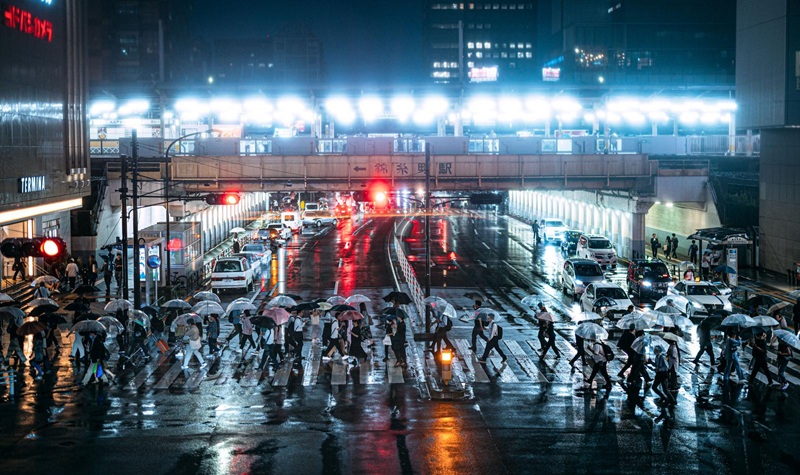
gray skies, sudden showers, sticky air, damp clothes, umbrellas everywhere, and the strange feeling that everything in your home is slightly wetter than usual.
For people visiting Japan, it can be inconvenient.
For people living in Japan, it becomes part of everyday life.
But once you understand what tsuyu is really like, it becomes much easier to handle.
🎯 Quick Answer
Japan’s rainy season is a humid early-summer period when rain becomes more frequent, temperatures rise, and daily life requires small adjustments.
The biggest challenges are usually:
- humidity
- wet clothing
- transportation delays
- mold and indoor discomfort
The good news is that Japan is extremely well adapted to rainy season life.
☔ 1. What Tsuyu Actually Feels Like
The first surprise for many newcomers is that tsuyu is not simply “a lot of rain.”
Humidity is often the bigger challenge.
The air suddenly feels heavier.
Walking even short distances can leave you feeling sticky.
Clothes may not dry properly.
Your home may begin to feel damp.
This is especially noticeable if you come from a dry climate.
And because temperatures also rise, the combination of warmth and moisture can feel exhausting.
In many ways, tsuyu is less about dramatic storms and more about constant atmospheric discomfort.
🌂 2. You Will Understand Japan’s Umbrella Culture Very Quickly
If you have ever wondered why Japan seems full of umbrellas, tsuyu explains a lot.
Suddenly you will notice:
people carrying folding umbrellas even when the sky looks normal.
Convenience stores selling umbrellas everywhere.
Umbrella stands at restaurants, offices, and stores.
Rain is so common that daily life is designed around it.
This is one reason rainy season in Japan often feels surprisingly manageable.
The infrastructure already expects it.
Even if you forget an umbrella, solving the problem is easy.
🚆 3. Transportation Still Works—Mostly
One impressive thing about Japan is that daily life continues even in wet weather.
Trains generally continue operating.
People still commute.
Schools remain open.
Work continues.
But rainy season can still create delays, especially during heavier rain.
Crowded trains can feel even more uncomfortable because of wet clothes and humidity.
Commuting during tsuyu is less about chaos and more about discomfort.
Leaving a little earlier than usual is often wise.
🏠 4. The Real Battle Happens Indoors
Visitors often focus on rain outside.
Residents quickly discover the bigger problem is inside.
Humidity can create:
musty smells, slow-drying laundry, condensation, and mold.
This surprises many newcomers.
The issue is not simply getting wet outside.
It is keeping your living space comfortable.
In Japan, many people use:
air conditioning in dry mode, dehumidifiers, and careful ventilation.
Without these adjustments, even your bedding may begin to feel damp.
This is one of the least glamorous but most real parts of Japanese rainy season life.
👕 5. Clothing Strategy Matters
The instinct is often to prepare for rain.
But humidity deserves equal attention.
Heavy clothing quickly becomes uncomfortable.
Shoes that absorb water become unpleasant fast.
Quick-drying clothes, breathable fabrics, and practical footwear make a huge difference.
Some people even keep spare socks.
That may sound excessive—until your shoes are wet all day.
🏪 6. Convenience Stores Become Even More Useful
Japan’s convenience stores become quiet heroes during rainy season.
Need an umbrella? Easy.
Forgot a towel? Easy.
Need drinks, snacks, tissues, or a quick break from rain? Also easy.
This is one reason everyday life in Japan remains relatively functional even in unpleasant weather.
The systems around you help.
🧠 7. Mental Adjustment Helps Too
Rainy season is not only physical.
It can affect mood.
Gray skies and sticky weather can feel draining.
Some people become less motivated.
Others feel restless indoors.
Understanding that this is normal helps.
Tsuyu is seasonal.
It passes.
And then comes Japan’s intense summer.
In a strange way, rainy season feels like the waiting room before summer begins.
🌍 8. Visitors vs Residents
For short-term visitors, tsuyu may simply mean carrying an umbrella.
For residents, it becomes a lifestyle adjustment.
Laundry changes.
Commuting changes.
Home management changes.
This is why understanding rainy season helps even if you are only staying temporarily.
Japan’s seasons genuinely shape everyday life.
🇯🇵 Conclusion
Japan’s rainy season is not necessarily dramatic—but it is deeply practical.
It changes how people dress, commute, dry clothes, shop, and move through the day.
At first, tsuyu may feel inconvenient.
But over time, you start to notice something interesting:
Japan is already designed to handle it.
Umbrellas, convenience stores, transport systems, and home habits all quietly adapt to the season.
That may be one of the most Japanese things about it.
For many people in Japan, surviving tsuyu simply means preparing for the intense summer that follows.
What is the rainy season like where you live? Endless storms, dry summers, or something completely different?
🔗Explore more of Japan
・Umbrella Etiquette in Japan: 7 Essential Rules Every Traveler Should Know (2026 Guide)
・Japanese Convenience Stores (Konbini): Why They’re Open 24/7 and How They’re Changing in 2026