
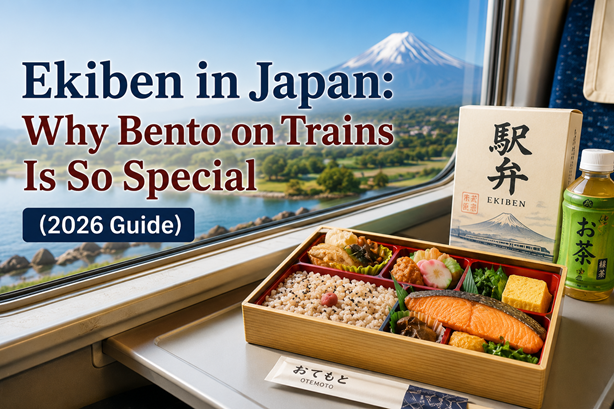
🌏 Introduction
Imagine boarding a Shinkansen at Tokyo Station on a sunny morning. As the train quietly glides out of the platform, the busy city slowly gives way to neighborhoods, rivers, and distant mountains. Around you, something interesting begins to happen. Passengers who had been silently checking their phones or reading books start reaching into shopping bags. One by one, colorful boxes wrapped in paper appear on tray tables. A few moments later, the unmistakable aroma of grilled beef, simmered vegetables, or freshly cooked rice fills the carriage.
For many Japanese people, this moment marks the true beginning of the journey.
The meal they are opening is called an ekiben, a boxed meal sold primarily at railway stations. At first glance, it may simply look like another type of bento. However, to understand ekiben, you have to look beyond the food itself. An ekiben is not just something people eat because they are hungry. It represents travel, regional culture, railway history, and one of Japan’s most beloved traditions.
Many countries have food sold at airports or train stations. Most travelers buy a sandwich, a coffee, or a quick snack before boarding. In Japan, however, countless people deliberately arrive at the station early so they have enough time to choose the perfect ekiben. Some passengers even plan their train schedules around famous station bento.
To many visitors, this may seem surprising. Why would a lunch box become one of the highlights of a journey?
The answer lies in the unique relationship between trains and travel in Japan. For more than a century, railways have connected every corner of the country, allowing people to experience local specialties without leaving their seats. Every ekiben tells a story about the region where it was created, using ingredients, recipes, and traditions that have often been enjoyed for generations.
For travelers visiting Japan, trying an ekiben is not simply about eating lunch. It is one of the easiest and most enjoyable ways to experience Japanese food culture while watching the country’s changing landscapes pass by outside the window.
🍱 What Is an Ekiben?
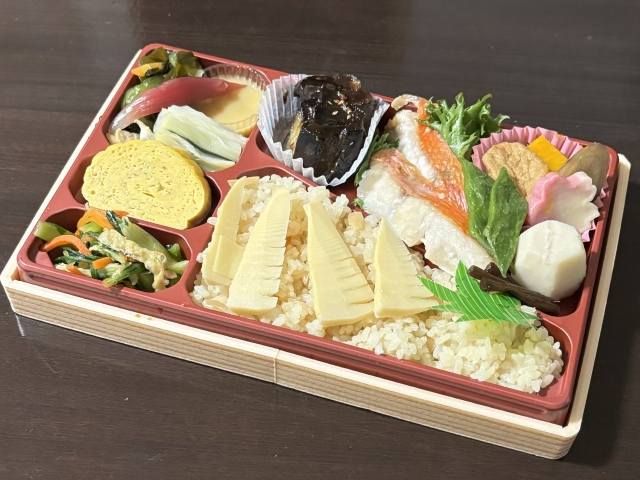
The word “ekiben” comes from two Japanese words: eki, meaning “station,” and bento, meaning a boxed meal. While the name sounds simple, the idea behind it is much richer.
An ordinary bento can be made at home, bought at a convenience store, or ordered from a restaurant. People eat bento at school, at work, during picnics, or almost anywhere throughout Japan. An ekiben, however, is designed specifically for travel.
Most ekiben are sold inside railway stations or nearby shops, especially at stations served by long-distance trains such as the Shinkansen or limited express services. They are carefully prepared to remain delicious even after several hours without reheating, making them ideal companions for train journeys.
Unlike many boxed meals found elsewhere in the world, an ekiben is rarely a random assortment of food. Every item inside the box is chosen with balance in mind. Rice, vegetables, meat, seafood, pickles, and small side dishes are arranged almost like pieces of art. The presentation is just as important as the flavor.
Many boxes themselves are beautifully designed. Some feature famous local landmarks, traditional artwork, or illustrations inspired by regional history. Others are shaped like trains, castles, or even ceramic containers that passengers often take home as souvenirs after finishing the meal.
In many ways, buying an ekiben feels less like purchasing fast food and more like selecting a small piece of Japanese culture.
🚄 Why Is Ekiben So Closely Connected to Train Travel?
To understand why ekiben became such an important part of Japanese culture, it helps to imagine what travel was like more than one hundred years ago.
Long before airplanes became common, trains were the fastest and most comfortable way to travel across Japan. Journeys between major cities could take many hours, sometimes an entire day. Unlike today, passengers could not simply buy food from vending machines inside stations or order meals through smartphone apps.
Instead, local vendors began selling freshly prepared boxed meals on station platforms. When trains stopped for several minutes, passengers would quickly step outside, purchase a meal, and return to their seats before departure. In some stations, vendors even walked alongside the train carrying stacks of wooden lunch boxes while calling out to travelers through the windows.
Over time, these simple meals gradually evolved into something much more sophisticated.
Each region realized that visitors wanted to taste local specialties before continuing their journey. Rather than serving identical lunches everywhere, stations began highlighting ingredients that represented their hometowns. Coastal cities offered fresh seafood. Mountain regions featured local mushrooms or beef. Agricultural areas proudly served rice harvested nearby.
The railway became a moving showcase of Japan’s regional cuisine.
Even today, although modern trains are faster than ever, this tradition remains remarkably strong. Buying an ekiben is no longer simply a practical necessity. It has become part of the travel experience itself.
For many Japanese people, a trip without an ekiben somehow feels incomplete.
🗾 Every Station Tells a Different Story

One of the greatest joys of ekiben is discovering how dramatically they change from one station to another.
Japan stretches over three thousand kilometers from north to south, and every region has developed its own culinary traditions based on local climate, geography, and history. Ekiben reflects this diversity in a remarkably accessible way.
In Hokkaido, many ekiben highlight fresh crab, salmon roe, sea urchin, and scallops harvested from the surrounding seas. Travel to Sendai, and you are likely to find beautifully prepared gyutan, or grilled beef tongue, one of the city’s most famous dishes. In Nagoya, miso-flavored specialties often appear, reflecting the region’s distinctive cuisine. Around Kobe, high-quality beef becomes the star, while western Japan offers countless variations featuring eel, octopus, or seasonal seafood.
Some stations have become famous almost entirely because of their ekiben. Enthusiasts travel across Japan specifically to collect regional lunch boxes, comparing flavors from different prefectures much like wine lovers compare vineyards or coffee enthusiasts visit famous cafés.
This regional diversity reflects something deeply Japanese.
Rather than trying to make every destination feel the same, Japan often celebrates local differences. Every prefecture takes pride in its own ingredients, recipes, and traditions, and ekiben offers visitors an easy way to experience that variety.
Instead of eating a standardized meal available nationwide, travelers enjoy food that could only have been created in that particular place.
In a country where regional identity remains strong, every ekiben becomes a delicious introduction to local culture.
🍙 More Than Food—A Part of the Journey
Perhaps the most fascinating aspect of ekiben is that many people remember not only what they ate but where they were when they ate it.
Ask someone about a memorable ekiben, and they may begin describing the view from the train window rather than the food itself. They remember passing Mount Fuji on a clear winter morning while enjoying grilled salmon. They remember opening a beef bento just as the train crossed wide rice fields in northern Japan. They remember sharing different ekiben with family members during childhood vacations.
The meal becomes inseparable from the journey.
This emotional connection helps explain why ekiben continues to thrive despite the convenience of convenience stores and station restaurants. In purely practical terms, there are often easier or cheaper ways to eat before boarding a train.
Yet practicality has never been the main reason people buy ekiben.
The carefully wrapped box creates a small ritual. Finding a seat, waiting for the train to depart, opening the package only after the journey has begun, and slowly enjoying each bite while watching unfamiliar scenery unfold outside the window transforms an ordinary lunch into part of the travel experience.
In many countries, transportation is simply a way to reach a destination as quickly as possible. In Japan, the journey itself often becomes something to appreciate.
Ekiben reflects this philosophy perfectly.
The destination matters, but so does everything that happens along the way.
🚅 Where Can You Eat Ekiben?
One question that many first-time visitors ask is surprisingly simple.
Where are you actually supposed to eat an ekiben?
The answer depends on the type of train you are riding.
On long-distance trains such as the Shinkansen and most limited express services, eating an ekiben at your seat is completely normal. In fact, this is exactly what these boxed meals are designed for. Once the train has departed, many passengers quietly open their lunch boxes and enjoy a leisurely meal while watching the scenery outside. During lunchtime, entire carriages may be filled with the gentle sound of wrapping paper being unfolded and chopsticks picking up carefully arranged dishes.
The atmosphere is calm and relaxed. People speak quietly, avoid bringing strongly scented foods onto crowded trains, and clean up after themselves before leaving. Eating on these trains is not viewed as rude. Instead, it is considered one of the pleasures of rail travel in Japan.
Local commuter trains are different.
These trains are designed for short trips and are often crowded with people traveling to work or school. Because passengers stand close together and rides are usually brief, eating full meals is generally avoided. Drinking water or a bottled tea is perfectly acceptable, but opening a large lunch box on a packed commuter train would feel out of place to many Japanese people.
This difference sometimes surprises visitors. The rule is not simply whether food is allowed. It depends on the purpose of the train. Long-distance trains are spaces where people settle in for a journey, while commuter trains are designed to move large numbers of people efficiently through busy cities.
Understanding this small distinction helps visitors feel more comfortable and travel with confidence.
🔥 Some Ekiben Warm Themselves
While many ekiben are enjoyed at room temperature, some offer an unexpected surprise.
These are self-heating ekiben.
At first glance, the box looks perfectly ordinary. Hidden beneath the meal, however, is a small heating system. After pulling a string attached to the container, a harmless chemical reaction begins, creating steam that gently warms the food over several minutes.
Watching steam rise from the lunch box while sitting on a high-speed train is an experience many travelers never forget.
The result is a hot meal without needing a microwave or electricity. Grilled beef becomes tender again, rice regains its softness, and the aromas become even more inviting.
These heated ekiben are especially popular during winter, when passengers appreciate enjoying a warm meal while snowy landscapes pass outside the window.
Although they usually cost a little more than standard ekiben, many visitors consider them well worth trying at least once. They combine traditional Japanese attention to detail with modern engineering in a way that feels uniquely Japanese.
🌸 Seasonal and Limited-Edition Ekiben
One reason many Japanese travelers never become tired of ekiben is that the selection is constantly changing.
Unlike fast-food menus that remain almost identical throughout the year, many railway companies introduce seasonal ekiben that reflect Japan’s changing landscapes and ingredients.
Spring may bring meals featuring bamboo shoots, cherry blossom-themed decorations, or fresh mountain vegetables. Summer often highlights lighter dishes with grilled fish and seasonal produce. During autumn, mushrooms, chestnuts, and locally harvested rice become popular ingredients, while winter menus showcase crab, oysters, and warming flavors perfect for colder weather.
Some stations also create limited-edition ekiben for festivals, anniversaries, or the launch of new train services. These special versions sometimes sell out within hours, attracting dedicated railway fans who arrive early simply to purchase a particular lunch box.
This constant sense of discovery reflects another aspect of Japanese food culture.
Rather than expecting exactly the same meal every time, many people enjoy anticipating what each season will bring. Food is closely connected to nature’s rhythms, and ekiben quietly follows that tradition.
For visitors returning to Japan several times, buying an ekiben can become a completely different experience with every trip.
❤️ Why Do Japanese People Love Ekiben So Much?
For someone visiting Japan for the first time, it may seem unusual that a simple boxed meal has inspired books, television programs, museums, and even collectors.
The reason becomes clearer once you realize that people are not collecting lunch boxes.
They are collecting memories.
Ask a Japanese traveler about a favorite ekiben, and the conversation rarely stays focused on the food alone. Instead, they remember the destination, the people they traveled with, the season, and the scenery they saw through the train window.
Perhaps it reminds them of childhood vacations with their grandparents. Perhaps it was the first meal they shared with friends after entering university. Perhaps it was eaten during a business trip that unexpectedly turned into a memorable adventure.
The ekiben becomes connected to those experiences.
This emotional attachment explains why many people happily spend time comparing different station bento before every journey, even if they have taken the same train many times before.
Choosing the meal becomes part of preparing for the trip itself.
Some enthusiasts even travel across Japan specifically to try famous ekiben from different regions, creating personal collections of memories one railway station at a time.
🚉 Tips for Trying Your First Ekiben
If you are planning to travel around Japan by train, experiencing an ekiben is remarkably easy.
The best place to buy one is usually inside large railway stations before boarding your train. Major stations such as Tokyo, Shinagawa, Shin-Osaka, Kyoto, Sendai, and Hakata offer dozens of choices, with dedicated shops displaying beautifully arranged boxes representing regions across Japan.
It is worth arriving a little earlier than necessary so you can browse without rushing. Some of the most popular ekiben sell out before the afternoon, particularly during weekends and holiday travel periods.
Once you have found the one that catches your eye, wait until your train has departed before opening it. This small moment of anticipation is part of the tradition. As the scenery begins to change outside your window, unwrap the box slowly and enjoy the meal at a relaxed pace.
After finishing, simply return all the packaging neatly to the box or dispose of it in designated trash bins at your destination station. Leaving your seat tidy is considered good manners and reflects the respect for shared public spaces that is common throughout Japan.
Most importantly, don’t feel pressured to choose the “best” ekiben.
There isn’t one.
Every region proudly offers something different, and discovering your own favorite is part of the experience.
🌏 More Than a Lunch Box
At first glance, an ekiben may seem like nothing more than a convenient meal purchased before boarding a train.
Spend a little more time with it, however, and it begins to represent something much larger.
It tells the story of Japan’s railway history, introduces travelers to regional ingredients, celebrates seasonal traditions, and reminds people that travel is about more than simply arriving at a destination. Even in an age of high-speed transportation, the simple act of opening a carefully prepared lunch box encourages passengers to slow down, look out the window, and appreciate the journey itself.
That may be why ekiben continues to hold such a special place in Japanese culture.
Long after the meal has been finished, the empty box discarded, and the train has reached its final station, the memory often remains. People may forget exactly what they ate, but they remember where they were, who they were traveling with, and the landscapes that unfolded outside the window as they enjoyed one of Japan’s most distinctive culinary traditions.
For visitors hoping to experience Japan beyond famous landmarks and popular attractions, few foods capture the spirit of travel quite like an ekiben.
Sometimes, the most memorable meal of your trip is not served in a restaurant.
It is quietly enjoyed on a train, somewhere between where you started and where you are going.
🍣 Continue Exploring Japanese Food Culture
If you enjoyed learning about ekiben in Japan, there are many more stories waiting to be discovered through Japanese food. Every dish has its own history, traditions, and cultural meaning that go far beyond its ingredients. Continue your culinary journey with these articles from Real Japan Navigator.
👉 What Is Kakuchi? Japan’s Hidden Standing Bar Culture Inside Liquor Stores (2026 Guide)
👉 The Day Japan Eats Unagi: A Summer Tradition Explained (2026 Guide)
👉 Why Do Japanese People Care So Much About Seasonal Foods? (2026 Guide)
👉 Why Does Japanese Food Come With Rice, Soup, and Side Dishes? (2026 Guide)
👉 Why Is Japanese Food Presentation So Beautiful? (2026 Guide)
👉 Why Are Japanese Convenience Store Desserts So Popular? A Sweet Part of Everyday Life (2026 Guide)
👉 What Is an Izakaya? Japan’s Casual Drinking & Food Culture Explained (2026 Guide)