
🌏 Introduction
Ask many Japanese adults about their strongest school memories, and there is a good chance they will not talk about classes first. Instead, they may talk about their school clubs.
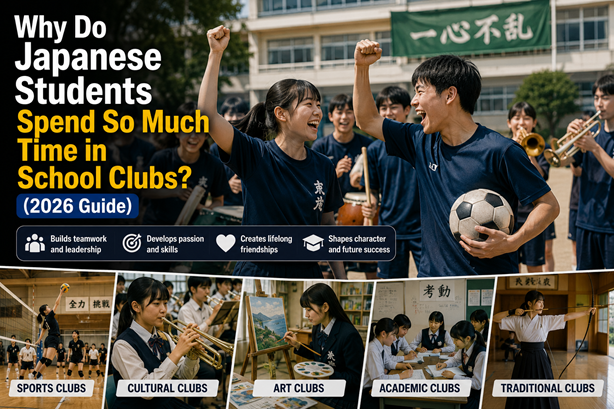
Known as bukatsu in Japanese, school clubs are one of the most distinctive parts of student life in Japan. Whether it is soccer, baseball, basketball, volleyball, music, art, or another activity, many students spend years committed to the same club, practicing after school, on weekends, and sometimes even during vacations.
For visitors from overseas, this can be surprising. In many countries, school sports and activities are organized differently. Students may participate in different sports throughout the year, balance multiple activities at the same time, or move between school teams and outside clubs more freely.
Japan often takes a different approach.
For many students, joining a club is not simply choosing a hobby. It becomes a major part of daily life, shaping friendships, routines, personal growth, and some of the most memorable experiences of adolescence.
Understanding bukatsu helps explain not only Japanese schools, but also how many Japanese people think about commitment, teamwork, and perseverance.
🎯 Quick Answer
Japanese school clubs are often more intensive than many school activity systems overseas because students typically commit to a single activity for several years, practice frequently, and participate in a strong team-oriented culture. For many students, bukatsu becomes an important part of their identity and school experience.
⚽ One Sport, One Club, Many Years
One of the biggest differences between Japanese school clubs and many overseas systems is the level of long-term commitment.
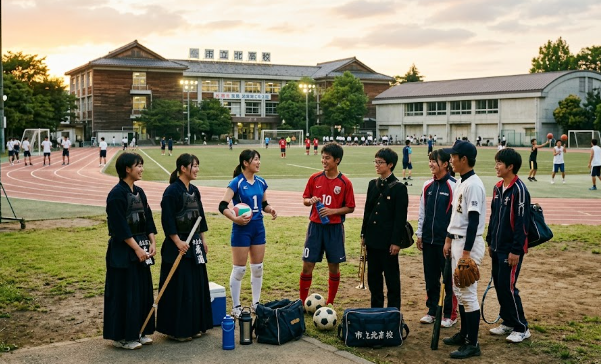
In Japan, students often choose one sport or activity and continue with it for years. A student who joins the soccer club in junior high school may spend all three years playing soccer. If that student continues into high school, they may spend another three years doing the same sport.
As a result, many Japanese students devote an extraordinary amount of time to a single activity.
In contrast, many schools overseas use seasonal systems. Students may play one sport during one part of the year and another sport during a different season. This allows them to experience a wider variety of activities while developing different skills.
Neither approach is necessarily better or worse. They simply reflect different educational philosophies.
Japan tends to emphasize long-term dedication, while many overseas systems encourage broader participation across multiple activities.
⏰ Why Practices Can Feel Endless
Another aspect of Japanese school clubs that surprises many visitors is the amount of practice.
When I was in both junior high school and high school, I belonged to school clubs myself. Looking back, one thing I remember clearly is how long the practices often felt.
We spent a great deal of time on fundamentals and repetition. Drills that might seem simple were practiced over and over again. Sometimes it felt like we spent as much time preparing to play as actually playing.
This reflects a common philosophy found throughout Japanese education and sports culture. Improvement is often seen as the result of consistent effort repeated over a long period of time.
In many Western sports systems, there is often a stronger distinction between individual training and team training. Athletes may be expected to develop certain skills independently, while team sessions focus on activities that require everyone to be together.
Japanese school clubs often blur that distinction. Much of the development process happens collectively, with the entire group practicing together regardless of individual skill level.
For some students, this creates a strong sense of unity. For others, it can sometimes feel demanding. Either way, it leaves a lasting impression.
👥 The Senpai-Kohai Relationship
School clubs are also where many Japanese students first experience the senpai-kohai relationship.
A senpai is an older student, while a kohai is a younger student. Within many clubs, this relationship carries expectations regarding respect, responsibility, and behavior.
Older students often help teach younger members, while younger students are expected to show respect toward those with more experience.
For visitors from countries where relationships between age groups are generally more equal and informal, this structure can seem unusual.
Many students have mixed feelings about it. Some appreciate the mentorship and guidance they receive from older members. Others find the hierarchy restrictive.
Regardless of opinion, the senpai-kohai relationship remains one of the defining characteristics of Japanese school clubs and has influenced workplace culture and social relationships throughout Japanese society.
🏆 Team Before Individual
Perhaps the most important value taught through bukatsu is the idea that the team comes first.
Success is often measured collectively rather than individually. Players learn to prioritize the goals of the group, support teammates, and continue contributing even when they are not the star player.
This mindset can create strong bonds among members. Students spend countless hours together practicing, traveling, competing, and overcoming challenges.
At the same time, this philosophy sometimes creates difficult situations.
One difference I have noticed between Japan and many overseas youth sports systems involves opportunities to participate in actual games. In Japan, a school may have dozens or even hundreds of players in a popular sport, but only a small number will appear in official matches. Some students train for years while rarely having opportunities to compete.
In contrast, many overseas systems attempt to create multiple teams so that more participants can experience actual game situations. Personally, I think this is one area where many Western youth sports systems have significant advantages. Giving more students meaningful playing opportunities can help maintain motivation and enjoyment while still developing skills.
This does not mean one system is entirely right or wrong. It simply highlights different priorities.
🌏 Why Japanese Adults Remember Bukatsu So Clearly
The reason school clubs remain such a common topic of conversation among Japanese adults is simple.
Bukatsu is rarely just about sports or activities.
It is about friendships.
It is about shared challenges.
It is about working toward a goal with the same people day after day for years.
Ask Japanese adults about their former clubs, and many can still remember practice schedules, competitions, teammates, coaches, victories, disappointments, and moments that happened decades earlier.
The memories remain vivid because school clubs occupy such a large part of adolescence.
For many people, some of their happiest memories and some of their most difficult memories happened during bukatsu.
🌏 Why Understanding Bukatsu Helps You Understand Japan
Many aspects of Japanese society become easier to understand once you understand school clubs.
The emphasis on teamwork, dedication, persistence, respect for seniority, and commitment to a group often appears later in universities, workplaces, and community organizations.
Of course, modern attitudes toward school clubs are changing. Some schools are reducing practice hours, and there are ongoing discussions about balancing student well-being with extracurricular activities.
Even so, bukatsu remains one of the most influential experiences in Japanese education.
For generations of students, school clubs have been about much more than what happens on the field, court, stage, or practice room.
They have been a way of learning how to be part of a group.
🇯🇵 Conclusion
Japanese school clubs may look intense to many international visitors, and in some ways they are.
Students often dedicate years to a single activity, spend long hours practicing, and develop strong relationships through shared effort and commitment. While some aspects of the system continue to evolve, bukatsu remains one of the most recognizable features of Japanese school life.
For many Japanese people, the memories of school clubs last long after graduation. The specific sport or activity may eventually fade into the background, but the friendships, challenges, and lessons learned often remain for a lifetime.
That is why understanding bukatsu is not just about understanding Japanese schools.
It is about understanding a small but important part of how many Japanese people grow up.
🔗Discover more about Japan
・Why Is Summer Vacation in Japan So Different? School Life, Homework & Cultural Surprises
・What Is Japanese School Lunch? Why Kyushoku Is More Than Just Food
・What Is a Japanese School Trip? Why Shūgaku Ryokō Becomes a Lifetime Memory
・Why Is Japanese Sports Day Such a Powerful Childhood Memory? Understanding Undokai
・Why Do Japanese Students Clean Their Own Classrooms? The Lesson Behind School Cleaning Time
・Why Do Japanese Schools Have Entrance Ceremonies? (2026 Guide)
・Why Do Japanese Schools Have Swimming Classes? (2026 Guide)
・Why Do Japanese Children Walk to School by Themselves? (2026 Guide)
・School Uniforms in Japan: More Than Just a Dress Code (2026 Guide)