
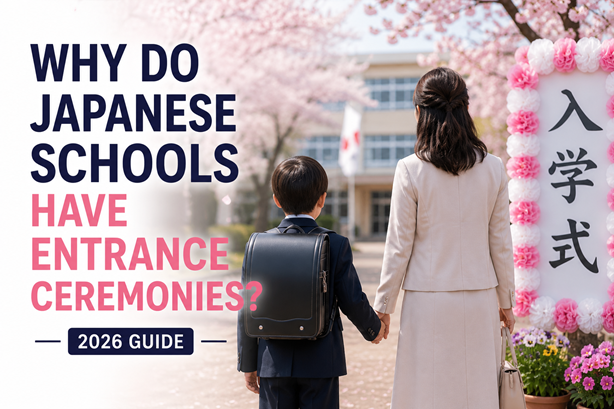
🌏 Introduction
When I was a child, I never thought Japan’s entrance ceremonies were unusual.
Every time I entered a new stage of education, there was an entrance ceremony. Kindergarten, elementary school, junior high school, high school, and eventually university. It was simply part of growing up. Like many Japanese students, I put on formal clothes or a school uniform, sat among hundreds of other students, listened to speeches from teachers and school leaders, and officially began a new chapter of my life.
At the time, it felt completely normal.
In fact, I never questioned it.
It was only after living overseas that I realized how different Japan’s approach actually is.
In many countries, students celebrate the beginning of school in very different ways. Universities often organize orientation programs, welcome weeks, club fairs, and social events designed to help new students settle in. I remember seeing campuses filled with music, student organizations, free T-shirts, hoodies, snacks, and various activities intended to create excitement. The atmosphere often felt closer to a festival than a formal ceremony.
Japan certainly wants students to feel welcomed as well, but the purpose of an entrance ceremony is somewhat different.
Rather than focusing primarily on social activities, Japanese schools often treat the beginning of a new school year as an important life transition. The ceremony exists to mark that moment. It is not simply about arriving at a new school. It is about recognizing that a new chapter has begun.
Understanding entrance ceremonies helps explain something much larger about Japanese education and, perhaps, about Japanese society itself.
🌸 A Ceremony for a New Beginning
One reason entrance ceremonies remain important is that Japanese people have traditionally placed great value on clearly marking important transitions in life.
Throughout Japan, there are ceremonies associated with different stages of childhood and adulthood. Children celebrate specific milestones. Families gather for important occasions. Schools organize events that recognize progression from one stage to the next.
Entrance ceremonies fit naturally into this pattern.
When students walk into a new school for the first time, they are not merely changing classrooms. They are entering a different phase of life. Expectations change. Responsibilities change. Social relationships change. In many cases, students are also entering a completely new environment with unfamiliar teachers and classmates.
The ceremony creates a moment of recognition.
Instead of allowing the transition to happen quietly, the school pauses and formally acknowledges it.
This may sound like a small thing, but such moments often become powerful memories. Years later, many people struggle to remember ordinary school days. Yet they still remember their first entrance ceremony, their first day in a new uniform, or the feeling of sitting nervously in a gymnasium surrounded by strangers.
🏫 More Than an Administrative Event
One of the things that surprised me after spending time overseas was how differently schools can approach the beginning of a school year.
In many places, the first day is largely practical. Students receive schedules, learn where classrooms are located, meet teachers, and begin adjusting to a new environment. The focus is often on helping individuals settle in as smoothly as possible.
Japanese entrance ceremonies certainly accomplish those goals as well, but they add another layer of meaning.
The ceremony is not simply about providing information.
It is about creating a shared experience.
Hundreds of students begin together. They sit together, listen together, and symbolically cross the same threshold together. For a brief moment, everyone shares the same experience regardless of their background, personality, or future ambitions.
This emphasis on a collective beginning reflects a broader characteristic of Japanese schools. Education is not viewed only as an individual journey. It is also seen as participation in a community. Students belong to classes, clubs, grade levels, and schools. The entrance ceremony serves as the first step into that community.
🌸 Why Cherry Blossoms Matter So Much
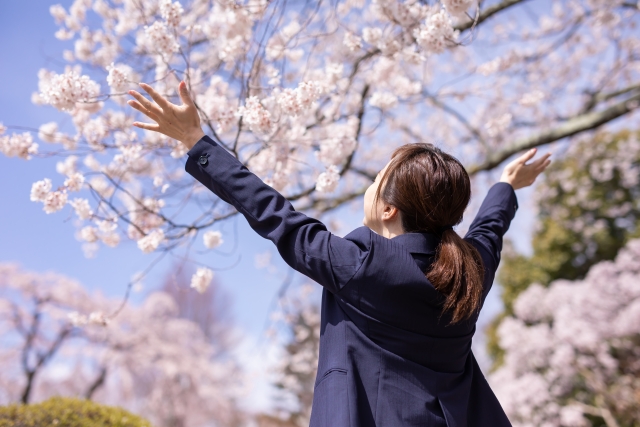
Another reason entrance ceremonies occupy such a special place in Japanese memory is their connection to spring.
Japan’s academic year begins in April, just as cherry blossoms bloom across much of the country.
As a result, many entrance ceremonies take place against a backdrop of pink petals and flowering trees. Over time, this connection became one of the most recognizable images in Japanese culture.
Even today, countless photographs show children standing beneath cherry blossoms while wearing new uniforms and carrying new school bags.
The timing feels almost symbolic.
Cherry blossoms bloom briefly before disappearing.
School years also pass surprisingly quickly.
Perhaps that is one reason entrance ceremonies remain so memorable. They occur at a moment when both nature and human life seem to be turning a page simultaneously.
When Japanese people see cherry blossoms as adults, they are often reminded not only of spring itself but also of school memories, friendships, and moments when entirely new chapters of life began.
🎓 A Different Idea of Welcome
This does not mean one system is better than another.
I understand why many students enjoy orientation programs and welcome weeks overseas. They are energetic, social, and often a lot of fun. They help students build friendships quickly and create excitement about the future.
Japanese entrance ceremonies simply reflect a different philosophy.
Rather than asking, “How can we make students feel comfortable immediately?” they often ask, “How can we recognize the importance of this moment?”
That difference shapes the atmosphere.
The mood tends to be more formal. Students sit quietly. Parents often dress formally. School leaders deliver speeches. National anthems or school songs may be performed. Everything is carefully organized.
For some visitors, this formality can feel surprising.
For many Japanese people, however, the formality is precisely what makes the occasion memorable. The ceremony feels different from an ordinary school day because it is meant to feel different.
🌏 Looking Back on My Own Experience
When I think about my own entrance ceremonies, what I remember most is not the speeches or even the details of the events themselves.
I remember the feeling.
I remember being nervous.
I remember wondering whether I would make friends.
I remember looking around at unfamiliar faces and realizing that many of those strangers would eventually become classmates, teammates, and close friends.
At the time, I was focused entirely on myself.
Like most students, I was thinking about my future rather than the meaning of the ceremony.
Only years later did I begin to appreciate what the event was trying to accomplish.
The ceremony created a shared starting point.
Every student in that room was experiencing the same uncertainty, the same anticipation, and the same excitement. We did not know it yet, but we were beginning a journey together.
Perhaps that is why so many Japanese people continue to remember their entrance ceremonies long after graduation. The event itself may only last a few hours, but it marks the beginning of experiences that shape years of our lives.
🇯🇵 Conclusion
Why do Japanese schools have entrance ceremonies?
The answer goes far beyond school tradition. Entrance ceremonies reflect a broader cultural tendency to recognize important transitions through shared rituals and collective experiences. They transform the simple act of starting school into a meaningful milestone and remind students that they are becoming part of something larger than themselves.
While many countries celebrate educational beginnings through orientations, social events, and welcome programs, Japan has historically chosen a more ceremonial approach. The goal is not merely to welcome students but to acknowledge the significance of the moment itself.
Looking back, I understand why these ceremonies remain such powerful memories for many people. They are not really about speeches, uniforms, or school songs. They are about standing at the edge of a new chapter, surrounded by hundreds of other people doing exactly the same thing, and realizing that life is about to change.
🌏 Explore More Japanese School Culture
If you enjoyed learning about Japanese entrance ceremonies, you may also enjoy these articles exploring the traditions, values, and experiences that shape school life in Japan.
👉Why Do Japanese Students Clean Their Own Classrooms? The Lesson Behind School Cleaning Time
👉Why Do Japanese Students Spend So Much Time in School Clubs?
👉Why Is Summer Vacation in Japan So Different? School Life, Homework & Cultural Surprises
👉What Is Japanese School Lunch? Why Kyushoku Is More Than Just Food
👉What Is a Japanese School Trip? Why Shūgaku Ryokō Becomes a Lifetime Memory
👉Why Is Japanese Sports Day Such a Powerful Childhood Memory? Understanding Undokai
👉 Why Do Japanese Children Walk to School by Themselves? (2026 Guide)
👉 Why Do Japanese Schools Have Swimming Classes? (2026 Guide)
👉 School Uniforms in Japan: More Than Just a Dress Code (2026 Guide)