
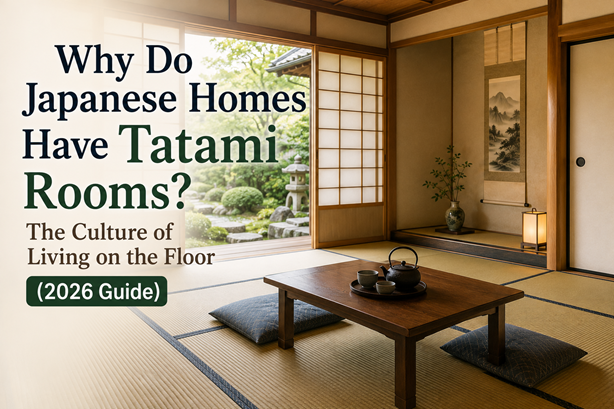
🌏 More Than a Room: Why Tatami Still Matters in Japan
Many visitors to Japan have the same first impression when they step into a traditional Japanese room.
“It’s almost empty.”
There is no large sofa, no dining table, no bed, and often very little furniture at all. The floor is covered with woven tatami mats, sunlight filters softly through shoji paper screens, and the room feels remarkably quiet. At first glance, it can seem unfinished, as though something is missing.
Yet for many Japanese people, the opposite is true.
A tatami room is not empty. It is full of possibilities.
The same room can become a living room in the morning, a place to welcome guests in the afternoon, a quiet space for drinking tea, a playroom for children, and a bedroom at night simply by bringing out or putting away a few everyday items. Instead of filling the room with furniture, the space itself remains open, ready to adapt to the needs of the moment.
This flexibility is one of the defining characteristics of traditional Japanese homes, but it begins with something surprisingly simple: the floor.
Tatami is often introduced as a traditional Japanese flooring material made from woven igusa grass. While this explanation is technically correct, it barely scratches the surface. Tatami is not merely something people walk on. It has influenced how Japanese homes are designed, how rooms are used, how people sit, how they welcome guests, and even how they experience the passing of time.
Understanding tatami is therefore not simply about learning what it is made of. It is about understanding why Japanese homes developed a very different relationship with space from many homes elsewhere in the world.
🌿 Tatami Is Not Just Flooring—It Shapes the Entire Room
In many countries, flooring is chosen after a room has already been designed. Hardwood, carpet, stone, or tile changes the appearance of a space, but rarely changes how people live inside it.
Tatami works differently.
A tatami room is planned around the floor from the very beginning. The proportions of the room are traditionally determined by the size and arrangement of the tatami mats themselves, and once those mats are in place, they influence almost everything that happens inside the room. Furniture remains low or minimal, movement becomes quieter, and daily life naturally shifts closer to the ground.
Because tatami serves as the foundation of the living space, people do far more than simply walk across it. They sit directly on it, enjoy meals around low tables, drink tea, read books, fold laundry, play with children, and, at night, spread out futons to sleep. The floor is not a surface beneath everyday life; it is where everyday life unfolds.
This is one of the greatest differences between traditional Japanese homes and many homes in Europe or North America. Much of Western domestic life is organized above the floor through chairs, sofas, dining tables, and beds. In a traditional Japanese home, daily activities often begin by coming closer to the floor itself. Rather than separating people from the room, tatami encourages them to become part of it.
For visitors, this difference can feel surprisingly relaxing. Sitting on tatami changes posture, slows movement, and creates a stronger awareness of the surrounding space. Even a short visit to a ryokan often leaves people with the feeling that the room itself somehow encourages them to move more quietly and spend time more slowly.
👣 Why Taking Off Your Shoes Matters Even More on Tatami
Most visitors quickly learn one of the basic rules of entering a Japanese home: shoes stay at the entrance.
Many assume this custom exists simply to keep the floor clean. Cleanliness is certainly part of the story, but tatami reveals a deeper reason.
Unlike a wooden floor that is used primarily for walking, a tatami floor is a place where people live with their entire bodies. Children crawl across it. Families sit on it during meals. Guests kneel on it while talking. Futons are spread directly across its surface each night before bedtime. Because people regularly touch tatami with their hands, knees, and faces as well as their feet, it naturally becomes one of the cleanest spaces in the house.
The relationship between shoes and tatami therefore reflects a different understanding of the home itself. Dirt is not simply something that makes the room look untidy. It interrupts a space intended for rest, conversation, and everyday living.
This way of thinking also explains why many Japanese people instinctively avoid stepping on tatami with slippers designed for hallways or bathrooms. Different parts of the home have traditionally been treated as different environments, and the tatami room occupies a particularly special place among them. The customs surrounding footwear are therefore not arbitrary rules but practical habits that developed alongside the unique role tatami plays within the home.
👀 Living Closer to the Ground Changes How You See the World
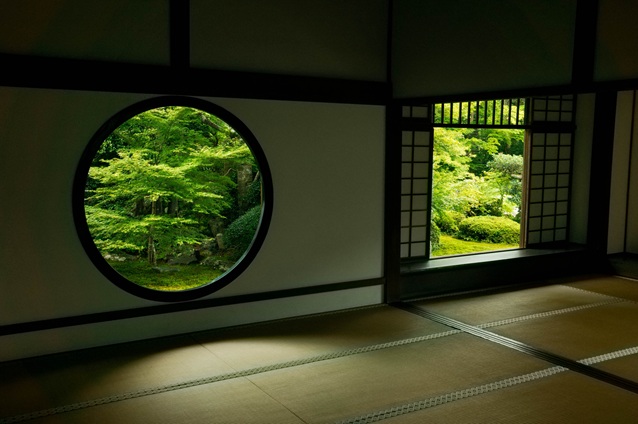
Perhaps the most fascinating aspect of tatami is not the material itself but the perspective it creates.
When people spend much of their time sitting on chairs, the room is naturally designed around eye level from that height. Paintings hang higher on the wall, tables rise toward the body, and windows frame the outside landscape from a standing or seated position above the floor.
A tatami room quietly changes those relationships.
People sit in seiza, cross-legged, or simply stretch out comfortably on the floor. Their eyes are lower, and the room is designed accordingly. A single flower displayed in the tokonoma alcove does not tower overhead but rests naturally within the field of vision. Looking through an open shoji screen, the garden appears almost like a carefully composed landscape painting, framed not from above but from a calm position close to the earth.
This lower viewpoint changes more than what people see. It changes how they experience the room itself. Empty space becomes more noticeable, natural light feels softer, and even silence seems easier to appreciate. The architecture is not asking visitors to admire expensive furniture or elaborate decoration. Instead, it gently directs attention toward proportion, balance, light, and the quiet beauty of ordinary things.
For many first-time visitors, this feeling is difficult to explain after leaving Japan. They remember the scent of the tatami, the soundless atmosphere, the soft texture beneath their feet, and the peaceful view of a garden, but what stayed with them was not one particular object. It was the way the entire room invited them to experience space differently.
🏡 One Room, Countless Possibilities
One of the most remarkable features of a tatami room is that it is never defined by a single purpose. Visitors from countries where rooms are assigned specific functions are often surprised by this. A bedroom contains a bed. A dining room contains a table. A living room contains sofas and a television. Once the furniture is in place, the identity of each room is largely fixed.
A traditional tatami room follows a different philosophy. Because very little furniture remains permanently in the room, the space itself is free to change throughout the day. A low table can be brought in during the morning to create a comfortable family living area. When guests arrive, cushions are placed neatly on the floor, transforming the same room into a welcoming reception space. During tea time, the atmosphere changes once again, with attention naturally shifting toward conversation rather than furniture. As evening approaches, the table is put away, futons are laid across the tatami, and without moving to another room, the space quietly becomes a bedroom.
To many visitors, repeatedly setting up and putting away furniture may appear inconvenient. From another perspective, however, it is remarkably efficient. Instead of building larger houses filled with dedicated rooms, Japanese homes have traditionally allowed one room to serve many different purposes. The few minutes spent unfolding a futon or storing it away each morning make it possible for the same space to support an entire day’s activities.
This approach also encourages people to own fewer large pieces of furniture. The room itself remains the most valuable part of the house because its function is determined not by what permanently occupies it, but by how people choose to use it at that particular moment. In many ways, the flexibility often associated with modern minimalist design has existed in Japanese homes for centuries through the simple presence of tatami.
🍃 A Floor That Becomes More Beautiful with Time
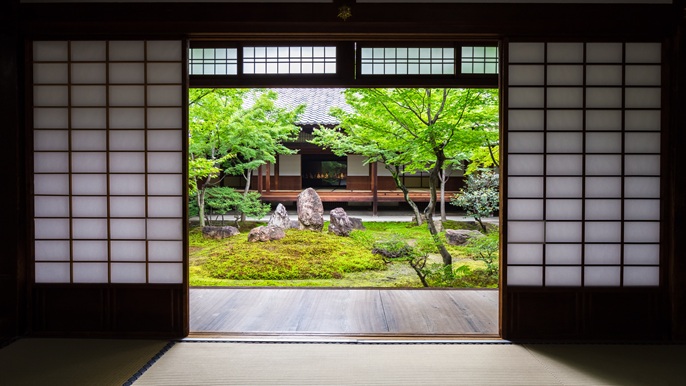
When new tatami is installed, its appearance often surprises even Japanese people. Fresh tatami has a gentle green color and the unmistakable fragrance of igusa grass. The scent fills the room with a freshness that immediately signals something new, and many people associate that aroma with moving into a new home or welcoming the New Year.
Yet that fresh green does not last forever.
As months and years pass, sunlight and daily life gradually transform the surface into a warm golden color. In many parts of the world, visible signs of age are often viewed simply as wear. A faded carpet or scratched flooring is something to replace as soon as possible. Tatami invites a different perspective.
Rather than seeing the changing color as evidence that the room has become old, many people experience it as a sign that the space has matured together with the family living there. The room has absorbed conversations, changing seasons, children’s laughter, quiet evenings, and countless ordinary days. Its appearance reflects the passage of time rather than its decline.
This way of seeing is not unique to tatami. Japanese craftsmanship often allows natural materials such as wood, paper, and bamboo to reveal their age instead of hiding it. Tatami quietly belongs to that same tradition. Like the rich patina that develops on well-used wood or the changing character of leather over many years, the beauty lies not only in its original condition but also in the story written onto its surface by everyday life.
🤲 Respect Begins at Your Feet
Tatami also carries its own etiquette, and one of the best-known customs is avoiding stepping directly on the decorative borders known as tatami-beri.
At first glance, this may seem like an old-fashioned rule without much meaning, but the custom reflects the respect traditionally shown toward both craftsmanship and space. The woven border protects the edges of each tatami mat while also completing its appearance. In earlier periods of Japanese history, the patterns woven into these borders sometimes indicated social status or even displayed family crests, making them more than simple decoration.
Today, most people no longer think about those historical meanings in everyday life. Even so, many Japanese still instinctively avoid stepping on the borders, especially in traditional settings. The custom has survived because it encourages careful movement within the room. Rather than crossing the space without thinking, people become slightly more aware of where they place each step.
This quiet attention reflects a broader attitude found throughout traditional Japanese homes. Respect for a space is expressed not through grand gestures but through small everyday actions. Removing shoes, arranging cushions neatly, folding futons carefully, and treating tatami gently are all part of the same rhythm. The room gradually teaches these habits without anyone needing to explain them.
🌸 Living with the Floor, Living with Time
Perhaps the greatest lesson offered by tatami is not about architecture at all.
It is about the relationship between people, space, and time.
When daily life takes place close to the floor, movements naturally become slower. Sitting down requires a deliberate action. Standing up takes a little longer. Spreading out a futon before sleep and folding it away the following morning becomes part of the rhythm of the day. None of these actions are particularly difficult, yet together they create a pace of living that differs from a home filled with permanent furniture.
This rhythm also changes the way people experience the room. Because furniture does not dominate the space, attention naturally shifts toward subtler details: the changing light entering through a window, the sound of rain outside, the scent of fresh tatami after the summer humidity, or the colors of a small flower displayed in the tokonoma. The room never demands attention. Instead, it quietly rewards those who slow down enough to notice.
Of course, contemporary Japan is changing. Apartments with entirely wooden floors have become increasingly common, and many younger families grow up without a traditional tatami room. Yet even in modern homes, tatami continues to occupy a special place. Some apartments include a single washitsu, while others create small tatami corners where people can relax, play with children, or simply enjoy sitting on the floor. The material remains relevant not because it belongs to the past, but because it offers a way of using space that still feels meaningful today.
For visitors, spending even one night in a tatami room often leaves a lasting impression. It is not only the fragrance of igusa, the softness beneath bare feet, or the quiet atmosphere that remains in memory. It is the realization that a floor can shape an entire way of living.
A tatami room is not simply a place inside a Japanese home.
It is a place where space, time, and everyday life quietly come together.
🏠 Continue Exploring Japanese Homes
If you enjoyed learning about tatami culture, you may also enjoy these articles from our Home Series:
👉 Where Home Begins: The Hidden Meaning of a Japanese Entryway (2026 Guide)
👉 How Do Japanese Homes Stay Comfortable in Summer? More Than Just Air Conditioning (2026 Guide)
👉 Why Do Traditional Japanese Homes Have an Engawa? The Space Between Inside and Outside (2026 Guide)
👉 What Is an Oshiire? The Japanese Closet That Made Tatami Rooms Work (2026 Guide)
👉 Disaster Preparedness at Home in Japan: What Emergency Supplies Should You Keep? (2026 Guide)
👉 Why Do Japanese People Sleep on Futons? The Culture of Sleeping Close to the Floor (2026 Guide)
👉 Why Do Japanese Homes Have Shoji? The Paper Screens That Shape Light & Privacy (2026 Guide)
👉 Why Are Japanese Apartment Balconies So Useful? Laundry, Air Conditioners, and Emergency Escape Routes (2026 Guide)