
🌏 Introduction
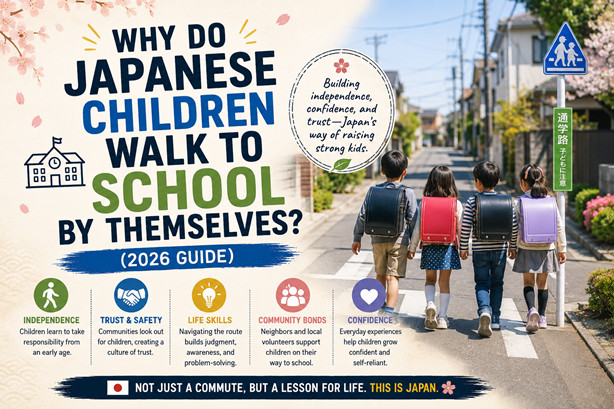
One of the biggest surprises for many visitors to Japan is seeing young children walking to school on their own. Early in the morning, elementary school students wearing brightly colored hats, carrying their randoseru backpacks, and chatting with friends can be seen making their way through quiet neighborhoods without parents accompanying them. For many people watching from overseas, the first reaction is often disbelief. Is it really safe? Why aren’t they riding school buses? Why aren’t their parents driving them?
Growing up in Japan, I never asked myself any of those questions.
Walking to school was simply part of everyday life.
Every morning, I put on my backpack, said goodbye to my parents, and headed toward school. Sometimes I walked with neighborhood friends. Sometimes older students joined us along the way. On rainy mornings, we carried umbrellas almost as large as we were. During the hot summer months, we arrived at school sweating before the first lesson had even begun. In winter, we walked with cold hands and white breath drifting through the morning air. None of these memories felt unusual because they were simply part of growing up.
At the same time, I remember feeling a little jealous whenever I watched American movies or television shows.
The bright yellow school buses looked exciting.
Children laughed together as they climbed aboard. Friendly drivers greeted students every morning. Parents waved goodbye from their driveways before heading to work. To me, it looked like something from another world. As a child, I wondered what it would be like to ride a school bus every day instead of walking.
Many years later, after living in both Canada and the United States, I finally understood why those buses were so common.
The schools were often much farther from people’s homes than the schools I had attended in Japan. Residential neighborhoods spread across much larger areas, roads were designed primarily for cars, and walking simply was not practical for many families. School buses were not a cultural luxury or a symbol of a better education. They were an efficient and sensible solution to the geography and daily life of those communities.
That experience completely changed the way I thought about school transportation.
Japan did not choose walking because school buses were somehow inferior.
North America did not choose buses because walking was somehow less valuable.
Each country developed systems that matched its cities, neighborhoods, distances, and lifestyles.
Neither is inherently better.
They simply create different childhood memories.
🚶 The Journey Is Part of the School Day
Looking back now, I realize that Japanese children do not simply travel to school.
They experience their neighborhood every single day.
The same streets become familiar companions throughout childhood. Children learn where the safest crossings are, which traffic lights change quickly, where flowers bloom in spring, and which trees provide shade during the hottest days of summer. They notice the changing colors of leaves in autumn and quietly watch snow collect along the roadside during winter.
Without realizing it, they become connected to the place where they live.
As children, we rarely thought about these things consciously.
Instead, we talked with friends about yesterday’s homework, weekend plans, television shows, or the soccer game we had played after school. Some mornings felt endless because we were excited about an upcoming school event. Other mornings passed quietly because everyone was still sleepy.
The destination was always the school.
But many of the memories were created long before we arrived there.
I still remember racing friends to the next intersection, stopping briefly to watch insects during summer, and taking slightly longer routes home simply because we wanted to continue talking together. On rainy days, there was always someone who had forgotten an umbrella, and more often than not, several of us squeezed together beneath one umbrella while laughing as our shoes became soaked. During autumn, we kicked fallen leaves along the sidewalk. During winter, we complained about how cold our fingers had become before finally reaching the warmth of the classroom.
None of those moments appeared in textbooks.
Yet they remain among my strongest memories of elementary school.
Perhaps that is because childhood is rarely remembered only through lessons.
It is remembered through the small moments between them.
🏘️ A Community That Quietly Watches Over Children
One of the things I appreciated much more after living overseas was how connected Japanese neighborhoods often feel during the morning commute to school.
Although parents do not usually walk with older elementary school children every day, that does not mean children are completely alone.
Many neighborhoods have volunteer crossing guards who help students cross busy intersections. Elderly residents watering their gardens greet children as they pass. Shop owners wave from the entrances of small local stores. People walking their dogs often recognize familiar faces after seeing the same children every weekday morning. In many communities, older students naturally look after younger ones, especially when walking together to school.
This does not mean every neighborhood in Japan is identical, nor does it mean accidents never happen. Like every country, Japan continues working to improve road safety and protect children.
What impressed me, however, was the quiet sense that many adults felt some responsibility for the children living nearby.
They were not replacing parents.
They were simply becoming part of the everyday landscape that surrounded childhood.
Only after living abroad did I begin to notice how differently communities organize themselves depending on local circumstances. In many parts of North America, parents express exactly the same care by driving children to school or trusting professional school bus drivers who know the students by name. Those relationships create their own memories and their own sense of security.
The methods are different.
The intention is remarkably similar.
In every country, adults are trying to help children arrive safely at school.
🚌 Different Roads Create Different Childhood Memories
The more I traveled and lived overseas, the more I realized that the way children travel to school is never simply about transportation.
It becomes part of childhood itself.
When I lived in Canada and the United States, I came to understand why so many people feel nostalgic about riding a yellow school bus. What had once looked exciting in movies turned out to be exactly that in real life. Children greeted the same driver every morning, laughed with neighborhood friends during the ride, listened to music playing quietly through the bus speakers, and watched familiar streets pass by through the windows. For many people, those bus rides became inseparable from their memories of growing up.
Looking back now, I understand why.
The journey itself created friendships before the school day even began.
It offered children a shared space where conversations continued long after classes had ended.
For many adults, the smell of the bus, the sound of its engine, or even the sight of a yellow school bus can instantly bring back memories from decades earlier.
Japanese children often remember something different.
Instead of remembering the inside of a bus, many remember the road itself.
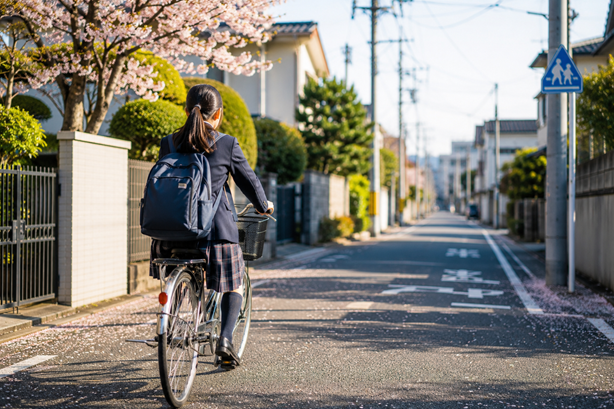
The narrow street where cherry blossoms bloomed every spring.
The small bridge crossed every morning.
The neighborhood dog that barked whenever children walked past.
The convenience store where everyone stopped after club activities.
The crossing guard who smiled and greeted every child by name.
The route home became filled with tiny moments that seemed ordinary at the time but quietly remained in our memories for years afterward.
Neither experience is richer than the other.
They simply tell different stories.
Childhood memories grow wherever children spend time together.
Sometimes that place is a school bus.
Sometimes it is the sidewalk leading home.
🌱 Learning Independence Without Realizing It
Many people say that Japanese children walk to school in order to become independent.
There is certainly some truth in that idea.
Walking every morning naturally teaches children how to cross roads safely, manage their time, remember their belongings, and take responsibility for themselves. Older students often help younger children, creating opportunities to learn kindness and leadership without anyone calling it a lesson.
Yet I do not think most Japanese children wake up believing they are participating in a carefully designed educational program.
We simply walked.
No one told us that today we would learn independence.
No teacher gave us homework about crossing streets.
Those lessons appeared quietly through repetition.
That may be one of the most interesting aspects of Japanese school life.
Some of its most important lessons happen outside the classroom.
Children gradually learn how to greet neighbors, wait patiently at crosswalks, notice approaching traffic, help younger classmates, and become familiar with their own communities. None of these experiences require formal instruction because they become part of everyday life.
Perhaps that is why they remain with us long after multiplication tables or grammar exercises have faded from memory.
🌸 The Walk Home Was Often the Best Part of the Day
When people remember school, they usually think about classrooms, teachers, examinations, or school events.
Strangely enough, some of my strongest memories happened after the final bell rang.
Walking home with friends often felt like the real beginning of the afternoon.
We talked about what had happened during class, argued about baseball or video games, laughed about small mistakes teachers had made, and sometimes made plans to meet again after finishing our homework. During summer we searched for cicadas in the trees. During autumn we kicked colorful leaves along the road. On rainy days we shared umbrellas that were never quite large enough, arriving home soaked but somehow happier because of it.
Those walks were never organized.
No adult planned them.
They simply happened because home was within walking distance.
Living overseas made me appreciate that these memories are not universal.
Children who ride school buses have different stories.
Children whose parents drive them have different conversations.
Children who use public transportation experience something different again.
Every system shapes childhood in its own quiet way.
What matters is not whether one method creates better memories.
What matters is that every child finds moments of friendship, laughter, and discovery somewhere along the journey.
🌏 Looking Back as an Adult
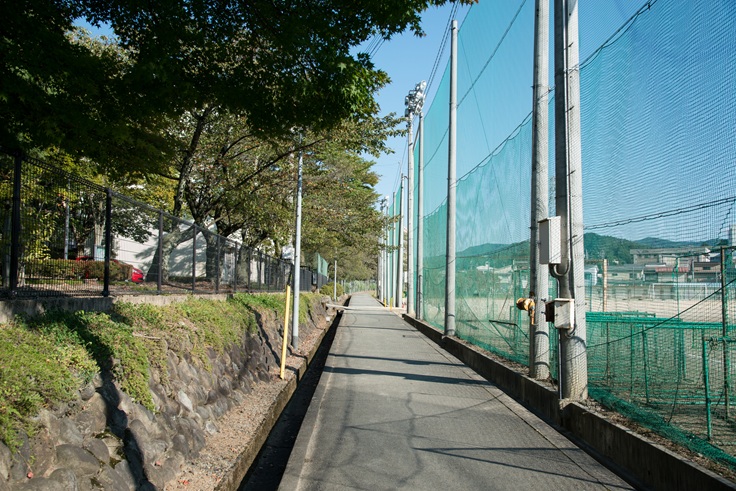
Today, when I occasionally pass an elementary school during the morning commute, I still see groups of children walking together with backpacks that seem almost too large for their small shoulders.
Some are talking excitedly.
Others are still half asleep.
A few are carefully holding umbrellas while trying to avoid puddles after overnight rain.
It is a scene I barely noticed when I was young because it seemed completely ordinary.
Only after spending years abroad did I realize how uniquely familiar that ordinary scene had become.
At the same time, I also smile whenever I see yellow school buses in North America.
I no longer see them as something I missed.
Instead, I see another beautiful way for children to grow up.
Different countries create different childhoods.
Different communities build different memories.
And that diversity is one of the most rewarding things about experiencing life beyond our own culture.
🇯🇵 Conclusion
Why do Japanese children walk to school by themselves?
The answer is not simply because Japan is safe, nor because walking is considered superior to taking a school bus.
The real answer lies in the way Japanese neighborhoods, schools, and daily life have developed together over many generations. Schools are often located close to the communities they serve, allowing children to walk through familiar streets, gradually become independent, and develop quiet connections with the people around them.
Living overseas taught me that there is no single “correct” way for children to travel to school.
School buses create lifelong memories of conversations, music, friendly drivers, and shared rides with neighborhood friends.
Walking creates different memories of changing seasons, rainy afternoons, familiar streets, and conversations that continue all the way home.
Neither experience should be seen as better than the other.
They simply reflect different communities, different geography, and different ways of growing up.
Perhaps that is the real lesson hidden inside Japan’s school commute.
Education does not always begin when the classroom door opens.
Sometimes it begins the moment a child steps outside, greets a neighbor, joins friends on the sidewalk, and starts walking toward another ordinary school day.
And perhaps that ordinary walk becomes one of childhood’s most extraordinary memories.
🌏 Continue Exploring Japanese School Culture
If you enjoyed learning why Japanese children often walk to school, you may also enjoy these articles exploring the traditions, values, and everyday experiences that shape school life in Japan.
👉Why Do Japanese Schools Have Swimming Classes? (2026 Guide)
👉Why Do Japanese Schools Have Entrance Ceremonies? (2026 Guide)
👉Why Do Japanese Students Clean Their Own Classrooms? The Lesson Behind School Cleaning Time
👉Why Do Japanese Students Spend So Much Time in School Clubs? (2026 Guide)
👉Why Is Summer Vacation in Japan So Different? School Life, Homework & Cultural Surprises
👉What Is a Japanese School Trip? Why Shūgaku Ryokō Becomes a Lifetime Memory (2026 Guide)
👉 Why Is Japanese Sports Day Such a Powerful Childhood Memory? Understanding Undokai
👉School Uniforms in Japan: More Than Just a Dress Code (2026 Guide)