
🌏 Introduction
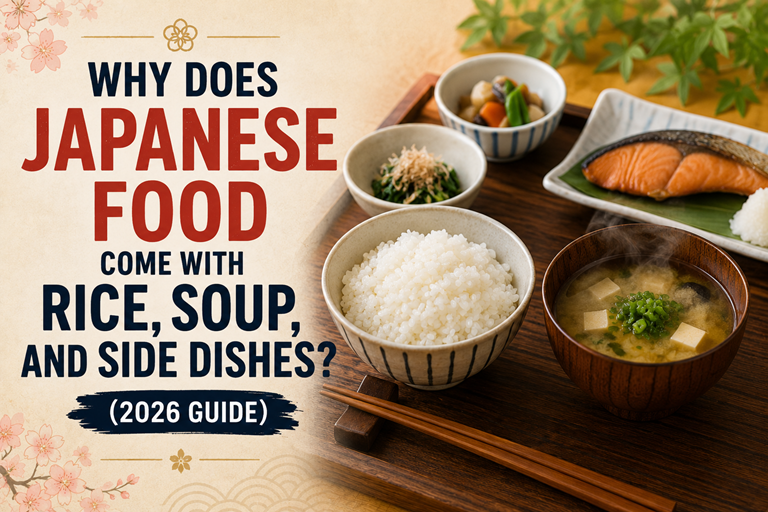
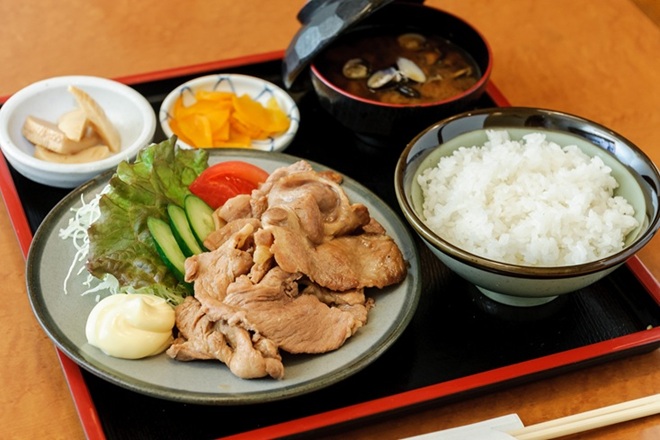
One of the first things many visitors notice when eating in Japan is that meals often arrive as a collection of dishes rather than a single plate. A tray may contain a bowl of rice, miso soup, pickles, a small side dish, and a main dish such as grilled fish, fried chicken, or pork. For travelers accustomed to a large entrée served on one plate, the arrangement can feel unusual at first. Why are there so many separate dishes? Why is rice served on its own? And why does almost every meal seem to include soup and small side dishes?
I have always found this question fascinating because I have had the opportunity to experience many different food cultures around the world. I have enjoyed makboos in Bahrain and Qatar, paella in Barcelona, curry in India, and countless rice dishes throughout Thailand. Each culture has developed its own relationship with rice, shaped by climate, geography, agriculture, trade, and history. None of these approaches are better or worse than the others. They are simply different expressions of how people have learned to enjoy one of the world’s most important foods.
When I think about Japanese meals, however, one thing stands out. In many countries, rice becomes part of the main dish. In Japan, rice often remains separate from the rest of the meal. That small difference changes the entire dining experience.
🍚 The Real Star of the Meal May Not Be What You Think
Many visitors assume that the main dish is the star of a Japanese meal.
If grilled fish is served, the fish appears to be the centerpiece.
If fried pork cutlet is served, the cutlet seems to take center stage.
If ginger pork or karaage is served, those dishes naturally attract the most attention.
Yet many Japanese people would quietly argue that something else plays the most important role.
The rice.
This idea can be difficult to understand at first because rice looks so simple. It is plain. It is not heavily seasoned. It is not covered in sauce. It does not demand attention in the way a beautifully grilled steak or a colorful seafood dish might.
Yet Japanese meals are often built around rice rather than around the main dish itself.
The fish exists alongside the rice.
The soup exists alongside the rice.
The pickles exist alongside the rice.
The side dishes exist alongside the rice.
Everything connects back to that bowl sitting quietly at the center of the tray.
🌏 Different Ways of Eating Rice Around the World
One reason I appreciate Japanese food culture is that it reminds me how many ways people can enjoy rice.
In Bahrain and Qatar, I remember eating makboos, where rice absorbs the flavors of spices, meat, and broth. The rice itself becomes a major part of the finished dish.
In Barcelona, I enjoyed paella, where rice serves as the foundation for seafood, vegetables, and saffron. Everything cooks together and creates a single unified experience.
In India, rice and curry often combine into countless delicious variations. The flavors blend together beautifully and become inseparable from one another.
In Thailand, fragrant rice frequently accompanies rich curries and stir-fried dishes, creating a balance between strong flavors and gentle textures.
These meals are wonderful examples of how rice can become deeply integrated into the main dish.
Japan developed a somewhat different approach.
Instead of combining everything into one dish, Japanese meals often keep each component separate.
The result is not a single flavor experience but a conversation between multiple flavors.
🍽️ Why Separate Dishes Matter
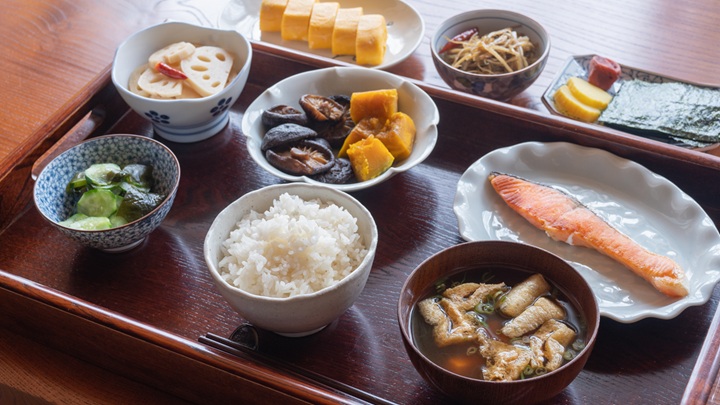
When a traditional Japanese meal is served, each item maintains its own identity.
The rice remains rice.
The miso soup remains soup.
The pickles remain pickles.
The fish remains fish.
The vegetables remain vegetables.
Rather than blending together before reaching the table, they interact inside the mouth as the meal progresses.
This creates a different rhythm of eating.
Instead of finishing one item and moving to the next, many Japanese people alternate between dishes throughout the meal.
A bite of fish may be followed by a bite of rice.
A sip of soup may come next.
Then perhaps a small bite of pickles.
Then another bite of rice.
The meal constantly shifts between flavors, textures, and temperatures.
🥢 The Habit Many Japanese People Learn as Children
When I was growing up, I was taught a style of eating that many Japanese people know well.
Rather than eating all of one dish first, we moved between different dishes throughout the meal.
Rice.
Soup.
Main dish.
Rice again.
A small side dish.
More rice.
Another sip of soup.
This pattern is sometimes called “triangle eating” because the diner moves continuously between multiple items.
Today, schools and families may not emphasize it as strongly as they once did, but many Japanese adults still naturally eat this way.
For many people, it simply feels balanced.
Finishing all the rice first would feel strange.
Finishing all the fish while leaving untouched rice until the end would also feel unusual.
The meal is designed to be experienced together rather than in separate stages.
🍚 Why Plain Rice Works So Well
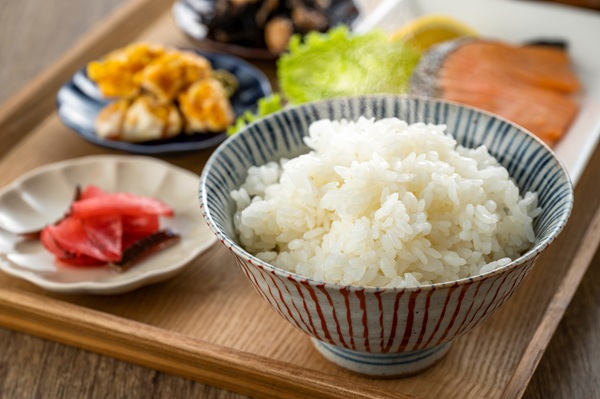
Visitors occasionally ask why Japanese rice is often served plain.
After all, many cuisines add spices, herbs, sauces, or seasonings directly into rice.
The answer may be that plain rice is incredibly flexible.
Because it is not strongly flavored, it can accompany almost anything.
A bite of salty grilled fish becomes gentler when followed by rice.
A rich sauce becomes more balanced.
A strong flavor becomes easier to enjoy repeatedly.
The rice acts almost like a bridge connecting the other dishes.
Personally, I often think rice serves as the mediator of the meal.
When flavors become intense, rice restores balance.
When dishes become rich, rice provides contrast.
When multiple flavors compete for attention, rice helps bring harmony back to the table.
🥒 The Role of Pickles and Small Side Dishes
Another element that surprises many visitors is the presence of small dishes that seem insignificant at first glance.
A few slices of pickled vegetables.
A small serving of spinach.
A tiny bowl of simmered vegetables.
A piece of tofu.
These items may appear minor, yet they contribute to the overall rhythm of the meal.
Japanese cuisine contains the concept of “hashi-yasume,” which can be loosely translated as giving your chopsticks a rest.
Small dishes help refresh the palate and create variety between bites.
They are not necessarily intended to satisfy hunger on their own.
Instead, they help maintain balance throughout the meal.
This is one reason why even a simple set meal can feel surprisingly complete.
🏠 Why Set Meals Feel Comforting
Ask many Japanese people what kind of meal feels comforting after a long day, and a surprising number may describe a simple set meal.
Not because it is luxurious.
Not because it is expensive.
Not because it is fashionable.
But because it feels familiar.
Many people grow up eating meals structured around rice, soup, and several supporting dishes.
The combination appears at home, at school lunches, in casual restaurants, and in family dining rooms throughout the country.
Over time, the format itself becomes associated with comfort.
Even when the main dish changes, the structure remains recognizable.
🌏 Looking Back on My Own Experience
Living and traveling abroad gave me a greater appreciation for how different food cultures can be.
I still remember incredible meals in Toronto where a beautifully cooked steak arrived on a large white plate and immediately became the center of attention. I remember outstanding steaks in the United States, where the entire dining experience focused on a single impressive piece of meat. In Nashville, I enjoyed a massive prime rib that was unforgettable. In Barcelona, colorful paella created a completely different but equally memorable experience.
None of these meals were lacking anything.
They simply followed a different philosophy.
The focus was often on showcasing a central dish.
Japanese set meals, by contrast, often feel less focused on a single star.
Instead, the meal becomes a collection of elements working together.
No single dish needs to dominate because each part contributes something important.
That difference does not make one approach better than the other.
It simply reflects different ways of thinking about food, balance, and the dining experience.
🇯🇵 Conclusion
Why does Japanese food often come with rice, soup, and side dishes?
The answer goes far beyond convenience or tradition.
The structure reflects a way of eating that values balance, variety, and interaction between multiple dishes. Rather than building the meal around a single centerpiece, Japanese meals often allow several elements to support one another. Rice sits quietly at the center, connecting flavors, softening stronger tastes, and providing a foundation for everything else on the table.
Perhaps that is why a simple set meal remains so popular in Japan today.
The grilled fish matters.
The soup matters.
The pickles matter.
The vegetables matter.
Yet the meal is ultimately about how all of these pieces work together.
And at the center of that experience is often a simple bowl of white rice.
🍽️ Explore More Japanese Food Culture
If you enjoyed learning about Japanese meal culture, you may also enjoy these articles exploring the deeper stories behind everyday food in Japan.
👉 What Is Kakuchi? Japan’s Hidden Standing Bar Culture Inside Liquor Stores (2026 Guide)
👉 The Day Japan Eats Unagi: A Summer Tradition Explained (2026 Guide)
👉 Why Do Japanese People Care So Much About Seasonal Foods? (2026 Guide)
👉 Why Is Japanese Food Presentation So Beautiful? (2026 Guide)
👉 Why Are Japanese Convenience Store Desserts So Popular? A Sweet Part of Everyday Life (2026 Guide)
👉 What Is an Izakaya? Japan’s Casual Drinking & Food Culture Explained (2026 Guide)
👉 How to Order Ramen in Japan (Like a Local): A Step-by-Step Guide (2026)
👉 Why Is Onigiri So Special in Japan? More Than Just a Rice Ball (2026 Guide)