
🌏 Introduction
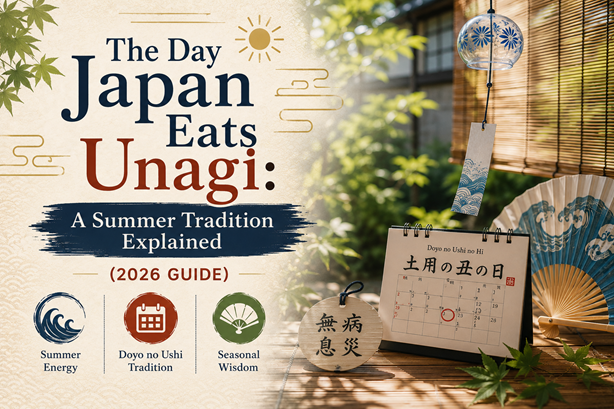
If you happen to visit Japan in the middle of summer, you may notice something unusual. Supermarkets display stacks of grilled eel. Convenience stores advertise special unagi lunch boxes. Department stores prepare beautifully packaged eel meals, while restaurants hang banners announcing seasonal menus. To a first-time visitor, it can feel as though the entire country suddenly decided to eat the same thing on the same day. The question naturally follows: why today? Why does one particular day each summer become the day of unagi?
At first glance, the answer appears simple. Japanese people eat eel to gain strength during the hottest part of the year. While there is certainly some truth to that, the real story stretches back much further and reveals something deeper than the nutritional value of a single ingredient. It tells us about the changing seasons, traditional calendars, centuries of cultural habits, and the fascinating way food and time have become connected in Japan.
Living overseas made me realize that every country develops its own relationship between seasons and food. In Canada and the United States, pumpkins immediately remind people of autumn, while roast turkey often signals the arrival of Thanksgiving. Christmas meals bring families together in winter, and summer barbecues mark the beginning of warmer days. During my travels in Spain, seafood became closely connected with local festivals, while in Thailand I learned that mangoes tasted completely different when they were truly in season rather than imported months later. Every culture creates its own calendar through food. Japan simply tells that story in a different way, and one of its most interesting chapters arrives during the hottest weeks of summer.
📜 Before Unagi Became the Star
Although many people assume that eating eel on Doyo no Ushi no Hi is an ancient custom that has existed unchanged for thousands of years, history tells a more interesting story. The practice of eating nutritious foods during the hottest period of summer is certainly very old. The Man’yōshū, Japan’s oldest surviving collection of poetry compiled more than 1,200 years ago, already contains references suggesting that eel was considered a nourishing food capable of helping people endure the exhausting summer heat. Long before modern nutritional science existed, people observed through experience that certain foods seemed to restore energy when temperatures became difficult to bear.
However, eel was not always the undisputed star of this seasonal tradition. Before the custom became firmly associated with unagi, people often believed that eating foods beginning with the Japanese syllable “u” brought good fortune and helped protect the body during the hottest season. Watermelon, known in Japanese as uri, was one example. Udon noodles, umeboshi pickled plums, and other foods whose names began with the same sound were also considered appropriate choices. The belief combined practical wisdom with wordplay, something that appears surprisingly often throughout Japanese seasonal traditions. Rather than focusing on one specific dish, people were looking for foods that symbolized health, freshness, and endurance.
This idea may seem unfamiliar to visitors today, but similar examples can be found around the world. Many cultures connect certain foods with particular dates, festivals, or celebrations, even when the original reason has gradually faded from everyday memory. Sometimes tradition begins with practical necessity. Sometimes it grows through symbolism. Sometimes both become impossible to separate. Doyo no Ushi no Hi eventually followed the same path.
🐟 How Unagi Became Japan’s Summer Symbol
The connection between eel and Doyo no Ushi no Hi became much stronger during the Edo period, around the middle of the eighteenth century. According to one of Japan’s best-known stories, an eel restaurant struggled because customers rarely wanted to eat rich, fatty fish during the hottest weeks of summer. Seeking advice, the owner consulted the famous scholar and inventor Hiraga Gennai. He reportedly suggested placing a sign outside the shop announcing that it was Doyo no Ushi no Hi, encouraging people to eat eel on that special day. Whether every detail of the story is historically accurate remains uncertain, but the tale has survived for generations because it illustrates how tradition, commerce, and seasonal customs often influence one another.
What is important is not whether a single advertisement changed history overnight. Eel had already been appreciated as a nutritious food for centuries. People were already searching for ways to maintain their strength during Japan’s long, humid summers. The seasonal calendar already carried cultural meaning. The famous story simply helped connect these existing ideas into one tradition that gradually spread throughout the country.
Even today, supermarkets begin preparing for Doyo no Ushi no Hi well in advance. Special displays appear near the entrance, advertisements fill newspapers and television commercials, and restaurants introduce limited-time menus featuring grilled eel served over rice. For visitors unfamiliar with the tradition, the sudden appearance of unagi everywhere can be surprising. Yet what they are witnessing is not merely a marketing campaign. It is the continuation of a seasonal ritual that has blended practical health advice, historical custom, and cultural memory for hundreds of years.
For many Japanese people, eating unagi on this day is less about believing it possesses magical powers than about participating in a familiar rhythm of the year. Just as cherry blossoms announce spring and the first cool evenings hint at autumn, Doyo no Ushi no Hi quietly reminds people that summer has reached its peak and that it is time to take care of both body and mind.
🌿 More Than Nutrition
Although unagi is often described as a nutritious food rich in protein and vitamins, reducing Doyo no Ushi no Hi to a discussion about nutrition misses the point. If the tradition were only about choosing the healthiest food available, it could easily have changed many times over the centuries as nutritional science advanced. Instead, the custom has endured because it represents something larger than a balanced meal. It reflects the Japanese habit of noticing the seasons and allowing those seasonal changes to shape everyday life.
Japan experiences four distinct seasons, and each brings its own ingredients, celebrations, and rhythms. Spring arrives with bamboo shoots and fresh mountain vegetables. Autumn is welcomed through chestnuts, mushrooms, and newly harvested rice. Winter encourages families to gather around steaming hot pots. Summer, meanwhile, brings intense heat and humidity unlike anything many visitors have experienced before. Long before air conditioning and modern medicine became common, people naturally searched for ways to stay healthy during this demanding season. Eating foods believed to restore strength became one practical response, while repeating the tradition year after year transformed it into part of Japan’s cultural calendar.
Perhaps this explains why many Japanese people continue eating unagi even if they are unsure of the historical details behind the custom. The meal itself has become a seasonal marker. Just as the blooming of cherry blossoms quietly announces that spring has arrived, seeing beautifully grilled eel displayed throughout supermarkets reminds people that midsummer has reached its peak. Food becomes another way of measuring time.
🌍 A Tradition Seen Through Overseas Experience
Living overseas made me appreciate this connection between food and the seasons even more. Before leaving Japan, I had assumed that every country naturally associated certain foods with certain times of the year. After spending time abroad, I realized that while the idea is universal, every culture tells that story differently.
In Canada and the United States, pumpkins immediately bring autumn to mind, while roast turkey has become inseparable from Thanksgiving. Christmas dinners transform ordinary winter evenings into family celebrations, and summer often means backyard barbecues shared with neighbors and friends. During my travels in Spain, seafood appeared at local festivals in ways deeply connected to regional traditions, while in Thailand I discovered that mangoes tasted completely different when they were enjoyed during their natural season rather than imported months later. Every place develops its own seasonal calendar, not by looking at dates on a wall, but by looking at the food people begin preparing and sharing.
That is why I never think of Doyo no Ushi no Hi as something uniquely mysterious or exclusively Japanese. Rather, it is Japan’s own version of a much broader human habit. Across the world, people use food to remember the passing of time, celebrate harvests, strengthen communities, and prepare themselves for changes in nature. Japan simply happens to express that relationship through unagi during the hottest part of summer.
🍚 More Than a Meal
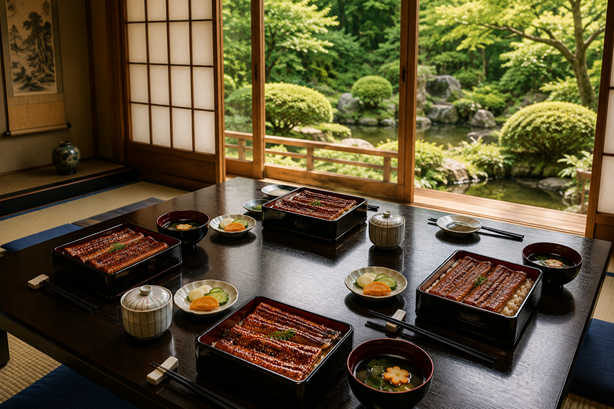
One of the most enjoyable parts of visiting Japan during this season is seeing how widely the tradition appears. Elegant restaurants prepare carefully grilled unaju served in lacquered boxes, while neighborhood supermarkets offer affordable lunch boxes for busy families. Convenience stores release limited-edition meals, department stores display beautifully packaged gift sets, and even television commercials begin reminding people that Doyo no Ushi no Hi is approaching.
Of course, not everyone eats eel. Some people simply do not enjoy its flavor, while others choose different foods for environmental, ethical, or personal reasons. That choice is becoming increasingly common, and today’s Japan includes many different ways of thinking about food. The tradition has evolved alongside society, just as every long-lived cultural custom eventually does.
Yet even for people who decide not to eat unagi, the day itself still serves as a gentle reminder to slow down and pay attention to the season. It encourages people to think about their health, acknowledge the exhausting summer heat, and remember that nature continues moving through its annual cycle regardless of how busy everyday life becomes.
Perhaps that is why the tradition has survived for so long. It is not simply about eating one particular fish. It is about recognizing where we stand within the rhythm of the year.
🇯🇵 Conclusion
For many visitors, Doyo no Ushi no Hi first appears to be one of Japan’s more unusual customs. Why would an entire country suddenly begin eating eel on the same day? The answer, however, reaches far beyond a single meal.
The story begins with ancient beliefs about maintaining health during the hottest season, continues through centuries of seasonal customs, and grows into a tradition that reflects Japan’s close relationship with the changing year. While eel eventually became the symbol of the day, it was not always the only food associated with the occasion. Earlier generations believed that foods beginning with the sound “u,” such as udon, umeboshi, or various kinds of melon, could also bring strength and good fortune during midsummer. Over time, history, folklore, practical wisdom, and even clever marketing blended together into the tradition people recognize today.
Living overseas reminded me that every culture has its own way of expressing the seasons through food. Some celebrate pumpkins in autumn, others gather for holiday feasts in winter, while still others wait patiently for the brief weeks when local fruit reaches its perfect flavor. Japan simply tells its summer story through unagi.
Perhaps that is the most interesting lesson hidden inside Doyo no Ushi no Hi. The tradition is not asking everyone to eat the same food. It quietly encourages us to notice the season we are living in, care for our health, and remember that food can be much more than nutrition alone. Sometimes a meal also becomes a calendar, a memory, and a conversation carried forward from one generation to the next.
🌏 Continue Exploring Japanese Food Culture
If you enjoyed learning about Doyo no Ushi no Hi, you may also enjoy these articles exploring the stories behind Japan’s everyday food culture and seasonal traditions.
👉What Is Kakuchi? Japan’s Hidden Standing Bar Culture Inside Liquor Stores (2026 Guide)
👉Why Do Japanese People Care So Much About Seasonal Foods? (2026 Guide)
👉Why Does Japanese Food Come With Rice, Soup, and Side Dishes? (2026 Guide)
👉Why Is Japanese Food Presentation So Beautiful? (2026 Guide)
👉Why Are Japanese Convenience Store Desserts So Popular? A Sweet Part of Everyday Life (2026 Guide)
👉What Is an Izakaya? Japan’s Casual Drinking & Food Culture Explained (2026 Guide)
👉Why Is Yakitori So Popular in Japan? The Everyday Joy of Grilled Chicken (2026 Guide)
👉Why Do Japanese People Love Sansai? The Wild Mountain Flavors of Spring (2026 Guide)