
🧠 Introduction
If you spend time in Japan, you may notice something subtle but powerful:
People rarely argue openly.
Conflicts are often avoided.
Social interactions feel smooth and controlled.
👉 This is not by accident.
👉 It is guided by a deeply rooted cultural value:
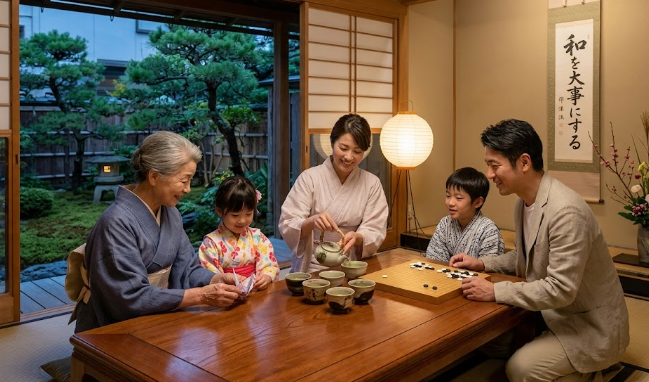
👉 “Wa” (和), meaning harmony.
🎯 Quick Answer
In Japan, harmony is valued because it:
- maintains social stability
- reduces conflict
- allows groups to function smoothly
👉 It is not about suppressing individuality—
👉 it is about balancing it.
🧩 1. What Is “Wa”?
“Wa” means:
👉 harmony, balance, and peaceful coexistence
It is one of the oldest cultural ideas in Japan, shaping:
- communication
- behavior
- decision-making
👉 In simple terms:
👉 “Don’t disrupt the group.”
🧠 2. Why Harmony Became So Important
🏝 Geography and Society
Japan is an island nation with limited space and resources.
👉 Historically, people had to:
- live closely together
- cooperate to survive
👉 Conflict was costly
👉 Harmony was efficient
👥 Group-Oriented Culture
Japanese society traditionally values:
- teamwork
- shared responsibility
- collective success
👉 Standing out too much can disrupt balance
👉 So people naturally adjust their behavior
“In a society where people are constantly aware of others, avoiding conflict is not just polite—it is efficient.”
⚖️ 3. Harmony vs Individuality
At first, “Wa” may seem restrictive.
👉 But it works differently:
- individuality is not eliminated
- it is expressed carefully
👉 This creates:
- fewer conflicts
- smoother interactions
👉 This is where it connects to modern Japan:
👉 Even in a highly developed society,
👉 people still prioritize harmony in daily life.
🔄 4. The Connection to “Ohitorisama”
This is where things get interesting.
👉 Japan values harmony…
👉 but also embraces being alone.
👉 Why?
Because:
👉 “Wa” requires energy.
- social awareness
- emotional control
- constant adjustment
👉 “Ohitorisama” (doing things alone) becomes:
👉 a way to reset and recover
Not isolation—
but balance.
“This is why Japan developed ‘ohitorisama’—a space where people can step outside harmony and reset.”
Read more : Ohitorisama in Japan: Why Doing Things Alone Feels Comfortable (Not Lonely)
🌏 5. What Makes It Unique?
In many cultures:
👉 expressing yourself openly is encouraged
In Japan:
👉 maintaining harmony is often prioritized
👉 This creates a key difference:
- Western cultures → direct expression
- Japan → indirect balance
👉 Neither is better—just different.
🧭 6. How You’ll Notice “Wa” as a Traveler
During your trip, you may see it in:
- quiet trains
- orderly lines
- polite communication
👉 These are not just rules—
👉 they are expressions of harmony.
🇯🇵 Conclusion
“Wa” is more than a concept—
👉 it is a foundation of Japanese society.
It explains:
- how people behave
- how conflicts are avoided
- how systems work smoothly
“In Japan, harmony is not just a value—it is a system.”
👉 And when combined with “Ohitorisama”:
👉 you begin to see a deeper truth:
“Understanding ‘wa’ helps you understand not just Japan—but the logic behind its everyday behavior.”
👉 Japan balances connection and independence in a unique way.
“Once you understand ‘wa,’ you will start to notice it everywhere in Japan—from trains to everyday conversations.”
More Deep Japan
・Is Japan Safe at Night? Why You Can Walk Alone Safely. Why Are Nights in Japan So “Blue” and Safe?
・Why Has Japan Lived in Harmony with Nature for 2,000 Years? The Satoyama Philosophy
・Mujin Hanbaijo: Why Japan’s Unmanned Shops Work (The Secret of Trust)