
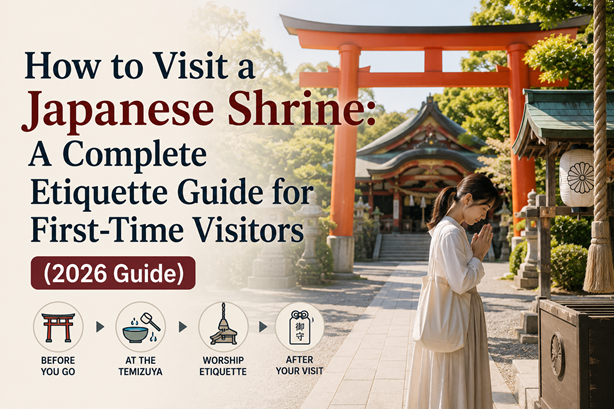
🌿 Introduction
For many first-time visitors to Japan, stepping into a Shinto shrine is one of the most memorable experiences of the trip. You leave behind the busy streets, pass beneath a towering torii gate, and suddenly the atmosphere changes. The sounds of traffic grow quieter, tall trees sway gently overhead, and a gravel path leads you toward buildings that have stood peacefully for generations. People around you naturally lower their voices, bow before entering, and move with quiet respect.
Even if you know very little about Shinto, you can immediately sense that this place is different.
It is also the moment when many visitors begin to worry.
Should I bow here?
Can I walk anywhere?
What do I do with the water at the entrance?
How do Japanese people pray?
Will I accidentally do something disrespectful?
These are perfectly normal questions. Unlike museums or famous landmarks, shrines are still active places of worship visited by millions of Japanese people throughout the year. They are places where people pray for good health, success in school, safe travel, family happiness, and countless other hopes. Visitors are warmly welcomed, but understanding a few basic customs helps you appreciate the experience much more deeply.
The good news is that shrine etiquette is not about memorizing dozens of complicated rules.
Instead, every custom follows one simple idea.
Respect.
Once you understand the meaning behind each step, from walking through the torii gate to offering a prayer at the main hall, the experience becomes far more meaningful than simply taking photographs.
This guide will walk you through the entire visit, explaining not only what to do but also why these traditions have remained an important part of Japanese culture for centuries.
⛩️ The Torii Gate: Entering a Sacred Space
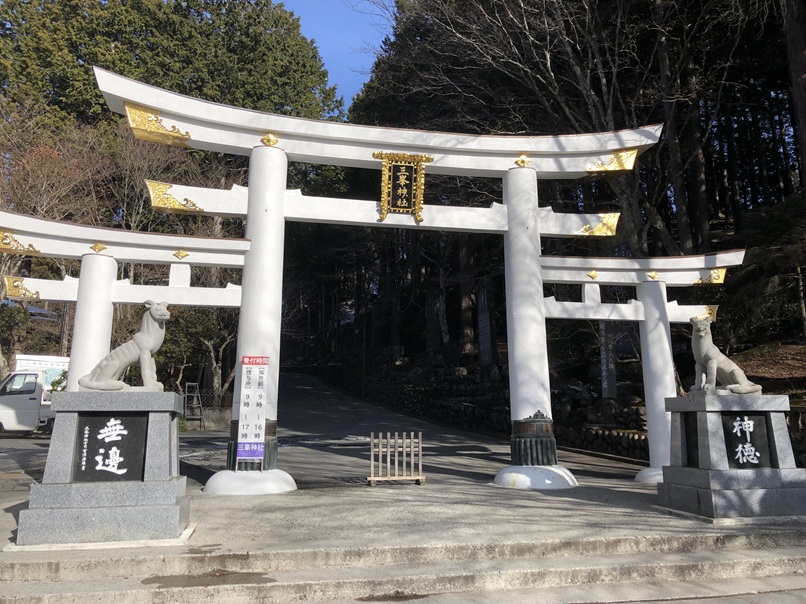
Your visit begins before you even reach the shrine itself.
Standing at the entrance is the torii gate, one of the most recognizable symbols of Japan. Whether painted bright vermilion or left in natural wood, the torii marks the boundary between the ordinary world and a sacred space dedicated to the kami, the spiritual beings honored in Shinto.
Passing beneath the gate is more than simply walking through an entrance.
It is a quiet acknowledgement that you are entering a place deserving of respect.
Many Japanese visitors pause briefly before passing through the gate and make a small bow. This gesture is not mandatory for foreign visitors, but doing the same is a thoughtful way to show appreciation for local customs.
After entering, you may notice that people rarely walk directly down the center of the path.
This is intentional.
Traditionally, the center is considered the symbolic path used by the kami. Visitors usually walk slightly to the left or right, leaving the middle open out of respect. It is a small gesture, yet it reflects an important aspect of Japanese etiquette: showing consideration even when no one expects recognition.
As you continue toward the shrine buildings, you may begin to notice other changes. The air often feels cooler beneath old cedar trees. Stone lanterns line the pathways. The pace of visitors naturally slows.
The journey toward the shrine has already begun.
💧 Purifying Yourself at the Temizuya
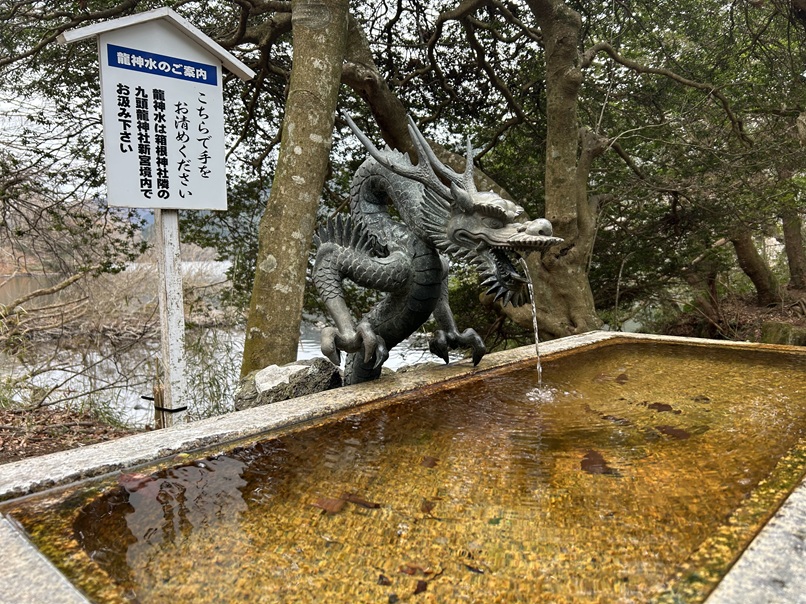
Soon after entering the shrine grounds, you will usually come across a small pavilion with flowing water. This is called the temizuya, sometimes known as the purification fountain.
Many first-time visitors assume it is simply a place to wash their hands.
In reality, it represents something deeper.
Before approaching the main shrine, visitors symbolically purify themselves by rinsing away the dust of everyday life. The ritual is not about physical cleanliness alone. It is a quiet moment to prepare both body and mind before offering a prayer.
Although it may seem unfamiliar at first, the procedure is simple once you know the order.
Begin by taking the ladle with your right hand and pouring water over your left hand.
Next, switch the ladle to your left hand and rinse your right hand.
Then hold the ladle again with your right hand, pour a small amount of water into your left palm, and use that water to gently rinse your mouth. You should never place your lips directly on the ladle itself.
After rinsing your mouth, wash your left hand once more.
Finally, hold the ladle upright so that the remaining water flows down the handle, cleaning it for the next visitor before returning it to its original place.
The entire process takes less than a minute, yet it encourages visitors to slow down before entering the heart of the shrine.
If the purification fountain is closed or unavailable, there is no need to worry. Simply continue respectfully toward the main hall.
The purpose of the ritual is mindfulness rather than perfection.
🌸 Walking Toward the Main Shrine
After leaving the purification fountain behind, the atmosphere often becomes even quieter.
The path leading toward the main shrine building is more than a walkway connecting two locations. It provides a gentle transition between everyday life and a place where people have gathered to pray for centuries.
As you approach the main hall, you may pass smaller shrines dedicated to different kami, ancient trees wrapped with sacred ropes, stone foxes guarding Inari shrines, or ema—small wooden plaques covered with handwritten wishes from visitors.
Take your time.
Unlike many tourist attractions, shrines are not places to rush through in order to check another destination off your itinerary.
Many Japanese visitors pause to appreciate the surroundings before offering their prayers. They enjoy the peaceful atmosphere, notice seasonal flowers, listen to birds singing in the trees, or simply spend a few quiet moments away from the busy pace of daily life.
Photography is generally allowed in outdoor areas, but always pay attention to signs. Some shrine buildings prohibit photography inside sacred spaces, and ceremonies should never be interrupted for pictures.
A shrine is both a cultural landmark and a living place of worship.
Remembering this helps guide every decision you make during your visit.
🙏 Offering Your Prayer
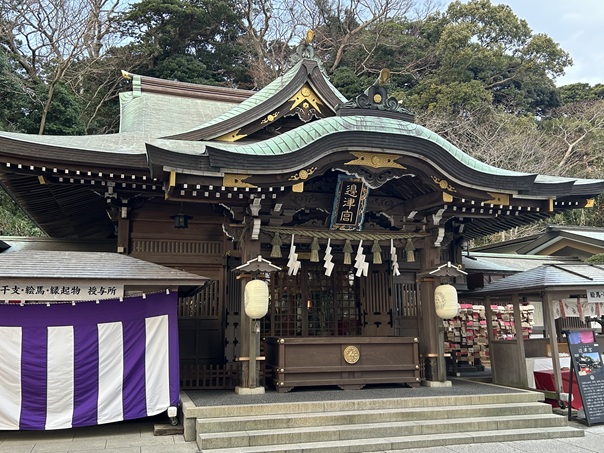
Eventually you will arrive at the main hall, where visitors offer prayers.
If there is an offering box in front of the hall, you may place a coin inside before praying. Many people have heard that a five-yen coin is considered especially lucky because its pronunciation, go-en, sounds similar to the Japanese word for “good connection” or “good fortune.”
While this makes five-yen coins popular, it is only a tradition.
There is no required amount.
One yen, ten yen, one hundred yen, or any other coin is perfectly acceptable. The sincerity of the prayer matters far more than the value of the offering.
Some shrines also have a large bell hanging above the offering box.
If one is present, gently ring it after making your offering. The sound traditionally announces your presence before the kami.
Then comes the best-known part of shrine etiquette.
Many shrines follow the tradition known as two bows, two claps, and one final bow.
First, bow deeply twice.
Next, clap your hands twice.
After clapping, bring your hands together quietly and offer your prayer in silence.
When you have finished, complete the ritual with one final respectful bow.
The prayer itself can be anything that is meaningful to you. Many Japanese people express gratitude before asking for help, while others simply pray for the health and happiness of family members, success in their studies, safe travel, or peace in everyday life.
There is no need to recite special words.
Quiet sincerity is enough.
🌿 Common Mistakes First-Time Visitors Should Avoid
One of the biggest concerns many travelers have before visiting a shrine is the fear of making a mistake. Fortunately, Japanese people generally understand that international visitors are unfamiliar with local customs. No one expects perfection, and showing genuine respect is far more important than following every step flawlessly.
Still, knowing a few common mistakes can help you feel more confident and allow you to enjoy the experience without worrying.
One of the most frequent mistakes is walking straight down the center of the approach leading from the torii gate to the main hall. As mentioned earlier, this central path is traditionally considered the symbolic route of the kami. Choosing to walk slightly to either side is a simple but meaningful way to show respect for the sacred space.
Another common misunderstanding happens at the temizuya. Some visitors place the ladle directly against their lips when rinsing their mouths. Instead, the correct method is to pour a little water into your left hand and rinse your mouth from your palm. Likewise, remember to let the remaining water flow down the handle before returning the ladle so it is clean for the next person.
Photography can also cause problems if visitors become too focused on getting the perfect picture. Shrine grounds are often beautiful, and taking photos outdoors is usually acceptable. However, many shrine buildings prohibit photography inside sacred areas, and ceremonies, prayers, or other worshippers should never be interrupted. If you are unsure, simply look for signs or follow the behavior of those around you.
Another point worth remembering is to keep your voice low. One reason shrines feel peaceful is that visitors naturally speak quietly. There is no rule requiring complete silence, but avoiding loud conversations helps preserve the calm atmosphere that people come to enjoy.
Finally, avoid thinking of shrine etiquette as a test that must be passed perfectly. Even many Japanese people occasionally perform the rituals slightly differently depending on the shrine they are visiting. The spirit behind the actions is always more important than mechanical precision. Respect, consideration, and sincerity are what matter most.
📖 Understanding Goshuin: More Than a Souvenir
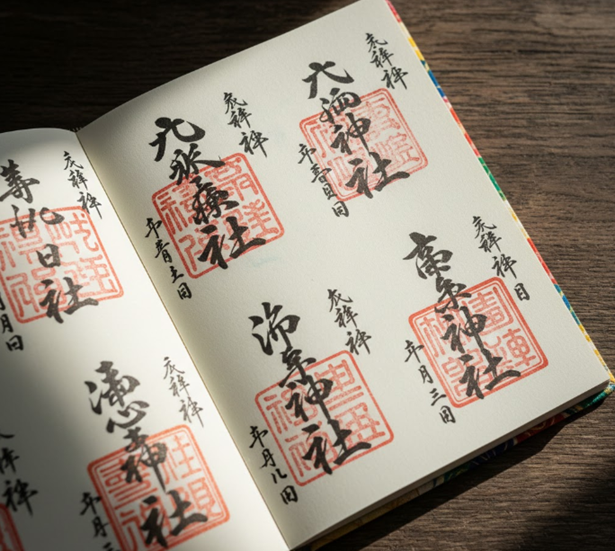
After offering their prayers, many visitors notice people carrying elegant books filled with beautiful black calligraphy and bright red stamps.
These are goshuin.
At first glance, they may look like decorative souvenirs or collectible stamps, but they have a much deeper meaning.
Originally, a goshuin served as proof that a person had visited a shrine or temple to worship. Today, they continue to represent that spiritual visit. Each one is carefully written by hand, usually including the name of the shrine, the date of your visit, and the shrine’s official seal.
Because every goshuin is handwritten, no two are exactly alike. The flowing brushwork reflects the skill of the person writing it, making each page unique.
If you would like to receive one, purchase a special stamp book called a goshuincho. At the shrine office, simply present your book and pay the small fee, which is typically around 300 to 500 yen, although the amount varies by shrine.
While waiting, be patient. During busy seasons, many visitors may be requesting goshuin, and the staff often write each one individually.
Perhaps the most important thing to remember is that a goshuin is not intended to be treated like a passport stamp or part of a sightseeing challenge.
Collecting dozens of stamps as quickly as possible misses the purpose of the tradition.
Instead, each page should remind you of a meaningful visit, a peaceful moment, and the shrine where you paused to offer your respect. Over time, a goshuincho becomes less like a travel souvenir and more like a personal record of your journey through Japan’s spiritual and cultural heritage.
🌸 Shrine Etiquette Is About Respect, Not Perfection
Many visitors leave Japan surprised by one simple realization.
The customs they were initially nervous about soon become second nature.
Bowing before entering the torii gate, purifying your hands at the temizuya, walking quietly through the grounds, and offering a respectful prayer begin to feel less like rules and more like natural expressions of appreciation.
This reflects something important about Japanese culture.
Etiquette is rarely about avoiding punishment or impressing others. Instead, it is about showing consideration—for people, for places, and for traditions that have been carefully preserved over hundreds of years.
That is why shrines remain special even for many Japanese people who do not regularly think about religion in their daily lives. They are places where people pause, reflect, and reconnect with values that often become easy to forget in modern life.
For travelers, learning these customs offers something more valuable than simply knowing the correct sequence of bows and claps.
It allows you to experience a shrine not only as a beautiful destination but as a living part of Japanese culture.
Once you understand the meaning behind each gesture, even the smallest actions—bowing before the torii, pouring water over your hands, or standing quietly before the main hall—become moments of connection rather than obligation.
⛩️ Final Thoughts
Visiting a Japanese shrine for the first time can feel unfamiliar, but it should never feel intimidating.
You do not need to memorize every detail or worry about performing each step perfectly. Japanese people understand that visitors come from different cultural backgrounds, and genuine respect will always be appreciated more than flawless technique.
If you remember only a few things, they are these: enter through the torii with respect, purify yourself at the temizuya if it is available, walk calmly toward the main hall, offer your prayer with sincerity using the traditional two bows, two claps, and one final bow, and take time to appreciate the peaceful atmosphere around you.
More than anything else, allow yourself to slow down.
A shrine is one of the few places where Japan’s fast-paced modern life seems to fade into the background. The quiet sound of wind through the trees, the scent of incense drifting through the air, the crunch of gravel beneath your feet, and the simple act of standing still for a moment can become some of the most memorable experiences of your journey.
Long after you leave Japan, you may find that what you remember most is not only the impressive architecture or beautiful torii gates, but the feeling of calm that accompanied every respectful step along the path.
🌸 Continue Discovering Japanese Culture
If you enjoyed learning how to visit a Japanese shrine, there is much more to discover about the customs, traditions, and everyday etiquette that shape life in Japan. Understanding the meaning behind these cultural practices will help you experience the country with greater confidence and appreciation.
Continue your journey with these related articles from Real Japan Navigator.
👉Tipping in Japan: Why You Don’t Need to Tip (And What to Do Instead)
👉Why Do Japanese People Bow? Meaning, Types, and When to Do It (2026 Guide)
👉Why Are Hydrangeas So Popular in Japan? The Meaning of Early Summer Flowers (2026 Guide)
👉Why Do Japanese People Walk Through Giant Grass Rings in June? (2026 Guide)
👉Why Do Japanese People Celebrate Tanabata on July 7? (2026 Guide)
👉The Sound of Summer in Japan: Why Cicadas Mean More Than Noise (2026 Guide)