
🌏 Introduction
For many first-time visitors to Japan, one of the biggest surprises of summer is not the heat. It is the sound.
Step outside an airport in Tokyo, Osaka, or Fukuoka on a hot July morning, and you may immediately hear an overwhelming chorus filling the air.
Miiiin… Miiiin…
For someone unfamiliar with Japan, the sound can seem almost unbelievable. Some visitors describe it as deafening. Others wonder if there are thousands of insects hiding in every tree. It is often one of the first sensory memories they take home after visiting Japan in summer.
For many Japanese people, however, the same sound creates a completely different reaction.
Rather than thinking, “The cicadas are loud,” many simply think, “Summer has arrived.”
That difference is fascinating because cicadas are not unique to Japan. They live throughout Asia, Europe, North America, Australia, and many other parts of the world. Yet the way people experience their songs often differs from one culture to another.
I noticed this most clearly after living in both the United States and Canada. Summer certainly had its own soundtrack there, but it sounded very different. The cicadas I heard in North America produced a steady, dry, almost mechanical chorus that continued for long periods. It blended into the background like part of the weather.
Returning to Japan each summer felt completely different.
The sound itself seemed more varied, almost musical. Morning sounded different from afternoon. Mid-August sounded different from late August. Even a walk through the same park could reveal different voices depending on the time of day.
That made me wonder whether Japanese people are not simply listening to insects.
Perhaps they are listening to the passing of summer itself.
🎐 Not Every Cicada Sounds the Same
One reason Japan’s summer soundscape feels so distinctive is that it is rarely created by a single species.
Instead, several kinds of cicadas appear throughout the season, each with its own voice, preferred habitat, and timing.
Early summer has its own atmosphere.
The hottest weeks of August often belong to different species.
As summer slowly begins to fade, yet another voice starts to dominate.
Most Japanese children grow up recognizing these changes without consciously studying them. They may not always identify every species correctly, but they instinctively notice that the soundtrack of summer changes as the weeks pass.
The Minmin-zemi produces one of Japan’s most recognizable calls, so familiar that its name imitates its own voice. The Abura-zemi creates a rougher, buzzing sound that many people associate with the hottest afternoons. In western Japan, the larger Kumazemi fills entire neighborhoods with an energetic chorus that can seem almost impossibly loud.
Then there is the Tsukutsukuboshi, whose unusual rhythm often appears toward the end of summer vacation, becoming almost a reminder that September is approaching.
My favorite, however, has always been the Higurashi.
Unlike the powerful daytime calls of other cicadas, the Higurashi usually sings during the cooler hours of early morning and especially at dusk. Its voice is softer, slower, and somehow more spacious. Instead of filling the air with intensity, it seems to leave room for silence between each phrase.
Whenever I hear a Higurashi in the evening, I do not simply think about insects.
I think about the end of another summer day.
The sunlight is becoming softer.
The air is finally cooling.
Children are beginning to head home.
Shadows grow longer.
Without realizing it, the sound becomes connected to a particular moment in time.
Of course, not every Japanese person experiences the same emotions. Some people simply find cicadas noisy, especially during heatwaves when the chorus seems endless. Others living in cities may hardly notice them anymore. The point is not that every individual shares the same feelings, but that Japanese culture has long associated different cicada songs with different moments of the season.
Over many generations, those sounds have become part of the country’s seasonal vocabulary.
🌿 A Calendar You Can Hear
When people think about the changing seasons in Japan, they often imagine famous landscapes.
Cherry blossoms announce spring.
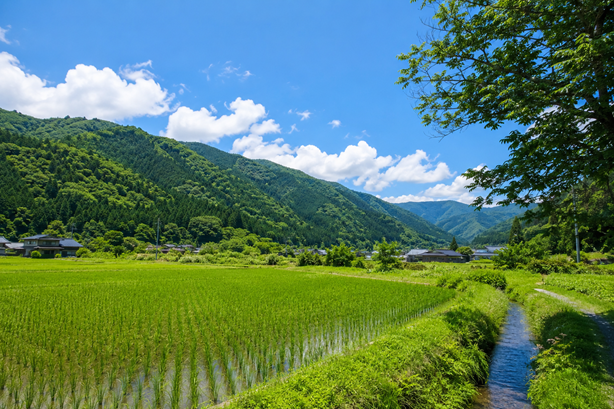
Green rice fields suggest early summer.
Red maple leaves symbolize autumn.
Snow-covered temples represent winter.
Most of these seasonal images are visual.
Summer, however, is unusual because one of its strongest symbols is something people hear rather than see.
You may never actually spot the cicada hidden among the leaves.
Yet its presence is unmistakable.
In many ways, Japan has developed not only a visual calendar but also an acoustic one.
Seasonal sounds appear throughout traditional Japanese life. The song of the bush warbler suggests early spring. Wind chimes hanging outside homes create a feeling of coolness during the hottest months. Autumn is often accompanied by the songs of crickets and bell insects. Even the sound of rain has inspired countless poems, paintings, and pieces of music.
Cicadas belong naturally within this larger tradition.
Rather than existing as isolated background noise, they help define where people are within the rhythm of the year.
This relationship between sound and season has deep roots in Japanese literature. Classical poetry rarely describes nature simply for decoration. Instead, natural sounds often signal changing emotions, the passing of time, or the awareness that nothing remains the same forever.
A single sound can quietly suggest an entire season.
Even today, Japanese television dramas frequently use cicada songs without showing the insects themselves. As soon as viewers hear them, they immediately understand the setting. It is summer. Schools are on vacation. The air is humid. The days feel long. Without a narrator explaining anything, the sound communicates the atmosphere.
In that sense, cicadas function almost like a cultural language.
Not because everyone consciously studies them, but because generations have grown up hearing the same seasonal soundtrack.
🧠 Do Japanese People Hear Insects Differently?
One idea that often appears in discussions about Japanese culture is that Japanese people may perceive insect sounds differently from people in many Western countries. This idea has attracted attention for decades, partly because of research suggesting that the human brain may process familiar sounds in different ways depending on language, culture, and lifelong experience.
Some studies have proposed that many native Japanese speakers tend to process insect sounds in areas of the brain that are also involved in language, while many non-Japanese speakers are more likely to perceive the same sounds primarily as environmental noise. This theory has been widely introduced in books and documentaries, although researchers continue to debate how broadly it applies and how much individual experience influences these differences.
Whether or not the theory fully explains people’s experiences, it raises an interesting question.
What we hear is shaped not only by our ears, but also by our memories.
A person who has grown up hearing cicadas every summer may connect the sound with childhood vacations, neighborhood festivals, family trips, or evenings spent outside after dinner. Someone hearing the same chorus for the first time may simply notice that it is loud.
Neither reaction is more correct than the other.
The sound itself has not changed.
The listener has.
This helps explain why visitors sometimes ask why Japanese people seem to appreciate something that appears noisy at first. In many cases, they are not appreciating the volume itself. They are responding to everything that the sound has come to represent over many years.
🌎 Summer Sounds Around the World
Living overseas made me realize that every country has its own soundtrack of summer.
When I lived in Canada and the United States, summer certainly had recognizable sounds. Lawnmowers became busy on weekends. Sprinklers clicked rhythmically across front yards. Children played outside long into the evening. Neighbors gathered for barbecues, and parks filled with conversation.
Cicadas were there as well, but they felt different.
The sound was often more continuous and uniform, creating a steady background hum that stretched across the hottest parts of the day. I rarely noticed the feeling that different species were taking turns or that the sound itself changed with the rhythm of the season.
Returning to Japan reminded me how diverse the country’s summer soundscape can be.
Morning and evening feel different.
A mountain trail sounds different from a city park.
Early July does not sound quite the same as late August.
Part of this comes from Japan’s geography and climate, which support a variety of cicada species across different regions. Part of it also comes from paying attention. Once people begin associating particular calls with certain moments of the season, they naturally notice those differences more clearly.
This is not something unique to Japan. Around the world, people connect familiar sounds with the places they call home. What differs is simply which sounds become part of those memories.
🌅 My Favorite Voice of Summer
If I had to choose one sound that represents a Japanese summer, it would not be the loud chorus of midday.
It would be the voice of the Higurashi at dusk.
There is something difficult to explain about hearing its call as daylight begins to fade. It does not make me think about insects. Instead, it reminds me that another summer day is quietly coming to an end.
The air feels cooler.
The sunlight softens.
Shadows stretch across the ground.
The excitement of the afternoon slowly gives way to evening.
For many people, the sound also carries memories that have nothing directly to do with cicadas themselves. It may recall walking home from school during summer vacation, spending time at grandparents’ houses in the countryside, visiting shrines during local festivals, or simply sitting outside as the sky gradually darkened.
Of course, these memories are personal rather than universal. Not everyone has the same experiences, and younger generations growing up in busy cities may form different associations. Even so, the Higurashi has remained a familiar symbol in Japanese literature, films, animation, and television because it naturally evokes the feeling of time passing.
Its song is gentle, but it often carries a quiet sense of impermanence.
🍃 Silence Does Not Always Mean the Absence of Sound
People sometimes imagine that Japanese culture values silence above all else.
There is some truth in this. Quiet spaces are often appreciated in temples, gardens, traditional tea ceremonies, and many everyday situations. At the same time, Japanese ideas of silence do not necessarily require complete absence of sound.
Instead, natural sounds often become part of what makes a place feel peaceful.
The rustling of bamboo leaves.
Rain falling on a wooden roof.
A distant stream.
The wind moving through trees.
And, in summer, the voices of cicadas.
Rather than interrupting silence, these sounds can deepen a sense of being connected to the surrounding environment.
This idea appears throughout Japanese aesthetics. Nature is rarely treated as something separate from human life. Instead, people often experience themselves as living within changing seasons rather than simply observing them from a distance.
Cicadas fit naturally into that perspective.
Their songs are temporary.
They belong to a particular season.
When they disappear, everyone knows that autumn is approaching.
In that sense, their voices become another way of measuring time.
🌏 Conclusion
Cicadas live in many parts of the world, and every culture experiences summer in its own way. Japan is not unique because it has cicadas.
What is distinctive is how closely their songs have become connected with the changing seasons, everyday memories, and cultural imagination.
For some people, cicadas are simply noisy insects.
For others, they are the unmistakable sound of childhood, long summer vacations, neighborhood evenings, or mountain walks at sunset.
Neither perspective is right or wrong.
They simply reflect different experiences.
After living in North America, I came to appreciate this difference more clearly. I realized that every country has its own sounds that quietly announce the arrival of summer. In Japan, however, cicadas have become more than part of the background.
They have become part of the season itself.
Perhaps that is why, for many people, the first cicada of the year does not merely signal that an insect has begun to sing.
It quietly says that another Japanese summer has arrived.
🔗Continue Exploring Japanese Culture
If you enjoyed learning how cicadas shape the feeling of summer in Japan, you might also enjoy exploring other articles about the relationship between nature, everyday life, and Japanese culture.
👉 Why Is Shade So Important in Japan? (2026 Guide)
👉 Why Do Japanese People Express Gratitude Before Every Meal? (2026 Guide)
👉 Space That Speaks: A Hidden Idea in Japanese Culture (2026 Guide)
👉 Why Do Japanese People Love Fireworks So Much? (2026 Guide)
👉 Why Do Japanese People Walk Through Giant Grass Rings in June? (2026 Guide)