
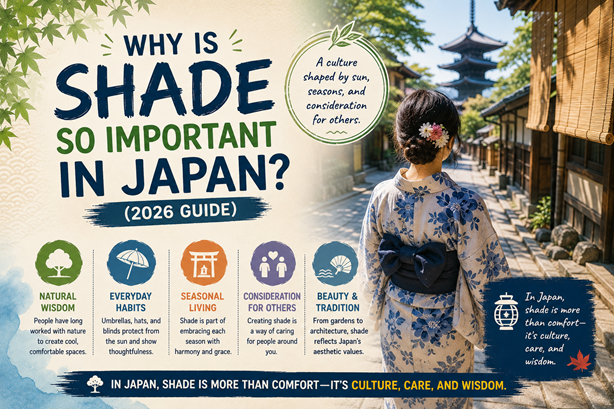
🌏 Introduction
During my first summers abroad, I noticed something that seemed surprisingly unfamiliar.
On sunny days, parks quickly filled with people looking for places in direct sunlight. Café terraces facing the sun became the most popular seats. Beaches were crowded with people hoping to spend as much time under the clear blue sky as possible. Friends often told me what a beautiful day it was because there wasn’t a cloud in sight.
Of course, I understood exactly why.
In countries with long winters, sunshine can feel precious. After months of cold weather, people naturally want to enjoy every warm afternoon they can. Sitting in the sun becomes something to celebrate rather than avoid.
Yet without thinking, I often found myself choosing a different place.
Whenever I entered a park, my eyes searched for the trees.
When walking down a street on a hot afternoon, I instinctively crossed to the shaded side.
If two benches were available, one in direct sunlight and the other beneath a large tree, I almost always chose the one under the shade.
No one had ever taught me to do this.
It simply felt natural.
Only later did I begin asking myself why.
Growing up in Japan, I had never noticed how often people quietly gathered in the shade during summer. Children played beneath trees in schoolyards. Families rested in parks where large branches provided relief from the afternoon sun. Visitors walking through temples and shrines naturally slowed down beneath long tree-lined approaches. Even busy shopping streets often used covered arcades, awnings, or traditional curtains to soften the summer heat.
It wasn’t that Japanese people disliked sunshine.
We enjoy cherry blossom season, spend days at the beach, hike mountains, and watch fireworks beneath open skies.
Yet when summer reaches its hottest weeks, something interesting happens.
Many people begin looking for shade almost without realizing it.
Perhaps the more interesting question is not why Japanese people like shade.
Perhaps the better question is this.
Why has Japan spent centuries creating it?
🌳 A Culture Shaped by Summer
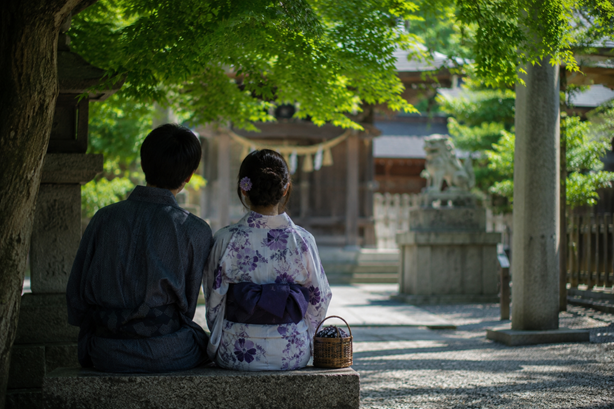
To understand Japan’s relationship with shade, we first need to understand summer itself.
For many visitors, Japan’s summer is hotter than they expect.
The temperature alone tells only part of the story.
Humidity changes everything.
On a humid afternoon, simply standing in direct sunlight can feel exhausting. Clothes quickly become damp with sweat. Walking only a short distance may leave you searching for the nearest convenience store, café, or station simply to cool down.
Anyone who has visited Japan during July or August probably remembers this feeling.
The air itself seems heavier.
The sunlight feels stronger because the surrounding humidity makes it difficult for sweat to evaporate efficiently.
For centuries, long before air conditioners existed, people had to find different ways of making summer more comfortable.
One obvious solution would have been trying to defeat nature.
Instead, Japan often chose another approach.
People learned to cooperate with it.
Rather than eliminating heat, they softened it.
Rather than fighting the sun, they created places where people could briefly escape from it.
Shade became one of the simplest and most effective forms of architecture.
⛩️ Shrines Were Never Only Places of Worship
One of my favorite places to experience this idea is at Japanese shrines.
Visitors often notice the large torii gate first.
Then the quiet atmosphere.
Then perhaps the main hall.
But what many people overlook is the journey itself.
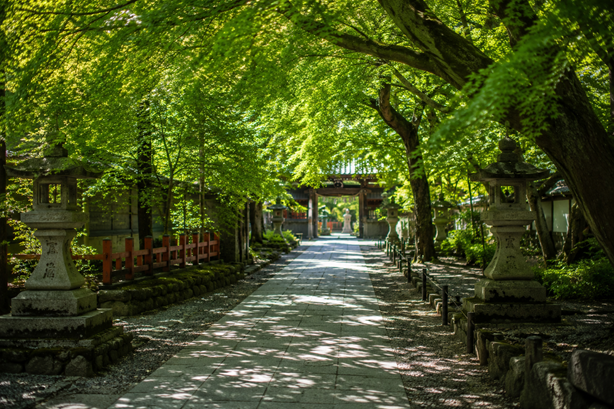
The approach to the shrine is frequently lined with tall trees that create long stretches of cool shade. Even on the hottest summer afternoons, the temperature seems to drop slightly as you leave the open street and begin walking beneath the branches.
This is not an accident.
For centuries, trees have been planted along shrine approaches for practical as well as spiritual reasons.
The shade makes the walk more comfortable.
The filtered sunlight creates a peaceful atmosphere.
The sounds of busy streets gradually fade behind birdsong and the gentle movement of leaves overhead.
Long before reaching the shrine itself, visitors have already begun slowing down.
Perhaps that is one reason shrine visits often feel calming.
The architecture is certainly important.
The history is important too.
But nature quietly prepares the experience before you even arrive.
Looking back now, I realize that many of my childhood memories of shrines are connected not only with festivals or prayers, but with walking beneath those enormous trees during the hottest days of summer.
Without realizing it, the shade itself became part of the memory.
🍃 Cooling the Body Without Defeating Nature
This same philosophy appears throughout traditional Japanese life.
Before electric cooling became common, homes were designed to encourage natural airflow. Deep roof eaves blocked harsh summer sunlight while still allowing breezes to enter. Verandas created gentle transitions between indoors and outdoors. Bamboo blinds known as sudare filtered sunlight instead of blocking it completely. Families sprinkled water across gardens and streets through the tradition of uchimizu, allowing evaporation to cool the surrounding air.
None of these ideas completely removed the summer heat.
That was never their purpose.
Instead, each small adjustment made the environment just comfortable enough.
One tree.
One breeze.
One bamboo screen.
One splash of water.
Each seemed insignificant by itself.
Together, however, they created a way of living with summer rather than constantly struggling against it.
Perhaps that quiet attitude is one reason these traditions continue to feel surprisingly modern today.
🌞 Discovering a Different Relationship with the Sun
Living overseas gave me a completely new perspective on sunshine.
In Canada, the United States, and parts of Europe, I often found people intentionally seeking sunny places. On pleasant afternoons, parks filled with families spreading blankets across open lawns. Outdoor cafés quickly occupied the tables facing the sun, and beaches became gathering places where people hoped to spend as much time as possible under clear blue skies.
Coming from Japan, I found myself doing something almost automatically.
I searched for a tree.
It wasn’t because I disliked the sunshine.
I enjoyed beautiful weather just as much as everyone else. I loved hiking under blue skies, spending time at the beach, and watching fireworks explode across warm summer nights. But whenever the afternoon became especially hot, my feet naturally carried me toward the nearest patch of shade.
At first, I thought this was simply a personal habit.
Later, I began noticing that many Japanese people did exactly the same thing.
On a crowded street, people quietly drifted toward the shaded side of the sidewalk. In public parks, benches beneath large trees filled long before those standing in direct sunlight. During summer festivals, families naturally gathered beneath the shade of temple grounds or the trees surrounding local shrines while enjoying food from festival stalls.
Only then did I realize something.
Perhaps this wasn’t simply a personal preference.
Perhaps it was something I had unconsciously learned while growing up in Japan.
Not through lessons.
Not through school.
But through everyday life.
🍃 Shade Is Something Japan Has Designed for Centuries
Once I began paying attention, I started seeing shade almost everywhere in Japan.
Traditional houses extend their roofs to create deep eaves that protect both walls and people from harsh summer sunlight. Shopping streets are often covered by long arcades that allow people to walk comfortably even during the hottest months. Temple grounds preserve enormous trees that have quietly offered shelter to visitors for generations.
Even Japanese gardens seem to guide people gently between sunlight and shade.
Rather than exposing everything equally to the sun, they create movement.
A bright open space.
A cool shaded corner.
A glimpse of light through leaves.
A narrow path beneath branches.
The experience changes continuously.
This is not only practical.
It also shapes how people experience summer itself.
Shade becomes more than the absence of sunlight.
It becomes a place to pause.
A place to breathe.
A place where conversations naturally last a little longer.
When I think back to my childhood, many summer memories happened in places that offered exactly this kind of shelter. We rested beneath trees after playing outside, waited for friends under the shade of school buildings, ate shaved ice while sitting beneath temporary festival tents, and escaped the afternoon heat under the giant trees surrounding neighborhood shrines.
Without realizing it, some of our happiest summer memories happened not despite the shade, but because of it.
🌏 Living With Nature Instead of Fighting It
Perhaps what fascinates me most is that Japan’s relationship with shade reflects a much broader way of thinking.
Rather than trying to eliminate nature’s power, people often looked for ways to cooperate with it.
Summer would always be hot.
Humidity would always exist.
The sun would continue rising every morning.
Instead of attempting to change these realities, generations developed countless small ideas that made everyday life more comfortable.
Deep roof eaves.
Rows of trees.
Bamboo blinds.
Flowing air.
Wind chimes that made even a gentle breeze feel refreshing.
Water sprinkled across the ground before sunset.
None of these inventions removed summer.
Instead, they made people feel more connected to it.
Living overseas also reminded me that every culture develops its own relationship with nature.
Countries with long, dark winters naturally celebrate sunshine whenever it arrives. Spending time outdoors beneath clear skies becomes something joyful after months of cold weather. That response makes perfect sense within those climates.
Japan simply tells a different environmental story.
Long, humid summers encouraged people to value coolness, moving air, and the quiet comfort of shade. Neither approach is more correct.
They are simply different responses to different landscapes.
And perhaps that is exactly how culture is formed.
Not by deciding what is universally best.
But by discovering what helps people live comfortably where they are.
🇯🇵 Conclusion
Why is shade so important in Japan?
The answer goes far beyond avoiding the summer sun.
For centuries, Japan has developed a culture that works with nature instead of trying to overpower it. Shrines planted long rows of trees that transformed ordinary walks into peaceful experiences. Traditional houses welcomed breezes while reducing direct sunlight. Gardens, verandas, bamboo blinds, and countless everyday spaces quietly reminded people that comfort could often be created through small adjustments rather than dramatic changes.
Growing up in Japan, I never noticed any of this.
Choosing the shaded side of the street simply felt natural.
Only after living in Canada, the United States, and traveling through many other countries did I begin asking why my instincts were different. There, I came to appreciate another equally beautiful relationship with nature—one that celebrates precious sunshine after long winters and encourages people to make the most of clear summer days.
Neither way is better.
Each reflects the climate, history, and everyday life of the people who live there.
Perhaps that is why I now see shade differently.
It is no longer simply a place where the sun cannot reach.
It is a quiet piece of Japanese culture.
A line of trees leading toward a shrine.
A deep roof protecting a wooden veranda.
A bamboo blind moving gently in the afternoon breeze.
A child choosing the cooler side of the street without ever thinking about why.
Sometimes the deepest parts of a culture are not found in famous festivals or historic buildings.
Sometimes they are found in the side of the sidewalk that people quietly choose to walk on during a hot summer afternoon.
🌏 Continue Exploring the Hidden Philosophy of Japan
If you enjoyed discovering why shade has played such an important role in Japanese life, you may also enjoy these articles exploring the quiet philosophies hidden within everyday Japan.
👉 Why Do Japanese People Bathe at Night Instead of the Morning? (2026 Guide)
👉 Why Do Japanese People Queue Even When Nobody Is Watching? (2026 Guide)
👉 Why Do Japanese People Sleep on Trains So Easily? The Hidden Trust Behind Everyday Commuting
👉 Why Is Being On Time So Important in Japan? Understanding Japanese Punctuality (2026 Guide)
👉 Why Does Japan Feel So Calm Even in Big Cities? The Hidden Rhythm Behind Urban Life (2026 Guide)