
🌏 Introduction
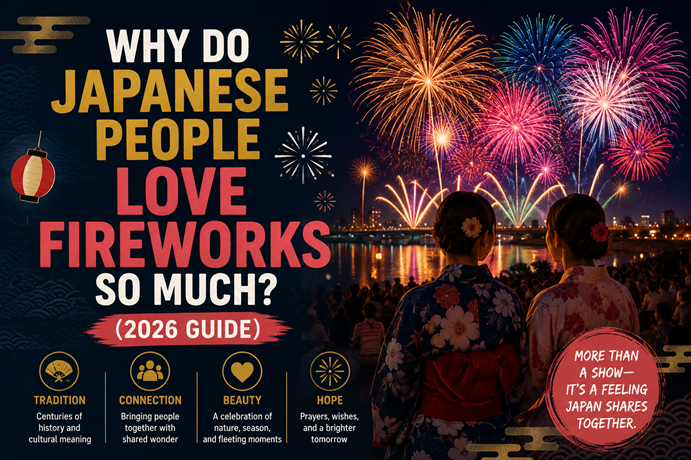
If someone asked me to describe a Japanese summer using only one image, I would probably choose fireworks.
Growing up in Japan, fireworks were never simply something we watched. They were part of the rhythm of the season. Every summer seemed to include at least one fireworks festival, whether it was a huge event that attracted hundreds of thousands of people or a small local celebration along a nearby river. Long before the first shell exploded into the night sky, the atmosphere itself already felt special. Families packed picnic sheets, children carried small fans to stay cool, couples dressed in yukata, and food stalls filled the streets with the smell of grilled food and sweet desserts. Even before the fireworks began, it felt as though everyone had gathered to celebrate the arrival of summer itself.
As a child, I never stopped to wonder why fireworks were so important. Summer simply meant fireworks. It felt as natural as cicadas singing in the trees or eating watermelon on a hot afternoon. Only after living overseas did I realize that although many countries also have spectacular fireworks displays, they often carry different meanings. In the United States, I enjoyed unforgettable Fourth of July celebrations. Canada Day fireworks created the same excitement every July, and many European cities also host impressive displays during festivals and national celebrations. Every country has its own traditions, and none of them are more beautiful than the others simply because they are different.
That is why this article is not about claiming that Japanese fireworks are somehow superior.
Instead, it asks a different question.
Why have fireworks become so deeply connected with Japanese summers that many people cannot imagine one without the other?
The answer lies not only in the fireworks themselves but also in memory, community, seasonality, and a uniquely Japanese appreciation for moments that disappear almost as quickly as they arrive.
🎆 More Than Entertainment, Fireworks Mark the Arrival of Summer
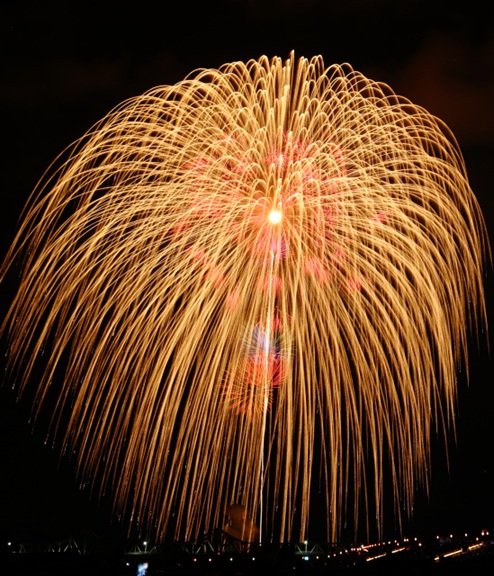
One reason fireworks occupy such an important place in Japanese culture is that they announce the arrival of summer in a way that almost everyone recognizes. The first major fireworks festivals usually begin as the weather becomes hotter, schools close for summer vacation, and communities begin preparing for seasonal festivals. For many Japanese families, attending a fireworks festival is not an unusual event but something that has happened repeatedly since childhood. Because the experience is shared across generations, fireworks become connected not only to one particular evening but to memories built over an entire lifetime.
I still remember looking forward to fireworks festivals every summer. Sometimes my family traveled to large events that filled the riverbanks with thousands of people. Other years we stayed close to home and watched smaller displays organized by local communities. Looking back now, I realize that I remember surprisingly little about the individual fireworks themselves. What I remember are the feelings surrounding them. Walking toward the venue while the sky slowly turned orange, hearing the distant sound checks before the event began, buying snacks from food stalls, finding a place to sit on the grass, and waiting together as darkness gradually covered the city. The fireworks became the highlight of an evening that was already special long before the first explosion lit up the sky.
Perhaps that is why fireworks remain such a powerful symbol of Japanese summer.
They are never experienced in isolation.
They arrive together with school holidays, warm evenings, local festivals, family gatherings, and memories that continue growing year after year.
👘 The Festival Is Just as Important as the Fireworks
Visitors often imagine that Japanese people attend fireworks festivals simply to watch fireworks.
In reality, the experience is much broader than that.
The festival itself is often just as memorable.
Many people choose to wear yukata, a light summer kimono traditionally associated with festivals and warm evenings. Streets become filled with colorful patterns, wooden sandals, paper fans, and laughter. For many young people, wearing a yukata is something they do only once or twice each year, making the occasion feel even more special. Couples often spend weeks planning which festival to attend, while families prepare well in advance for an evening that lasts only a few hours.
Food also plays an important role in these memories. Long rows of stalls sell takoyaki, yakisoba, okonomiyaki, grilled squid, candied apples, kakigōri, cotton candy, baby castella, chocolate-covered bananas, and countless other festival foods. Even people who rarely eat these snacks during the rest of the year suddenly find themselves buying them because somehow they simply belong at a summer festival.
Looking back, I sometimes wonder whether people are gathering for the fireworks or whether the fireworks simply provide a reason for everyone to gather.
Perhaps the answer is both.
The explosions in the sky create unforgettable moments, but the conversations, the food, the walk home, and the people sharing those moments often become the memories that stay with us much longer than the fireworks themselves.
🌸 Beauty That Exists Only for a Moment
One aspect of Japanese fireworks has always fascinated me.
Unlike many fireworks designed to emphasize loud effects or dramatic movement, traditional Japanese fireworks are often created to bloom into nearly perfect spheres. Firework artisans spend years refining techniques so that each explosion expands evenly in every direction, creating a flower-like shape that appears beautiful from almost any viewing angle. It is an extraordinary combination of science, craftsmanship, and artistry, yet what moves me most is not the technical achievement.
It is what happens immediately afterward.
A firework reaches its most beautiful moment for only a few seconds.
Then it disappears completely.
As a child, I simply thought that was exciting.
As I grew older, however, I began feeling something else.
There is a quiet sadness hidden inside every beautiful firework.
The brighter it shines, the sooner it fades.
Perhaps that is why fireworks have always reminded me of summer itself. Summer arrives full of energy, fills our days with festivals, vacations, and unforgettable memories, and before we realize it, the season has quietly disappeared once again.
🌊 Fireworks and the Japanese Appreciation of Fleeting Beauty
As I grew older, I began to notice that fireworks reminded me of many other things that Japanese people quietly treasure. Cherry blossoms bloom brilliantly for only a short time before falling to the ground. Autumn leaves reach their most beautiful colors for only a few weeks before winter arrives. Fireflies appear on summer evenings for a brief season and then disappear. Even snow transforms familiar landscapes for only a short while before melting away.
Fireworks belong to that same family of experiences.
Their beauty comes partly from the fact that they cannot last.
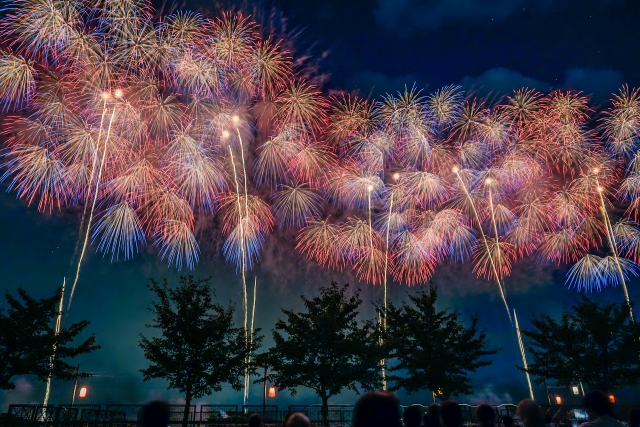
If fireworks continued for hours without stopping, they would probably lose much of their emotional impact. Instead, every shell rises into the night sky, reaches its brightest moment, and quietly fades into darkness. Before the audience has time to fully absorb what they have just seen, another firework replaces it with a completely different shape and color.
Perhaps that is why fireworks often feel emotional rather than merely exciting.
For me, they have always represented the passing of time. Every summer brings another fireworks festival, yet every festival is slightly different from the last. The people standing beside you may have changed. Children who once sat on their parents’ shoulders now attend with friends or partners of their own. Grandparents who once walked slowly to the riverbank may no longer be there. The fireworks themselves may look similar, but the people watching them continue to change.
In that sense, fireworks quietly remind us that beautiful moments are precious precisely because they cannot be repeated forever.
🌍 Fireworks Are Universal, but Their Meaning Can Be Different
Living overseas helped me appreciate this even more.
I have watched spectacular fireworks in North America, particularly during Independence Day celebrations in the United States and Canada Day festivities. They were energetic, joyful, and unforgettable. Large crowds gathered together, music filled the air, and the fireworks celebrated important national occasions. I have also seen fireworks during festivals in Europe, where they became part of local traditions that had developed over centuries.
Those experiences taught me something important.
People everywhere enjoy looking up at a bright night sky.
The excitement of fireworks is universal.
Children smile.
Adults stop talking for a moment.
Everyone shares the same sense of anticipation as another explosion lights up the darkness.
What differs from country to country is not whether fireworks are beautiful but what they represent.
In Japan, fireworks are rarely separated from the feeling of summer itself. They are woven together with school vacations, neighborhood festivals, warm evenings, cicadas singing in the trees, families gathering outdoors, and communities slowing down long enough to enjoy a single evening together.
That seasonal connection gives fireworks a unique emotional weight.
Even many Japanese adults who no longer attend festivals every year still hear the distant sound of fireworks and immediately think, “Summer has arrived.”
🚶 A Few Tips for Your First Japanese Fireworks Festival
If you plan to attend a fireworks festival during your trip to Japan, a little preparation will make the experience much more enjoyable.
One thing many first-time visitors underestimate is the size of the crowds. Some of Japan’s largest fireworks festivals attract hundreds of thousands of spectators, and transportation before and especially after the event can become extremely crowded. Rather than expecting to leave immediately after the final firework, it is often better to relax, enjoy the atmosphere, and allow the crowds to begin dispersing naturally.
Another practical point is the location of restrooms. Temporary toilets are usually installed at large festivals, but long queues are common as the evening progresses. Whenever possible, using the restroom before settling into your viewing area can save considerable time and stress later.
Because summer evenings in Japan remain hot and humid even after sunset, carrying drinking water is also a good idea. Many experienced visitors bring a small picnic sheet so they can comfortably sit while waiting for the display to begin, since arriving early is often the best way to secure a good viewing spot.
These small preparations may seem simple, but they allow you to focus on what truly matters: enjoying the evening rather than worrying about logistics.
🇯🇵 Conclusion
Why do Japanese people love fireworks so much?
The answer is probably much bigger than fireworks themselves.
For many people, fireworks represent childhood memories, family traditions, neighborhood festivals, and the arrival of another summer. They remind us of evenings spent with friends, walking through rows of food stalls, wearing yukata, listening to laughter around us, and looking up at a sky that suddenly blossoms with light before returning to darkness only seconds later.
My experiences living overseas also taught me that fireworks are not unique to Japan. Many countries celebrate with remarkable displays, each reflecting its own history, culture, and traditions. That is one of the wonderful things about travel. The same object can carry completely different meanings depending on where you are.
What makes Japanese fireworks special is not that they are the only beautiful fireworks in the world.
It is that they have become deeply woven into the emotional landscape of summer.
Perhaps that is why, even today, whenever I hear the distant sound of fireworks somewhere beyond the buildings, I instinctively pause for a moment.
For just a few seconds, the sky blooms.
Then everything grows quiet again.
And somehow, that brief moment feels enough to remind me that another Japanese summer has arrived.
🌏 Continue Exploring the Seasons and Culture of Japan
If you enjoyed learning why fireworks are such an important part of Japanese summer, you may also enjoy these articles exploring the traditions, memories, and seasonal customs that shape everyday life in Japan beyond the guidebooks.
👉 Why Is the Summer Solstice So Quiet in Japan? (2026 Guide)
👉 Why Is Summer Vacation in Japan So Different? School Life, Homework & Cultural Surprises
👉 What to Wear in Japan During Summer (2026 Guide)
👉 How to Survive Summer in Japan: Heat, Humidity, and Practical Tips (2026 Guide)
👉 Why Do Japanese People Bathe at Night Instead of the Morning? (2026 Guide)