
🌏 Introduction
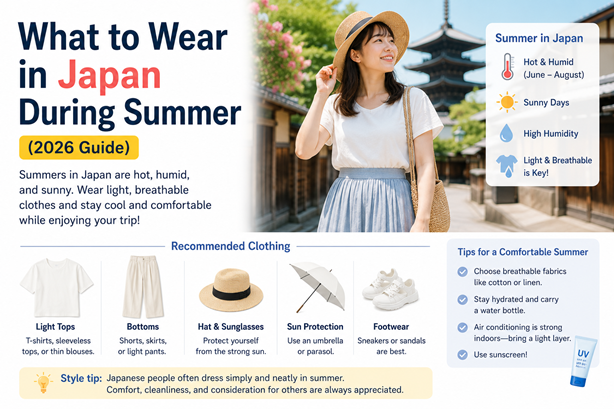
Many travelers look at the weather forecast before visiting Japan in summer and think they understand what to expect. They see temperatures around 30°C (86°F), perhaps 32°C (90°F), and assume it will feel similar to summer in their own country. I used to think the same way.
I grew up in Japan, so I thought I understood Japanese summers very well. However, after living overseas for several years, I returned to Japan during the summer and immediately remembered something I had forgotten.
It was not just hot.
It was humid.
That may sound obvious, but living abroad taught me that temperature alone does not tell the whole story. I have experienced places where the thermometer showed higher temperatures than Japan, yet the weather felt more comfortable. In Japan, the combination of heat and humidity creates a completely different experience.
The moment you leave an air-conditioned building, you feel it. The air feels heavier. Walking for ten minutes can leave you sweating. Standing on a train platform can feel warmer than expected. Even people who normally handle hot weather well are often surprised by how intense a Japanese summer can feel.
Because of that, I pay close attention to what I wear during summer in Japan. The right clothing can make a huge difference. The goal is not to look fashionable. The goal is to stay comfortable enough to enjoy your trip.
If you understand how Japanese summers actually feel, choosing the right clothes becomes much easier.
☀️ Japan’s Summer Is About Humidity as Much as Heat
One of the biggest mistakes visitors make is focusing only on temperature.
In many countries, a hot day means strong sunshine and high temperatures, but once you find shade, the weather becomes much more comfortable. In much of Japan, especially in cities such as Tokyo, Osaka, Kyoto, Nagoya, and Fukuoka, humidity changes that equation.
Your body relies on sweat to cool itself. When humidity is high, sweat evaporates more slowly. As a result, people often feel hotter than the temperature suggests.
This is why a day that looks manageable on a weather app can feel surprisingly exhausting in reality.
Many travelers arrive with clothing that worked perfectly in another country only to discover that it feels uncomfortable in Japan. Heavy fabrics, tight clothing, and materials that trap moisture quickly become frustrating.
When planning summer clothing for Japan, think less about temperature and more about moisture.
👕 Fabric Choice Matters More Than You Think
If there is one lesson I learned after years of traveling, it is that fabric matters.
Many people automatically reach for cotton because it is comfortable and breathable. Cotton certainly has advantages, and I still wear it regularly. However, during the hottest and most humid periods of the Japanese summer, I often prefer linen or rayon.
The reason is simple.
When cotton absorbs sweat, it can become heavy and cling to the skin. On particularly humid days, that feeling can become uncomfortable.
Linen and rayon often feel lighter. They allow air to circulate more easily and are less likely to stick to your body after you begin sweating. As a result, they often feel cooler during long walks around cities such as Tokyo, Kyoto, or Osaka.
Many visitors spend entire days outdoors exploring temples, shopping districts, parks, and train stations. Clothing that feels comfortable at breakfast may feel very different after several hours of walking.
Choosing the right fabric can have a surprisingly large impact on your day.
🚶 You Will Probably Walk More Than You Expect
Another factor many visitors underestimate is how much walking they will do.
Japan’s public transportation system is excellent, but using trains does not eliminate walking. In fact, it often increases it.
You walk to the station. You walk through the station. You transfer between lines. You walk to your destination. You explore neighborhoods on foot. Before the day is over, it is not unusual to have walked tens of thousands of steps.
This is one reason why lightweight clothing becomes so important.
The goal is not simply surviving the weather. The goal is remaining comfortable throughout a full day of movement.
Loose-fitting clothing is often more practical than tight-fitting clothing. Lightweight shirts tend to be more comfortable than heavy fabrics. Breathable materials become increasingly important as the day progresses.
Comfort matters more than fashion when temperatures rise and humidity remains high.
🎒 Bringing a Change of Clothes Can Be a Smart Idea
One habit I developed over time is carrying an extra shirt when I know I will be outside all day.
This may sound excessive to travelers from cooler climates, but it can make a huge difference in Japan.
Imagine spending the morning exploring Asakusa, walking through Ueno, and visiting several temples or museums. By lunchtime, your shirt may already feel damp from sweat.
Changing into a fresh shirt can feel surprisingly refreshing.
Many Japanese people carry small towels, handkerchiefs, or other items specifically because they expect to sweat during summer. Some office workers even keep spare shirts available.
You do not necessarily need to pack multiple outfits every day, but having the option can make long sightseeing days much more comfortable.
🧢 Sun Protection Is More Important Than Many Visitors Realize
Summer in Japan is not only humid. The sunlight can also be intense.
Visitors are often surprised by the number of people using umbrellas on sunny days.
These are not rain umbrellas.
They are sun umbrellas.
Protecting yourself from direct sunlight can significantly improve comfort during long days outdoors. Hats are also common, particularly among travelers who plan to spend extended periods sightseeing.
Sunscreen should be considered essential.
Many visitors focus on avoiding rain during their trip but underestimate the impact of prolonged sun exposure. A severe sunburn can quickly turn an enjoyable vacation into an uncomfortable experience.
🧥 Don’t Be Surprised by Strong Air Conditioning
One of the interesting contradictions of Japanese summer is that while outdoor temperatures can feel overwhelming, indoor environments are often surprisingly cool.
Trains, department stores, hotels, shopping malls, and office buildings frequently use strong air conditioning.
As a result, you may spend part of the day feeling too hot and another part feeling slightly cold.
This is especially noticeable during long train rides or when spending significant time indoors.
For that reason, some travelers prefer carrying a lightweight layer that can be worn when necessary and easily removed when returning outside.
The contrast between indoor and outdoor temperatures is something many first-time visitors do not anticipate.
👟 Comfortable Shoes Matter Just as Much as Clothing
Whenever people ask me what to wear in Japan during summer, they usually focus on shirts, shorts, and fabrics.
Shoes deserve equal attention.
Japan is a country that rewards walking. Some of the most enjoyable experiences happen while exploring neighborhoods, wandering through shopping streets, or discovering places that are not listed in guidebooks.
Poor footwear becomes noticeable very quickly.
Comfortable walking shoes are often one of the best travel investments you can make.
The perfect shirt will not help much if your feet hurt halfway through the day.
🌏 My Personal Approach to Summer in Japan
After years of living both in Japan and overseas, my approach to summer has become fairly simple.
I dress for humidity.
That may sound obvious, but it changes many decisions.
I choose lighter fabrics whenever possible. I pay attention to breathability. I often prefer linen or rayon during the hottest months. I carry water regularly. If I expect a long day outside, I may bring an extra shirt.
Most importantly, I respect the weather.
When I was younger, I sometimes assumed I could simply ignore the heat. Experience taught me otherwise.
Japan’s summer is manageable and enjoyable, but it becomes much easier when you prepare properly.
🇯🇵 Conclusion
What should you wear in Japan during summer?
The answer is less about fashion and more about comfort.
Japan’s summer is defined not only by temperature but also by humidity. Lightweight fabrics, breathable clothing, comfortable shoes, and practical preparation can dramatically improve your experience. Choosing the right materials, staying hydrated, and planning for long days of walking will help you enjoy your trip far more than simply checking the weather forecast.
Even after growing up in Japan, I still remember the shock of returning from overseas and experiencing a Japanese summer again. That experience taught me that heat is not just about numbers on a screen. Humidity plays an equally important role.
Once you understand that, dressing for summer in Japan becomes much easier.
And when you are comfortable, you can focus on what really matters: enjoying the incredible places, food, culture, and experiences that make Japan such a memorable destination.
🌏 More Practical Japan Travel Guides
Planning a summer trip to Japan? These guides will help you stay comfortable, connected, and prepared throughout your journey.
👉 How to Survive Summer in Japan: Heat, Humidity, and Practical Tips (2026 Guide)
👉 Best eSIM for Japan Travel: Stay Connected Without Stress
👉 eSIM vs Pocket WiFi in Japan: Pros, Cons & Best Choice for Travelers
👉 What Should You Do With Your Luggage in Japan? Storage, Delivery, and Travel Tips (2026 Guide)
👉 Is Shibuya Sky Worth It? The Best Place to Understand Modern Tokyo (2026 Guide)