
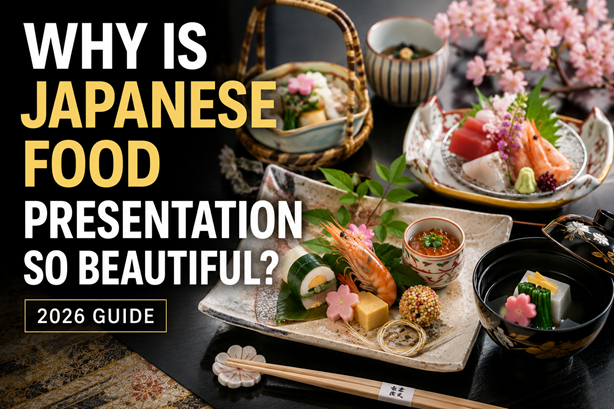
🌏 Introduction
One of the first things many visitors notice when they eat in Japan is not the taste of the food. It is the appearance.
Before the first bite, before the aroma reaches the table, people often pause for a moment and simply look at the meal. A bowl of rice, a piece of grilled fish, a small dish of vegetables, a bowl of soup, and a few colorful side dishes are carefully arranged in front of them. Even an inexpensive meal can feel surprisingly elegant.
At first glance, some people assume this means Japanese food is more beautiful than food from other countries. I have never thought that.
Some of the most visually impressive meals I have ever eaten were outside Japan.
I still remember ordering a massive prime rib in Nashville and watching it arrive at the table on a large white plate. The size alone was impressive. It was simple, bold, and impossible to ignore. In Toronto, I enjoyed beautifully prepared steaks where the quality of the meat was the star of the show. There was no need for elaborate decoration. The presentation felt confident and direct. In Barcelona, I remember colorful paella arriving at the center of the table, filled with vibrant seafood, vegetables, and saffron rice. The colors alone captured the energy of the city.
Those meals were beautiful.
They were memorable.
And they expressed beauty in ways that were completely different from one another.
That is why I do not think the interesting question is whether Japanese food is more beautiful than other cuisines. The more interesting question is why Japanese food often feels beautiful in a different way. The answer says a great deal about how Japanese people think about food, seasons, and everyday life.
🍱 Beauty Through Balance Rather Than Size
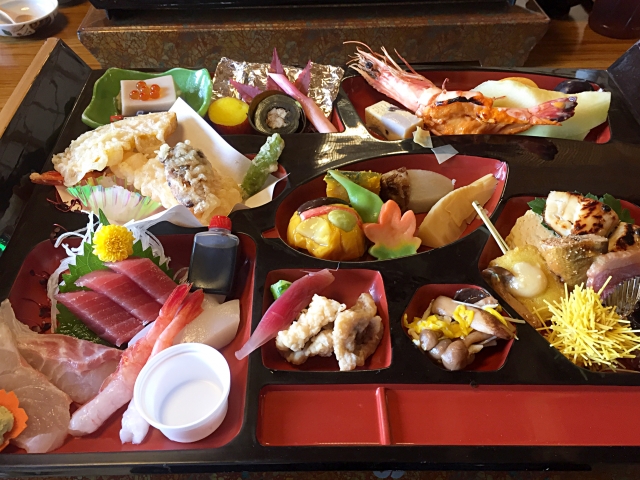
One of the biggest differences I notice when comparing Japanese meals with many meals I have eaten overseas is the role of the main dish.
In many Western countries, a meal often revolves around a centerpiece. A large steak, a roast, a burger, or a pasta dish occupies most of the plate and becomes the focus of attention. The visual impact comes from scale, quality, and presence. There is something wonderful about that approach. A perfectly cooked steak placed in the center of a white plate can be incredibly beautiful because there is nowhere for your attention to go except the food itself.
Japanese meals often take a different approach.
Instead of asking one dish to carry the entire meal, Japanese dining frequently divides the experience into several smaller parts. Rice sits in one bowl. Soup sits in another. Vegetables may appear in a small dish. Pickles occupy their own corner of the table. Fish or meat is served separately.
The result is not a single visual statement.
It is a collection of smaller elements working together.
Rather than creating beauty through size, Japanese meals often create beauty through balance.
This difference is subtle, but once you notice it, you begin seeing it everywhere.
🌸 The Influence of the Seasons
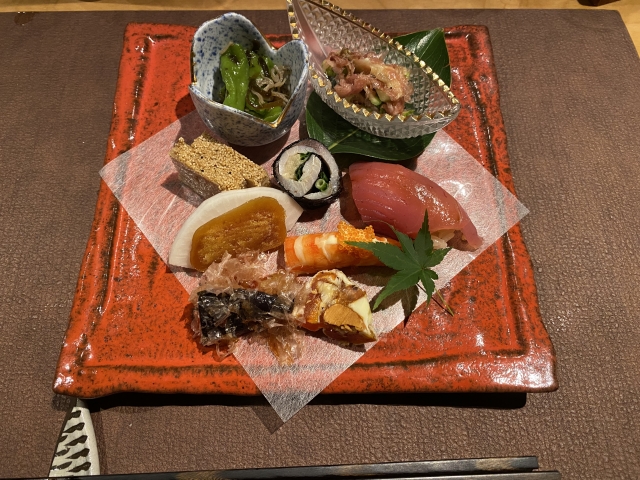
Another reason Japanese food often appears visually distinctive is the influence of the seasons.
Japan is hardly the only country that values seasonal ingredients. Every country has seasonal foods and traditions. However, Japanese cuisine often makes the season itself visible.
A meal served in spring may include colors that remind people of cherry blossoms. Summer dishes often become lighter and brighter. Autumn meals may feature ingredients and colors associated with changing leaves. Winter dishes tend to emphasize warmth and comfort.
The interesting part is that the season does not appear only in the ingredients.
It appears in the presentation.
It appears in the colors.
It appears in the tableware.
It appears in the atmosphere created by the meal.
Someone visiting Japan for the first time may wonder why a restaurant changes plates, bowls, or decorations throughout the year. The reason is that many people view the dining experience as an extension of the season outside.
Food is not completely separate from nature.
It is one way of experiencing it.
🎨 Color Is Part of the Meal
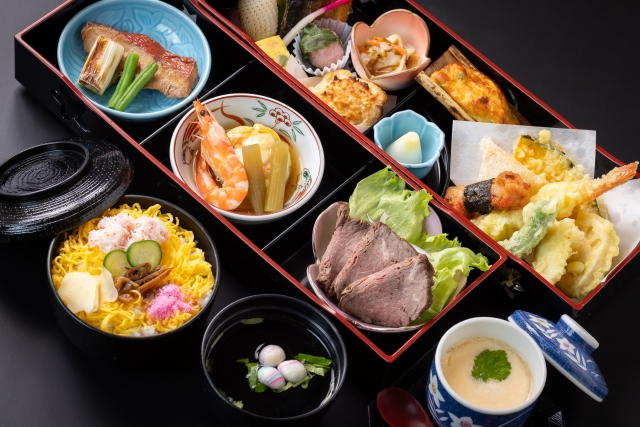
When I think about Japanese food presentation, I often think about color.
Many meals are intentionally designed to include a variety of colors. White rice, green vegetables, orange carrots, yellow egg, pink fish, dark seaweed, and bright pickles may all appear in the same meal.
This is not always done consciously, but over time it became part of how people evaluate whether a meal feels complete.
A colorful meal often feels balanced.
A colorful meal often feels healthy.
A colorful meal often feels inviting.
This is one reason why bento boxes attract so much attention from visitors. The colors are often the first thing people notice. Even a simple homemade lunch can look surprisingly attractive when several ingredients are arranged carefully together.
The visual appeal comes not from complexity but from contrast.
Different colors create energy.
Different textures create interest.
The meal feels alive before it is even tasted.
🍽️ The Importance of Small Details
Living overseas taught me something interesting.
Many cultures admire boldness.
Japanese food often admires detail.
This difference appears in many places beyond food. It appears in gardens, architecture, design, and even seasonal traditions.
Food presentation reflects that same tendency.
A small garnish may receive careful attention.
A leaf may be added for seasonal effect.
A bowl may be selected because its color complements the ingredients.
A piece of food may be rotated slightly because it looks more natural from a particular angle.
None of these details dramatically change the taste.
Yet together they influence how the meal feels.
Visitors sometimes assume this level of attention only exists in expensive restaurants. In reality, it appears throughout Japanese society. School lunches, convenience store meals, train station bento boxes, and ordinary home cooking often contain traces of the same mindset.
The goal is not perfection.
The goal is thoughtfulness.
🥢 Food Is Meant to Be Seen Before It Is Eaten
One thing I only fully appreciated after spending time overseas is that Japanese meals often include a brief moment of observation.
People naturally look at the food.
They notice the arrangement.
They notice the colors.
They notice the dishes.
Then they begin eating.
This process happens so quickly that many people never think about it. Yet it contributes to the overall experience.
Food satisfies hunger, but it also creates anticipation.
Presentation is part of that anticipation.
The appearance of a meal tells a story before the first bite ever arrives.
🌏 Different Cultures Express Beauty Differently
Traveling taught me that every culture has its own version of beauty.
The prime rib I ate in Nashville was beautiful because of its confidence and scale.
The steak I enjoyed in Toronto was beautiful because of its simplicity and quality.
The paella I shared in Barcelona was beautiful because of its color, abundance, and energy.
Japanese food often feels beautiful because of its balance, seasonal awareness, and attention to small details.
None of these approaches are better than the others.
They simply emphasize different values.
The mistake people sometimes make is treating food presentation like a competition.
It is not.
The purpose is not to determine which country creates the most beautiful meals.
The purpose is to understand how different cultures define beauty in different ways.
Once you stop looking for a winner, the differences become far more interesting.
🇯🇵 Conclusion
Why is Japanese food presentation so beautiful?
The answer is not that Japanese food is inherently more beautiful than food elsewhere. Around the world, people create extraordinary meals that reflect their own history, environment, and cultural values. What makes Japanese food presentation distinctive is the particular way it combines balance, seasonality, color, detail, and harmony.
Rather than relying on a single centerpiece, Japanese meals often create beauty through relationships between multiple dishes. Rather than separating food from the natural world, they frequently bring seasonal changes onto the table. Rather than focusing entirely on quantity or scale, they often pay attention to smaller details that shape the overall experience.
Perhaps that is why so many visitors find Japanese food memorable even before tasting it.
The meal is not simply something to eat.
It is something to observe, appreciate, and experience.
And in Japan, those experiences are often designed to begin long before the first bite.
🌏 Explore More Japanese Food Culture
If you enjoyed learning about the aesthetics behind Japanese cuisine, you may also enjoy these articles exploring the deeper stories behind Japan’s food culture and everyday dining habits.
👉What Is Kakuchi? Japan’s Hidden Standing Bar Culture Inside Liquor Stores (2026 Guide)
👉The Day Japan Eats Unagi: A Summer Tradition Explained (2026 Guide)
👉Why Do Japanese People Care So Much About Seasonal Foods? (2026 Guide)
👉Why Does Japanese Food Come With Rice, Soup, and Side Dishes? (2026 Guide)
👉Why Are Japanese Convenience Store Desserts So Popular? A Sweet Part of Everyday Life (2026 Guide)
👉What Is an Izakaya? Japan’s Casual Drinking & Food Culture Explained (2026 Guide)
👉Tempura in Japan: History, Origins, and Why It Tastes So Light
👉Ramen in Japan: Types, Toppings, and How to Eat It Like a Local (2026 Guide)