
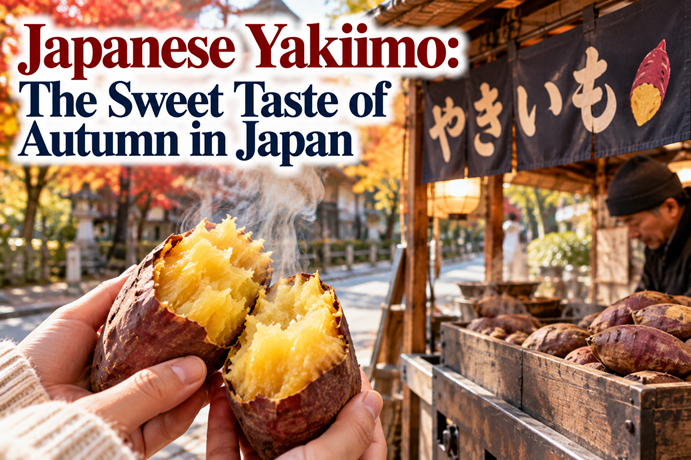
🍂 Introduction: A Familiar Voice on a Cool Evening
Japanese yakiimo is more than a roasted sweet potato. For many people, it brings back the memory of a cool autumn evening, the smell of something sweet being slowly roasted, and a distinctive voice drifting through a residential neighborhood. “Ishiyaki-imo—yaki-imo!” The call comes from a small truck moving slowly along the street, announcing that hot, stone-roasted sweet potatoes are available to buy.
I remember hearing that call near my home in Japan, particularly from late afternoon into the evening. When the voice approached, I would go outside and buy a sweet potato. It was a simple experience, but it connected food with the changing season in a way that is difficult to reproduce by buying a snack from an ordinary shop. You heard the seller before you saw the truck, and the sound itself became part of the neighborhood.
The trucks are less common in many places today, but the memory remains recognizable to people who grew up hearing them. Japanese supermarkets now frequently sell roasted sweet potatoes from dedicated roasting cases, making them convenient to buy without waiting for a truck to pass. The way people obtain yakiimo has changed, yet the appeal of a warm, naturally sweet potato remains.
I also have fond memories of eating sweet potatoes in the United States and Canada. Sweet potato fries and sweet potato tarts were delicious in their own right, and Japanese sweet potato desserts have their own appeal. The difference is not that one country’s way of eating sweet potatoes is better than another’s. Rather, the same ingredient can become part of very different food cultures. In Japan, a whole roasted sweet potato can be enjoyed almost like a dessert, even though no sugar or elaborate preparation is needed.
Yakiimo brings these ideas together: a familiar ingredient, a cooking method that develops its natural sweetness, and a seasonal tradition connected to the sounds and memories of everyday life. To understand why it remains so appealing, it helps to look at the street vendors, the science of roasting, the varieties of sweet potato, and the changing place of yakiimo in Japanese food culture.
📑 Table of Contents
- 🚚 The Singing Sweet Potato Truck
- 🔥 How Stone-Roasting Brings Out Sweetness
- 🍠 From Fluffy to Creamy: Japanese Sweet Potato Varieties
- 🌎 Japanese Yakiimo and North American Sweet Potato Dishes
- 🍁 Sweet Potatoes and the Feeling of Autumn
- 🛒 From Street Trucks to Supermarket Roasters
- 🏯 A Food with a Long History
- 🍴 How to Enjoy Yakiimo
- ✨ Why Yakiimo Remains a Taste of Autumn
🚚 1. The Singing Sweet Potato Truck
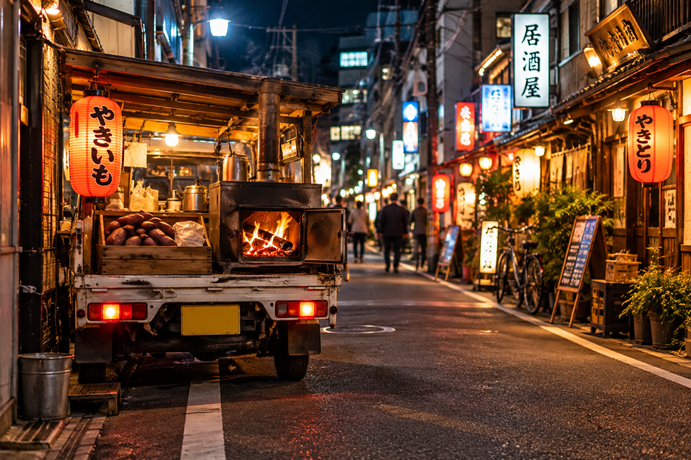
The traditional yakiimo truck is one of the most memorable symbols of roasted sweet potatoes in Japan. A vendor drives slowly through residential streets in a small vehicle fitted with equipment for roasting or keeping sweet potatoes hot. A loudspeaker broadcasts the familiar call, often with a distinctive melody: “Ishi-yaki-imo!” The phrase means stone-roasted sweet potato, and its drawn-out delivery can be recognizable even before the truck comes into view.
The experience is different from buying food at a fixed shop. The seller does not wait behind a counter for customers to arrive. Instead, the sound travels through the neighborhood, and potential customers decide whether to go outside, follow the voice, or wait for the truck to come closer. Sometimes the seller passes a home only briefly, so hearing the call can create a small sense of urgency. If you want a potato, you may need to find the truck before it moves on.
That movement gives the food a special relationship with place. The seller travels through streets where people live, rather than operating only in a designated shopping area. The call becomes part of the neighborhood’s soundscape, alongside passing vehicles, children returning home, and people preparing dinner. For residents who recognize it, the sound can signal not only the availability of food but also a familiar part of the cooler season.
The trucks have become less common in many areas as shopping habits and food retail have changed. Their availability varies by neighborhood, and it would be inaccurate to suggest that every Japanese town still has a regular vendor. Nevertheless, the tradition has not disappeared entirely. Some vendors continue to operate, and their trucks remain a distinctive way to experience yakiimo.
The sound itself is important because it carries a memory of how food was sold. Modern shopping often depends on signs, apps, and fixed opening hours. A mobile vendor instead announces the product directly to the street. People hear the call, recognize what is being sold, and decide whether to respond. It is a small, informal exchange between a seller and a neighborhood.
For me, the memory is especially clear because I used to go and buy yakiimo when I heard the voice near home in the late afternoon or evening. That moment connected the food with a particular time of day and a particular season. The potato was delicious, but the experience began before the first bite.
🔥 2. How Stone-Roasting Brings Out Sweetness
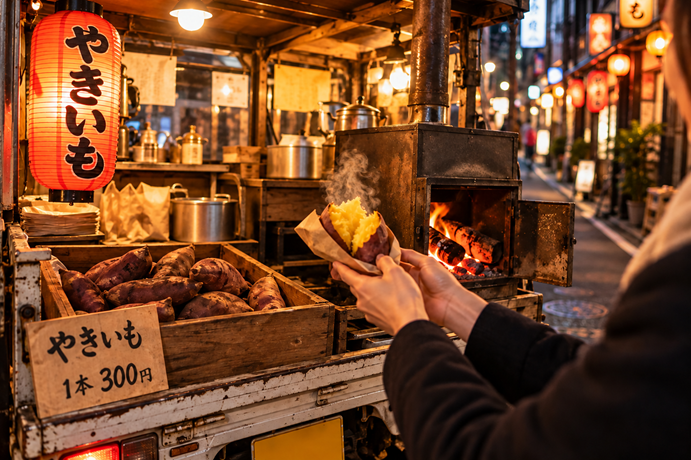
The name ishiyaki-imo describes the traditional method of roasting sweet potatoes using heated stones. In a stone-roasting oven, sweet potatoes are placed among hot stones and heated gradually. The method differs from simply boiling a potato or cooking it quickly at a high temperature. Slow heating gives the inside time to soften and allows the potato’s natural sweetness to develop.
Sweet potatoes contain starch, which is made up of long chains of glucose molecules. During heating, enzymes in the potato can break down some of that starch into smaller sugars, including maltose. The degree of sweetness depends on the variety, the potato’s condition, its storage history, and the temperature and duration of cooking. Roasting is therefore not just a way to make a potato edible; it can transform its flavor and texture.
It is common to hear that the stones themselves make the potato sweet through “far-infrared rays.” That explanation is too simple. Heat transfer from the stones and the gradual heating of the potato matter, but sweetness is also influenced by the biochemical changes taking place inside it. Temperature control and cooking time help determine how much sweetness develops and whether the flesh becomes fluffy, moist, or creamy.
The stones also help create a particular cooking environment. They hold heat and transfer it to the surface of the potato, allowing it to warm gradually. The exact method varies between vendors and roasting equipment, so not every yakiimo truck uses the same oven design or cooking schedule. Modern machines can reproduce the slow-roasting process without requiring a traditional truck-mounted stone oven.
When the potato is ready, the skin may look dry or slightly wrinkled, while the flesh inside becomes soft and fragrant. Some varieties develop a moist, almost syrupy texture, and their natural sugars can create a rich sweetness that feels closer to a dessert than to a plain vegetable. Other varieties remain drier and fluffier, with a flavor reminiscent of chestnuts.
This is one of the reasons yakiimo can surprise people who expect a sweet potato to taste similar to a boiled or mashed one. Roasting changes the eating experience. The outside protects the flesh as it cooks, and opening the potato reveals a warm interior whose texture depends on both the variety and the method.
The appeal does not require added sugar, cream, or elaborate seasoning. A well-roasted sweet potato can be satisfying on its own, with its natural sweetness doing most of the work.
🍠 3. From Fluffy to Creamy: Japanese Sweet Potato Varieties
One of the most interesting changes in Japanese yakiimo culture is the range of textures now available. The word yakiimo may sound as though it describes one standardized snack, but different varieties can produce noticeably different results. Some are fluffy and relatively dry, while others become soft, moist, and intensely sweet.
Beni Haruka (紅はるか) is known for its pronounced sweetness and moist texture when roasted. It has become a popular choice for people who enjoy a soft, creamy yakiimo. Depending on how it is grown, stored, and cooked, the flesh can feel almost sticky, with a sweetness that lingers after each bite. This makes it a useful example of how modern varieties have helped yakiimo become associated with dessert-like richness.
Anno Imo (安納芋) is another variety associated with a soft, sweet interior. Its flesh can have an orange hue, and roasting can produce a very moist texture. The contrast between its darker skin and warm-colored interior makes it visually distinctive when cut open. Its sweetness and softness have helped make it well known among people who seek especially rich yakiimo.
Naruto Kintoki (鳴門金時) is often associated with a more traditional, fluffy texture. Rather than becoming extremely creamy, it can have a drier, chestnut-like quality that some people prefer. It is a useful reminder that there is no single ideal texture for roasted sweet potatoes. A fluffy potato and a creamy potato offer different pleasures, and preference depends on what the eater enjoys.
Silk Sweet (シルクスイート) is valued for its smooth mouthfeel. Its texture can sit between the more floury types and the very soft, moist varieties, although the final result depends on preparation. The name suggests silkiness, and it is often chosen by people who prefer a smooth texture without the same degree of stickiness found in some other varieties.
These categories are useful, but they are not absolute. The same variety can taste different depending on how long it has been stored, the conditions in which it was grown, and the way it is roasted. A potato that is fluffy when prepared one way may become more moist under different cooking conditions. It is therefore better to think of the varieties as offering characteristic tendencies rather than guaranteed results.
The differences also show how Japanese sweet potatoes have become more than a single seasonal commodity. Retailers and specialist sellers may highlight particular varieties, while consumers can develop preferences for specific textures and flavors. Choosing a yakiimo can become a small tasting experience: one person looks for a creamy interior, another prefers a drier potato, and someone else wants a balance of both.
For visitors, the easiest way to understand the difference is to try more than one type when the opportunity arises. Rather than searching for the “best” variety, compare how each one feels and tastes. The contrast is part of the enjoyment.
🌎 4. Japanese Yakiimo and North American Sweet Potato Dishes

Sweet potatoes are enjoyed in many countries, but the dishes built around them reflect different culinary habits. In the United States and Canada, sweet potatoes appear in fries, roasted side dishes, casseroles, pies, tarts, and other desserts. I enjoyed sweet potato fries and sweet potato tarts while living in North America, and they remain examples of how versatile the ingredient can be.
Sweet potato fries are a particularly familiar example. The potato is cut into pieces, seasoned, and cooked until the exterior develops color while the inside softens. Depending on the recipe, the fries may be served with salt, spices, sauces, or other seasonings. The sweetness of the potato is part of the flavor, but it is combined with the texture and seasoning of the finished dish.
Sweet potato tarts and pies take the ingredient in another direction. The potato may be mashed or puréed and combined with ingredients such as sugar, eggs, dairy products, or spices. The result is a structured dessert in which the sweet potato contributes flavor, color, and body. These dishes can be rich and comforting, especially when served during cooler weather or family gatherings.
Japanese sweet potato cuisine also includes many preparations beyond yakiimo. Sweet potatoes can be used in daigaku imo, a dish of fried pieces coated in a sweet syrup; suito poteto, a Japanese-style sweet potato dessert made with mashed potato and other ingredients; and various cakes, breads, and traditional sweets. The ingredient is not confined to one cooking method or one meal.
The distinctive appeal of yakiimo lies in its simplicity. A whole sweet potato is roasted, usually with its skin left on, and served without needing a complicated recipe. Its sweetness comes primarily from the potato itself and the way it has been cooked. The experience invites the eater to notice the ingredient’s texture and flavor directly.
This does not make yakiimo more authentic or inherently healthier than other sweet potato dishes. A sweet potato tart and a roasted sweet potato serve different purposes, and their nutritional qualities depend on the ingredients and portion sizes involved. The cultural difference is better understood through the way the food is presented and enjoyed rather than by ranking one country’s cooking above another’s.
My experience of both North American dishes and Japanese yakiimo makes the contrast especially appealing. I can enjoy a well-made sweet potato fry or tart, and I also enjoy the pleasure of opening a hot roasted sweet potato and eating it almost as it is. The ingredient is familiar, but the experience is different.
For overseas readers, that is an accessible way to approach yakiimo. You do not need to be unfamiliar with sweet potatoes to appreciate it. You simply need to experience what happens when the potato itself becomes the center of the dish.
🍁 5. Sweet Potatoes and the Feeling of Autumn
Yakiimo is closely associated with autumn and winter in Japan, although the exact season when it is available depends on the retailer and region. As the weather becomes cooler, the idea of eating something warm becomes especially appealing. A roasted sweet potato can be held in both hands, its heat felt through the skin or paper wrapping, before it is opened and eaten.
The seasonal connection is not only about temperature. Sweet potatoes are harvested at particular times of the year, and storage can influence their flavor. Some sweet potatoes are held under controlled conditions before sale, allowing their sweetness and eating quality to develop. As a result, the relationship between harvest, storage, and roasting helps shape the seasonal food experience.
The cooler weather also changes how the food feels in daily life. A cold drink or a light snack may be refreshing during summer, but a warm roasted potato can feel especially satisfying on an autumn evening. It is easy to eat without a table or complicated preparation, and it can serve as a snack or a small meal depending on its size and the person’s appetite.
The street vendor adds another seasonal element. Hearing the familiar call in the evening can remind people that the weather has changed and that yakiimo is available again. This association is personal and varies from person to person; not everyone grew up hearing the trucks, and some people know the food mainly through supermarkets. Still, for those who remember the vendors, the sound can be inseparable from the season.
The idea of shun—the time when a food is at its seasonal best—is often discussed in Japanese food culture. It is not a rigid rule that every ingredient must be eaten only during a specific period. Rather, it reflects an appreciation of ingredients in relation to the seasons and the conditions under which they are grown, harvested, and prepared.
Yakiimo is a particularly accessible example because its appeal is easy to experience. The potato is warm, its aroma is noticeable, and the texture becomes part of the pleasure. The season is not simply described on a calendar; it can be felt through an ordinary food bought on the way home.
🛒 6. From Street Trucks to Supermarket Roasters
The traditional yakiimo truck remains memorable, but it is no longer the only way many people buy roasted sweet potatoes. Supermarkets increasingly use dedicated roasting machines or heated display cases, making yakiimo available as part of an ordinary shopping trip. Customers can buy one while purchasing vegetables, prepared foods, or other household necessities.
This change reflects a broader shift in how people obtain food. A mobile seller depends on a route, a schedule, and the ability to attract customers as the truck passes. A supermarket offers a fixed location and a more predictable opportunity to buy the product. The customer no longer needs to hear a call or hurry outside before the seller moves on.
For consumers, the supermarket method is convenient. People can compare the available potatoes, check prices, and buy one when they want it. The roasting machine can also help stores produce a steady supply, although the flavor and texture vary according to the equipment, the potatoes, and the time they spend cooking.
The difference is not simply a story of tradition disappearing and modernity taking over. Supermarket roasting has helped keep yakiimo visible in everyday food shopping. A person who has never bought a potato from a truck can still discover the pleasure of a freshly roasted one. In that sense, the food has adapted to a new retail environment while retaining its central appeal.
The change also affects the atmosphere surrounding the purchase. A supermarket purchase is usually part of a planned shopping trip. The truck, by contrast, can create a spontaneous moment: a sound interrupts the evening, someone recognizes it, and the desire for a warm snack leads them outside. The two experiences can result in the same kind of food, but they are not identical.
The mobile vendor turns the neighborhood into part of the transaction, while the supermarket brings the product into a larger retail setting. Both have a place in contemporary Japan. The fact that a tradition changes form does not automatically mean it has lost all cultural significance.
The continued popularity of roasted sweet potatoes also reflects the development of varieties and roasting methods. As producers and retailers have learned more about sweetness, storage, and cooking, the product has become appealing to people who seek particular textures and flavors. Yakiimo is therefore both a familiar seasonal food and an example of how a traditional ingredient can adapt to contemporary tastes.
🏯 7. A Food with a Long History
Sweet potatoes became important in Japan partly because they could grow in conditions where other crops might struggle. They helped provide food during periods of scarcity and became a familiar ingredient in everyday cooking. Their history is connected not only with taste but also with agriculture, food security, and the changing lives of ordinary people.
Over time, sweet potatoes were used in many forms. They could be boiled, steamed, roasted, fried, or incorporated into sweets. Their versatility made them useful in both household cooking and commercial food production. Yakiimo became one of the most recognizable ways to enjoy the ingredient because it required relatively little preparation while allowing the potato’s natural sweetness to develop.
The history of roasted sweet potatoes is not a single uninterrupted story. Different roasting methods and selling practices became popular at different times, and the appeal of yakiimo has changed with economic conditions and consumer preferences. During periods when inexpensive, filling food was especially important, sweet potatoes could provide valuable calories. In more recent decades, their sweetness and variety have helped make them desirable as a treat in their own right.
The modern popularity of sweeter varieties has also influenced how people think about the food. Instead of regarding yakiimo only as a simple snack, some consumers now seek particular varieties, textures, and levels of sweetness. Specialist shops and retail roasting machines have made it easier to experience these differences.
The Japanese government’s official food-culture publication, Highlighting Japan, explores the sweet potato’s history and its many uses in Japanese cuisine. It also discusses how roasted sweet potatoes and other sweet potato foods can introduce overseas readers to a wider range of Japanese food culture. Read the government publication “Enchanted by the Magical Vegetable Sweet Potato”.
The history helps explain why yakiimo can feel both ordinary and special. It is an everyday food made from an agricultural ingredient, but its popularity has been shaped by changes in farming, cooking, selling, and consumer taste. The warm potato in someone’s hands is part of a much longer story about how a useful crop became a source of comfort and pleasure.
🍴 8. How to Enjoy Yakiimo
The simplest way to enjoy yakiimo is to eat it warm and pay attention to the texture. Some potatoes are easy to break open with the hands, revealing soft flesh that can be eaten directly. Others may be firmer or fluffier, and a spoon can be useful for very moist varieties. The skin is generally edible when clean and properly cooked, although some people prefer to remove it.
There is no single correct way to eat it. Some people enjoy the potato plain, while others pair it with tea. Japanese green tea or roasted green tea can provide a pleasant contrast to the potato’s sweetness, but the pairing is a matter of preference rather than a strict tradition. The main point is to experience the flavor of the potato itself.
If you buy yakiimo from a supermarket, the variety may or may not be clearly identified. Specialist sellers may offer more information about the variety and texture. When several types are available, trying different ones can help you discover whether you prefer a fluffy potato or a creamy, moist one.
Yakiimo can also be enjoyed cold. As it cools, its texture may become firmer, and some people enjoy chilled roasted sweet potato as a snack. The experience is different from eating it hot, but it can still be satisfying. The potato’s sweetness remains, even though the warmth and aroma are less prominent.
When buying from a truck, follow the seller’s instructions and be careful when handling the potato, since the flesh can be very hot. Prices and portion sizes vary by seller, so it is sensible to ask before buying if the information is not clear. Not every truck follows the same route or operates at the same time, and availability can be local and seasonal.
For overseas readers visiting Japan, yakiimo is worth trying because it offers a direct way to experience the ingredient without needing to understand a complicated menu. It is a simple food, but the differences between varieties and roasting methods can be surprisingly interesting.
✨ 9. Why Yakiimo Remains a Taste of Autumn
Yakiimo remains appealing because it brings together several things that are easy to overlook when food is treated only as a product. There is the taste of the sweet potato itself, the slow process of roasting, the seasonal association with cooler weather, and the experience of buying something warm in the middle of an ordinary day.
For people who remember the trucks, the food may also carry a sound. The drawn-out call of “ishi-yaki-imo” can bring back memories of walking outside, searching for the vehicle, or buying a potato near home. Those memories do not belong to everyone in Japan, but they help explain why the trucks are still discussed with affection even as supermarkets become a more convenient source.
The changing way yakiimo is sold also shows how food traditions can adapt. A mobile vendor and a supermarket roasting case offer different experiences, but both allow people to enjoy a warm sweet potato. The method of purchase may change, while the food’s appeal continues.
My own memory of buying yakiimo when I heard the voice near home remains part of how I think about autumn in Japan. It is not a grand event or an elaborate ceremony. It is an ordinary moment: a familiar sound, a short trip outside, and a warm potato eaten as the evening grows cooler. That simplicity is exactly what makes it memorable.
For readers who know sweet potatoes mainly as fries, pies, or side dishes, Japanese yakiimo offers another way to enjoy the ingredient. For readers who already know Japan, it offers a glimpse into a seasonal food tradition that connects agriculture, cooking, retail, and neighborhood life.
A roasted sweet potato may seem humble, but its story is not small. It carries the taste of the ingredient, the knowledge of how to cook it, and the memories people attach to the places where they buy and eat it. In Japan, the voice of a yakiimo truck is one way autumn can announce itself—not through a festival or a landmark, but through an everyday sound drifting down a familiar street.
🍠 Continue Exploring Japanese Food Culture
Yakiimo is only one example of how a familiar ingredient can become part of Japan’s seasonal food culture. To explore more, continue with our Food articles, where everyday dishes and ingredients reveal the stories behind what people eat.
👉 Japanese Kissaten Food: Napolitan, Cream Soda, Pudding, and the Taste of Everyday Japan
👉 What Is Gotouchi Gourmet in Japan? How Food Changes from Region to Region
👉 Japanese Chestnuts in Autumn: 7 Fascinating Chapters from Ancient Japan to Modern Sweets
👉 Japanese University Cafeterias: More Than Lunch for Students