
🌏 Introduction
During the years I spent living overseas, one question slowly began to take shape in my mind. Why did Japanese spaces feel so different? It wasn’t because they were larger. In fact, many Japanese homes are much smaller than those I experienced in Canada or the United States. It wasn’t because they contained more beautiful furniture, either. If anything, they often contained less. Yet whenever I returned to Japan, I felt something that was surprisingly difficult to explain. Those spaces never felt empty. They felt calm. They seemed to breathe in a different rhythm. At first, I assumed the difference came from architecture. Then I began noticing the same feeling in Japanese gardens, in calligraphy, in conversations, and even while walking through shrines. Little by little, I realized I wasn’t looking at separate traditions at all. They were all expressing the same invisible idea.
Living abroad helped me recognize something I had never questioned while growing up in Japan. In many countries, spaces are often designed to communicate their purpose immediately. A bedroom tells you it is for sleeping. A dining room tells you it is for eating. A meeting room tells you it is for discussing ideas. This approach is practical, comfortable, and perfectly suited to the lifestyles that created it. Japan simply developed another way of thinking. Rather than deciding everything in advance, many traditional Japanese spaces quietly leave something open. They invite the people using them to complete the experience themselves.
That is why I don’t believe this article is really about architecture, interior design, or even traditional culture. It is about a way of seeing the world. Japan has never been a country where every space is simple or minimal. Tokyo alone proves that. Neon signs fill entire streets, trains carry millions of passengers every day, and some shopping districts overwhelm the senses from the moment you arrive. Yet alongside all of that energy exists another current that has flowed through Japanese culture for centuries. It is the quiet belief that not every space needs to be filled, not every silence needs to be broken, and not every meaning needs to be explained. Sometimes what has been intentionally left behind speaks just as clearly as what has been placed in front of us.
Perhaps that is why some visitors leave Japan remembering not only the famous landmarks, but also the feeling of standing in a quiet garden, sitting inside a traditional room, or walking beneath tall trees toward a shrine. Nothing dramatic happened. Nothing spectacular demanded attention. Yet those moments remained in their memories. Perhaps space itself had quietly become part of the story.
🎐 Listening to Silence
When people imagine Japan, they often imagine silence. In reality, Japan is no quieter than many other countries. Anyone who has stood at Shibuya Crossing, boarded a packed commuter train in Tokyo, or walked through the lively streets of Osaka knows that Japanese cities are full of movement and sound. The difference is not that Japan avoids noise. Rather, Japanese culture has long paid attention to the relationship between sound and silence.
One summer afternoon, while living overseas, I heard a wind chime outside someone’s house. For a brief moment, I was reminded of childhood summers in Japan. It wasn’t because the sound itself was extraordinary. In fact, wind chimes exist in many parts of the world. What brought back those memories was everything surrounding the sound. In Japan, the gentle ring of a wind chime is followed by stillness. You hear the breeze passing through the leaves. You notice the warm afternoon air. Then another quiet note arrives. The silence is not an interruption. It is part of the experience.
The same feeling appears in places many visitors know well. At a shrine, you rarely remember constant sound. Instead, you remember gravel beneath your feet, birds calling somewhere high above the trees, leaves moving softly in the wind, or the single ring of a bell before someone offers a prayer. Even the bamboo shishi-odoshi found in some gardens illustrates this beautifully. Visitors often remember the sharp knock as the bamboo strikes a stone, yet that single sound only has its impact because of the long pause before it happens again. The silence prepares the moment.
Perhaps that is why Japanese sound often feels different. It does not try to fill every second. It leaves space for people to notice what is already there. Like music, where rests give meaning to the notes, many traditional Japanese spaces allow silence to become part of the composition. The silence is not empty. It quietly encourages us to listen more carefully.
🏡 A Room That Refuses to Decide
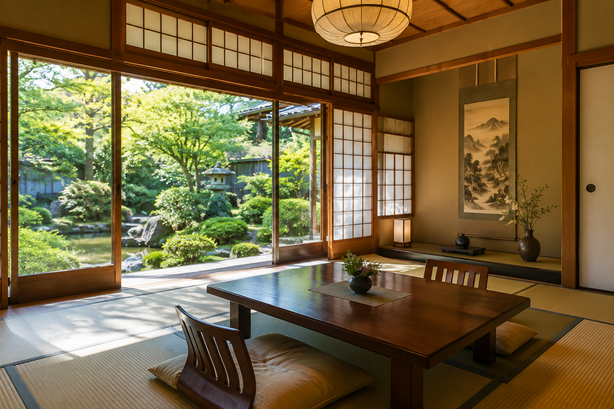
If sound reveals one side of this hidden idea, the traditional washitsu reveals another. Growing up in Japan, I never thought a room changing its purpose throughout the day was unusual. At night, futons were spread across the tatami floor, and the room became a bedroom. The following morning, the bedding disappeared into a closet, leaving nothing behind except the tatami itself. A low table appeared, and the very same room became a place to eat breakfast. Later in the day, the table could be moved aside, allowing children to play, guests to gather for tea, or relatives to sit together in conversation. The room never insisted on what it should be. It simply waited for the people inside it.
Only after living in North America did I realize how unusual that flexibility was. Many homes there are designed around rooms with clearly defined purposes. Bedrooms remain bedrooms. Dining rooms remain dining rooms. Living rooms remain places for relaxing. There is absolutely nothing wrong with this approach. It reflects different climates, different histories, and different ways of living. Yet returning to Japan made me appreciate something I had always taken for granted. The washitsu is not empty because something is missing. It appears open because it has not yet decided what it wants to become.
This difference may seem small, yet it changes the relationship between people and the space around them. Furniture does not completely determine how the room should be used. Instead, the people living there shape it according to the needs of that particular day. The room quietly adapts instead of giving instructions. Perhaps this is why so many visitors describe traditional Japanese rooms as peaceful. The feeling does not come from having fewer objects alone. It comes from sensing possibilities rather than limitations. What first appears to be empty gradually reveals itself as something remarkably flexible.
Sometimes, leaving space does not mean leaving something unfinished.
Sometimes, it means leaving room for life itself.
🪨 A Garden That Asks You to Imagine
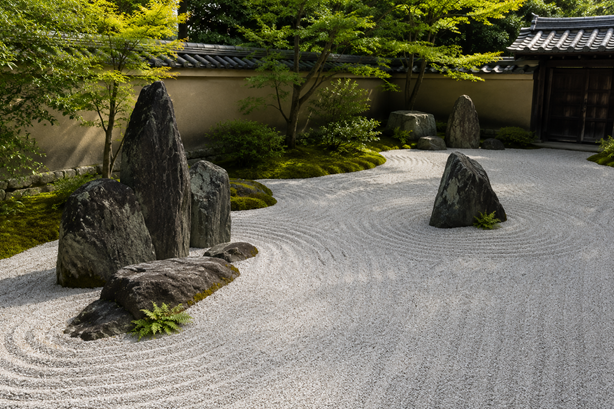
If the washitsu shows how space can remain open to different possibilities, the Japanese dry landscape garden, or karesansui, reveals another remarkable idea. Instead of creating beauty by adding more, it often creates meaning by suggesting what is not physically there. For many first-time visitors, standing before the famous rock garden at Ryōan-ji in Kyoto is a confusing experience. They have heard so much about one of Japan’s greatest gardens, yet when they finally arrive, they see little more than white gravel and a handful of carefully placed rocks. There are no waterfalls, no colorful flowers, and no flowing rivers. At first glance, it can feel surprisingly simple.
Yet the longer you remain there, the more your imagination begins to work. The carefully raked patterns in the gravel no longer look like gravel alone. They begin to resemble waves moving across an ocean or gentle currents flowing around islands. The rocks cease to be ordinary stones and instead become mountains rising from mist or small islands floating in an endless sea. Nothing in the garden explicitly tells you what to see. It quietly allows you to discover your own landscape.
That may be one of the most fascinating characteristics of Japanese aesthetics. Rather than presenting every detail directly, it often leaves room for the viewer to participate. The garden is completed not only by the gardener who created it, but also by the person sitting silently in front of it. Two visitors may see entirely different landscapes, yet neither interpretation is considered wrong. The empty spaces are not gaps waiting to be filled. They are invitations to imagine.
🖌️ Writing With White Space
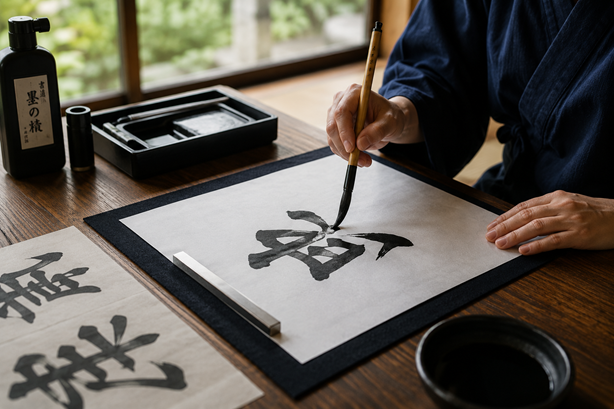
The same invisible idea appears again in Japanese calligraphy. Many people naturally focus on the black ink brushed across white paper, believing that the beauty of the work lies entirely in the characters themselves. As I grew older, however, I began noticing something else. The white paper seemed just as important as the ink.
Master calligraphers often speak about balance, but that balance is created not only through the strokes they paint. It is also created through the spaces they intentionally leave untouched. The white areas surrounding each character allow the writing to breathe. If every corner of the page were covered with ink, even the most beautifully written character would lose much of its strength. The untouched paper quietly gives the brushstrokes their presence.
A similar philosophy can be found in Japanese ink paintings and even in modern graphic design. While some design traditions communicate by filling a page with information, Japanese designers often achieve impact by allowing generous amounts of space to remain empty. A single photograph surrounded by clean margins, a carefully positioned logo, or a simple package with very little decoration can feel calm, elegant, and trustworthy precisely because nothing is competing for attention.
This does not mean one design philosophy is superior to another. Different cultures have developed different visual languages according to their own histories, technologies, and artistic traditions. What fascinates me is simply that Japanese creators have long understood that absence can be just as expressive as presence. Sometimes what is not printed becomes part of the design itself.
💬 Conversations That Leave Room for Others
Perhaps the most difficult example to explain is found not in art or architecture, but in conversation. Many cultures value lively discussions, quick responses, and expressing ideas openly. There is warmth in that style of communication, just as there is excitement in conversations that move quickly from one idea to the next. Japan has simply developed another style alongside it.
Growing up, I rarely thought silence during a conversation was unusual. Sometimes a few seconds would pass before someone answered a question. Sometimes people nodded quietly before speaking. Sometimes nothing was said at all, yet everyone around the table seemed to understand exactly how the others felt.
Only after spending time overseas did I realize that these pauses could feel surprisingly long to people from different cultural backgrounds. In some countries, silence may suggest uncertainty or awkwardness, encouraging someone to speak in order to keep the conversation moving. In Japan, however, silence can sometimes communicate something entirely different. It may express careful thought, respect for another person’s words, or simply a willingness to let everyone reflect before continuing.
This idea is closely connected to the Japanese concept often translated as “reading the atmosphere.” Contrary to popular stereotypes, this is not about expecting people to read minds. It is about recognizing that communication includes more than spoken words. Facial expressions, timing, pauses, and the willingness to leave space for another person’s thoughts all become part of the conversation.
In that sense, silence is not the opposite of communication.
It is one way communication happens.
⛩️ Shrines Where Space Becomes Part of the Journey
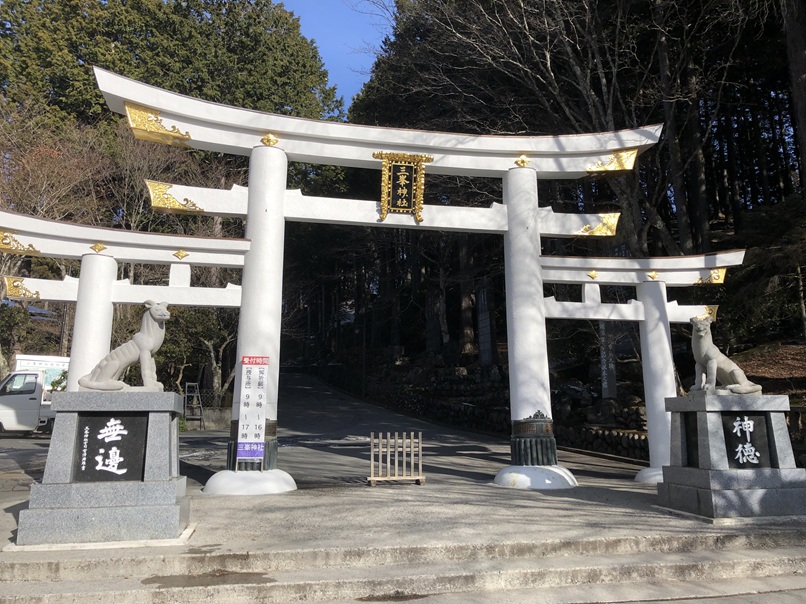
When visitors enter a Japanese shrine, they often focus on the destination: the torii gate, the purification fountain, or the main hall where prayers are offered. Yet one of the most meaningful parts of the experience begins long before reaching any of these places.
The approach itself matters.
Many shrines are reached by walking beneath long rows of towering trees. The branches create cool shade even during the hottest days of summer, gradually separating visitors from the busy streets outside. The sound of traffic fades behind birdsong and the gentle movement of leaves overhead. The gravel beneath your feet changes the rhythm of your walk. Nothing dramatic has happened, and yet your pace naturally slows.
Looking back, I have come to believe that this is no accident.
The space between the entrance and the shrine is not empty land waiting to be crossed as quickly as possible. It prepares the mind before arrival. The trees, the shade, the changing sounds, and the gradual transition from city to sacred space all become part of the experience itself. In many ways, the shrine begins long before the main building comes into view.
Perhaps that is another example of space speaking without words.
🌿 The Hidden Idea That Still Shapes Everyday Japan
Once I began noticing this pattern, I started seeing it everywhere. It appeared in the pause before a reply, in the open floor of a washitsu, in the white paper surrounding a single brushstroke, in the gravel of a Zen garden, and in the shaded path leading toward a shrine. Eventually I realized that these were not isolated traditions at all. They were different expressions of the same quiet idea.
That idea still survives in everyday life, even if we rarely stop to think about it. It appears when someone pauses before answering instead of interrupting. It appears when a room is kept flexible rather than permanently fixed to one purpose. It appears when a designer chooses simplicity not because decoration is wrong, but because space itself is allowed to communicate. Most Japanese people probably never wake up thinking about these things. I certainly didn’t when I was younger. They simply become part of the environment we grow up in.
Living overseas helped me understand that this is only one way of experiencing the world. Other cultures celebrate abundance, lively conversation, bold colors, and richly decorated spaces, and those traditions possess their own beauty and history. This article is not an argument that one approach is better than another. Instead, it is an invitation to notice one small idea that quietly connects many different parts of Japanese culture.
Perhaps that idea can best be described like this. Space is not the absence of something. It is the place where something else is allowed to happen. A garden invites imagination. A washitsu invites possibility. A conversation invites reflection. A shrine invites calm. A sheet of white paper invites a single brushstroke to breathe.
Perhaps that is why Japanese spaces so often remain in our memories long after we leave them. They do not try to tell us everything.
They leave just enough unsaid for us to discover something ourselves.
🌏 Continue Exploring the Hidden Ideas Behind Japan
If you enjoyed discovering how the idea of “space” quietly connects so many parts of Japanese culture, you may also enjoy these articles exploring the deeper philosophies hidden in everyday Japan.
👉 Why Is Shade So Important in Japan? (2026 Guide)
👉 Why Do Japanese People Give Summer Gifts? The Tradition of Ochugen (2026 Guide)
👉 Why Do Japanese People Take Off Their Shoes So Often? (2026 Guide)
👉 Why Do Japanese People Queue Even When Nobody Is Watching? (2026 Guide)
👉 Why Do Japanese People Care So Much About Seasonal Foods? (2026 Guide)