
🌏 Introduction
Visitors often arrive in Japan expecting to be impressed by its famous landmarks. They dream of seeing cherry blossoms floating beside ancient castles, walking through thousands of vermilion shrine gates in Kyoto, or catching their first glimpse of Mount Fuji rising above the clouds. These places certainly deserve their reputation, and for many travelers they become unforgettable memories. Yet something curious often happens after a few days. The moments people continue talking about are no longer the famous sights they carefully planned to visit. Instead, they begin to notice things that were never included in the itinerary.
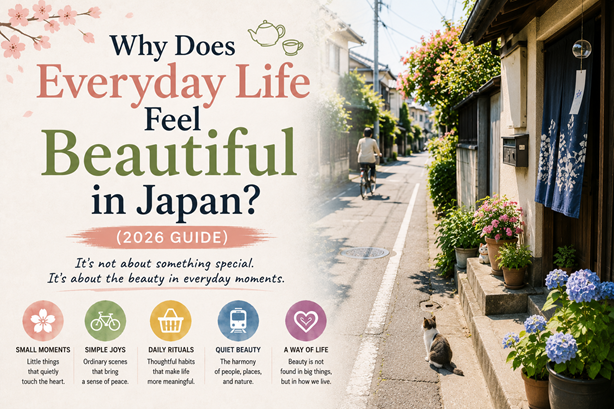
They remember buying a simple lunch from a convenience store and wondering why it looked almost too carefully prepared to eat. They remember quiet residential streets where every front entrance seemed to have its own small arrangement of flowers, even though no tourists would ever walk by. They remember the wrapping around a gift, the orderly rows of bicycles outside a station, or the sound of wind chimes drifting through a neighborhood on a summer afternoon. None of these moments were extraordinary in themselves. They were simply fragments of ordinary life, yet together they created an impression that many visitors struggle to describe after returning home. Somehow, everyday life in Japan seemed unexpectedly beautiful.
This observation does not mean that Japan is uniquely capable of appreciating beauty. Every culture has developed its own understanding of what beauty means. Italy celebrates beauty through art, architecture, and lively public squares. France finds it in cafés, cuisine, and centuries of craftsmanship. Scandinavian countries have become admired for quiet functional design, while Britain often treasures landscapes and buildings that reveal the character of time itself. Beauty has never belonged to one country or one civilization. It is always shaped by history, climate, religion, materials, and the values that people inherit from previous generations.
What makes Japan particularly interesting is something slightly different. Rather than reserving beauty for special occasions or places set apart from daily life, Japanese culture has often allowed beauty to become woven into ordinary routines. It is not something that appears only inside museums, temples, or carefully preserved historic districts. It quietly accompanies the activities people repeat every single day. That difference is subtle, and perhaps difficult to notice at first, but once visitors begin to see it, they often discover that it changes the way they look at Japan itself.
🌿 Beauty That Lives Beside Everyday Life
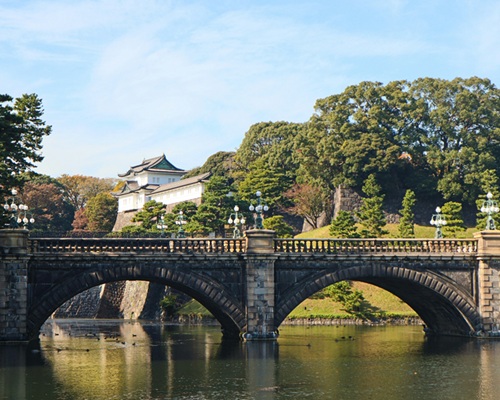
In many societies, beauty is something people intentionally seek out. They buy tickets to concerts, spend an afternoon in an art museum, visit famous gardens, or travel long distances to admire historic architecture. These experiences invite people to step away from everyday routines for a while and enter places designed to inspire admiration. Japan certainly has these spaces as well, but they exist alongside another tradition that is less obvious and perhaps more deeply rooted in everyday life.
Across Japan, beauty often emerges not because someone decided to create an artwork, but because ordinary activities are approached with care. A shop owner sweeps the pavement before opening, even though it will soon become dusty again. A station employee bows toward a departing train, although few passengers are watching. Someone carefully folds wrapping paper around a small purchase that cost only a few hundred yen. None of these actions attract attention, and none are performed as public spectacles. They simply reflect the belief that everyday tasks deserve the same consideration as special occasions.
For many visitors, this atmosphere is difficult to explain because it is not produced by one masterpiece or one famous building. Instead, it grows from countless small decisions repeated every day by ordinary people. A neighborhood feels welcoming because each home contributes something modest to the street. A railway station feels calm because thousands of individuals unconsciously cooperate with one another. Even a convenience store often feels surprisingly pleasant, not because it is luxurious, but because cleanliness, order, and thoughtful presentation have become ordinary expectations rather than exceptional efforts.
Perhaps this is why so many travelers return home speaking not only about Japan’s great temples or mountain landscapes, but also about places that would rarely deserve a photograph elsewhere. A vending machine standing beside a rice field, umbrellas lined up neatly outside a café, or flowers quietly blooming beside the entrance of an ordinary home somehow become lasting memories. These scenes are not designed to impress visitors. They simply reveal a culture in which everyday surroundings are considered worthy of care.
🏺 When Usefulness Becomes Beautiful
One idea that helps explain this way of thinking is the long-standing appreciation for the beauty of useful things. Rather than separating practical objects from artistic expression, Japanese culture has often regarded the two as natural partners. A bowl is expected to serve food, a teacup to be held comfortably in the hand, and a wooden tray to carry everyday meals. Yet fulfilling these practical purposes has never excluded them from also being graceful, balanced, and pleasing to use. In many cases, usefulness itself becomes the source of beauty.
This understanding became particularly influential through the Mingei movement of the twentieth century, led by the philosopher Sōetsu Yanagi. Rather than celebrating expensive works created for collectors, Yanagi drew attention to ordinary handcrafted objects used by ordinary people. He believed that true beauty could be discovered not only in galleries but also in the bowls, baskets, textiles, and tools that quietly supported everyday life. Although most people in modern Japan are unlikely to think consciously about the philosophy of Mingei while shopping or commuting to work, the underlying attitude continues to appear in surprisingly familiar places.
A convenience store offers a good example. Its purpose is straightforward: to provide food and daily necessities quickly and efficiently. Yet visitors often notice details that seem to go beyond simple functionality. Lunch boxes are arranged with careful attention to color and balance. Seasonal ingredients quietly announce the arrival of spring, summer, autumn, and winter. Packaging opens smoothly without unnecessary frustration, while products are displayed with a sense of order that makes choosing them feel surprisingly comfortable. None of these details is essential for survival, yet together they transform an ordinary shopping trip into an experience that feels quietly considered.
The same pattern can be found almost everywhere. Hotels make limited spaces feel calm rather than cramped. Public transportation combines efficiency with remarkable visual clarity. Even the entrance of a private home, which exists simply as a place to remove one’s shoes, often becomes a carefully maintained space where flowers, light, and seasonal decorations create a gentle welcome. Function is never abandoned in pursuit of beauty, but neither is beauty treated as an unnecessary luxury. Instead, the two gradually become inseparable.
Perhaps this is one reason why Japan often leaves such a lasting impression on visitors. The beauty they remember was rarely waiting at the end of a sightseeing route. More often, it quietly appeared while they were buying lunch, entering a house, or simply walking through an ordinary neighborhood without expecting to discover anything remarkable.
🍂 Beauty That Deepens with Time
Another key to understanding everyday beauty in Japan is the relationship between beauty and time. Around the world, many cultures admire things that are new, flawless, and untouched. At the same time, there are also cultures that discover beauty precisely because time has left its mark. Japan belongs to this second tradition, but it is by no means alone.
Across much of Europe, particularly in countries such as Italy, France, and the United Kingdom, people often speak of patina—the rich character that develops as materials age. The polished surface of an old wooden table, the worn steps of a stone staircase, or the weathered façade of a centuries-old building are not viewed simply as signs of decay. They are valued because they tell a story. Every scratch, every faded color, and every uneven stone reflects the countless lives that have passed through that place. Time is not treated as something that diminishes beauty, but as something that quietly adds to it.
Japan expresses a remarkably similar respect for time, although its materials and traditions have evolved differently. Rather than stone, Japanese architecture has historically relied on wood, paper, bamboo, and earth. These materials inevitably change as seasons pass. Wood darkens, paper softens, and moss gradually covers stone pathways. Instead of resisting these transformations completely, Japanese aesthetics has often accepted them as part of an object’s life. The idea commonly described as wabi-sabi encourages people to appreciate the quiet dignity that appears as things weather, mature, and eventually fade. Beauty is found not despite impermanence, but because of it.
Seen from this perspective, Japan and Europe share more than many people realize. Both cultures have learned to respect the passage of time rather than simply replacing everything with something newer. Their methods may differ, yet both suggest that history itself can become part of beauty. What matters is not preserving an object in an artificial state of perfection, but allowing the past to remain visible within the present.
One way of understanding the difference is through the materials that shaped each civilization. Much of Europe’s architectural heritage was built in stone. Stone endures for centuries, making preservation of the original structure both possible and desirable. Japan, however, developed within a landscape where wood became the primary building material. Wood requires repair, renewal, and eventually replacement. As a result, Japanese tradition often places greater emphasis on preserving craftsmanship, techniques, and proportions than on preserving every original piece of material.
Perhaps nowhere is this idea expressed more clearly than at Ise Grand Shrine. Every twenty years, the shrine is rebuilt using new timber according to techniques that have been handed down for generations. To many visitors unfamiliar with the tradition, rebuilding such an important shrine may seem contradictory. Yet the purpose is not to preserve old wood forever. It is to preserve the knowledge, skills, and spirit that allow the shrine to continue living across centuries. In this sense, continuity is maintained not through permanence, but through renewal.
Neither approach is superior to the other. Europe often preserves memory through material itself, while Japan has frequently preserved memory through the careful transmission of craft and tradition. Both remind us that beauty does not exist only in the present moment. It is something created through an ongoing conversation between the past, the present, and the future.
🌸 Beauty Hidden in Ordinary Moments
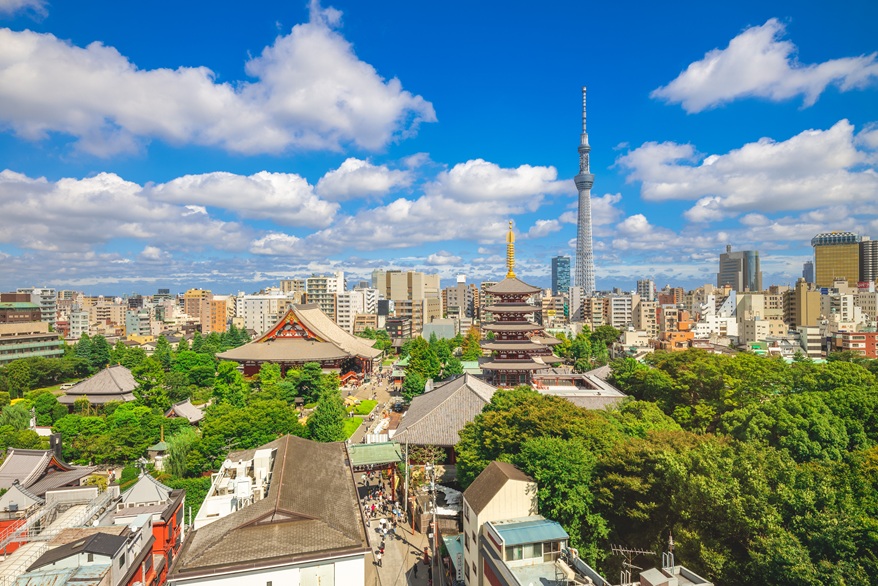
If time gives depth to Japanese beauty, then everyday life gives it visibility. One of the most distinctive aspects of Japan is not that beautiful things exist, but that they are rarely separated from ordinary experiences. A traveler does not need to visit an art gallery to encounter thoughtful design or seasonal awareness. Instead, these qualities quietly appear throughout daily life, often in places that receive little attention.
Consider the morning glory that Japanese elementary school children grow each summer. At first glance, it seems to be little more than a simple science project. Yet the experience extends far beyond observing how a plant grows. Children collect seeds for the following year, press flowers, make colorful dyes from petals, and even weave dried vines into decorative wreaths after the growing season has ended. The beauty of the plant is never limited to the moment it blooms. Its entire life cycle becomes something to appreciate, from its first leaves to the quiet elegance of its final dry branches. Rather than treating nature as valuable only at its most colorful moment, the experience encourages children to notice beauty in change itself.
The same sensitivity appears in countless other moments. The loud chorus of cicadas, which some visitors initially hear as overwhelming noise, gradually becomes an unmistakable sign that summer has arrived. As evening approaches, the gentle call of the higurashi carries an entirely different feeling, one that many Japanese people associate with the quiet melancholy of a day drawing to a close. Neither sound was created to entertain anyone, yet both have become part of the emotional landscape of the season.
Even the entrance of a home reflects this way of seeing. A vase holding a few seasonal flowers, carefully arranged shoes, or the simple act of sweeping the entrance every morning are not extravagant displays. They are modest gestures that acknowledge the changing seasons, welcome guests, and create a sense of harmony before anyone steps inside. Beauty is expressed not through excess, but through attention.
This same philosophy can be discovered in places that many visitors never expect. Convenience stores introduce seasonal products throughout the year, allowing even a quick lunch to reflect the arrival of spring or autumn. Department stores wrap purchases with remarkable care, transforming ordinary shopping into an act of quiet hospitality. Manhole covers become canvases celebrating local identity, while railway stations use thoughtful design to make crowded spaces feel calm and understandable. None of these examples exists for the purpose of attracting tourists. They simply reveal a habit of treating ordinary surroundings with consideration.
Perhaps this is why so many visitors find themselves taking photographs of things they would have ignored elsewhere. They are not searching for famous landmarks anymore. They have begun noticing the countless small moments in which everyday life has been gently refined over generations.
✨ Conclusion
Many cultures have developed their own understanding of beauty, each shaped by different histories, landscapes, materials, and beliefs. Japan is not unique because it values beauty, nor because its people appreciate aesthetics more deeply than anyone else. Rather, what often distinguishes Japan is the way beauty quietly accompanies ordinary life instead of standing apart from it. Practical objects become graceful without losing their usefulness. Historic traditions continue alongside modern technology. Seasonal change is welcomed instead of resisted. Even the smallest routines are approached with enough care that they contribute, almost unnoticed, to the atmosphere of daily living.
Perhaps this is why so many visitors leave Japan with memories that seem strangely difficult to explain. They remember famous temples and celebrated gardens, of course, but what lingers longest is often something much quieter: the lunch they bought at a convenience store, the flowers outside an ordinary house, the sound of insects at dusk, the thoughtful wrapping around a simple gift, or the peaceful feeling of walking through a neighborhood where the past and the present exist comfortably together.
Japan’s beauty is not hidden because it is rare.
It is hidden because it is ordinary.
It does not wait inside museums.
It does not appear only on special occasions.
It quietly accompanies everyday life, becoming part of the streets people walk, the homes they care for, the objects they use, and the changing seasons they experience year after year. In that sense, beauty is not something people in Japan simply admire from a distance. It is something they continue to live alongside, often without even realizing it.
Japan’s beauty is not found in extraordinary moments alone.
It quietly lives in ordinary ones.
🌏 Continue Exploring Deep Japan
If this article changed the way you think about beauty in Japan, you may also enjoy exploring other aspects of Japanese culture that quietly shape everyday life.
👉 Walking Through a Japanese Neighborhood: The Everyday Japan Most Travelers Never See
👉 Why Do Japanese Schools Ask Children to Grow Morning Glories? (2026 Guide)
👉 Where Home Begins: The Hidden Meaning of a Japanese Entryway (2026 Guide)
👉 The Japanese Art of Repair: More Than Sustainability (2026 Guide)
👉 The Sound of Summer in Japan: Why Cicadas Mean More Than Noise (2026 Guide)