
🌏 Introduction
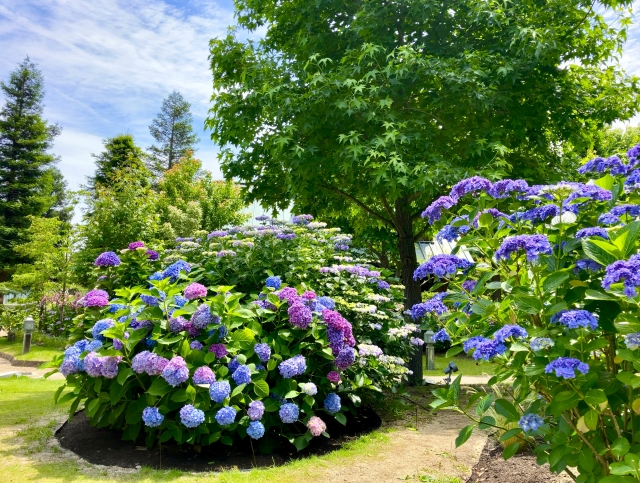
Some flowers instantly make people think of a particular season. Cherry blossoms bring thoughts of spring, while autumn leaves signal the arrival of cooler weather. In Japan, hydrangeas often belong to early summer.
For many people, seeing hydrangeas immediately brings the rainy season to mind. For me, that connection is very strong. When I see hydrangeas, I instantly think of tsuyu, Japan’s rainy season. I picture damp streets, umbrellas, gray skies, and the heavy humid air that settles over daily life during that time of year.
And yet, despite those conditions, hydrangeas continue to bloom beautifully.
That contrast has always felt meaningful to me. Day after day, rain falls, people complain about the weather, and the season can feel uncomfortable. But hydrangeas somehow seem completely at home in that environment. Rather than looking weakened by the rain, they often seem stronger because of it.
That may be one reason they are so loved in Japan.
Of course, hydrangeas are visually beautiful flowers. But their popularity in Japan is not simply about appearance. They have become part of the emotional scenery of early summer, woven into how many people experience the season itself.
Understanding that helps explain why these flowers remain so culturally significant.
🎯 Quick Answer
Hydrangeas are popular in Japan not only because they are beautiful, but because they are deeply connected to the emotional atmosphere of the rainy season and early summer. Their timing, changing colors, and ability to thrive in wet weather make them feel closely tied to Japan’s appreciation of seasonal transitions and everyday natural beauty.
🌸 More Than Just Pretty Flowers
At first glance, the popularity of hydrangeas may seem simple to explain. They are beautiful flowers with rich colors and distinctive shapes, so naturally people enjoy them.
But beauty alone does not fully explain their cultural place.
Many flowers are beautiful, yet not all become emotionally tied to a particular season in the same way. Hydrangeas in Japan feel different because they are associated not only with visual beauty, but with a specific seasonal mood.
Japan often experiences the seasons emotionally as much as practically. Certain foods, weather changes, and natural scenes become symbols of particular moments in the year. Hydrangeas fit naturally into that way of seeing the world.
They are not just flowers blooming in June.
They are part of what June feels like.
That emotional role helps explain why they continue to resonate so strongly.
🌧️ The Rainy Season Connection
The connection between hydrangeas and the rainy season is one of the strongest reasons for their popularity.
In Japan, hydrangeas typically bloom during the rainy season, usually from around June into early summer depending on the region. That timing matters.
Unlike cherry blossoms, which are often associated with fresh beginnings and brighter skies, hydrangeas belong to a quieter and more reflective time of year.
The rainy season in Japan is not always easy to enjoy. The humidity can be exhausting, clothes feel damp, and umbrellas become part of daily life. It can feel like a heavy season.
And yet hydrangeas somehow soften that experience.
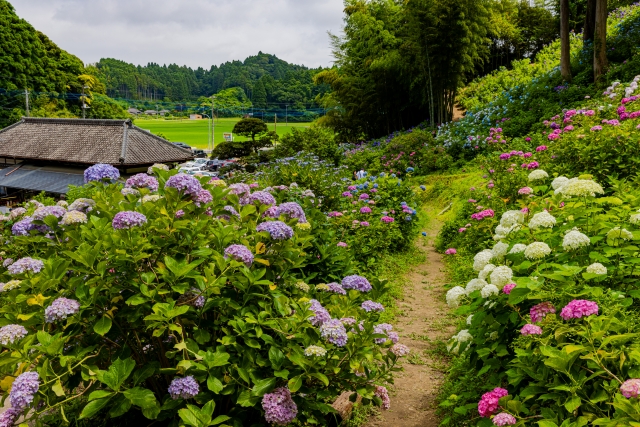
A street that might otherwise feel gray and inconvenient suddenly feels more beautiful. A rainy walk becomes less gloomy when bright blue, purple, or pink hydrangeas appear along the path.
Without the rain, hydrangeas would still be attractive flowers. But with the rain, they become part of a much larger emotional experience.
💙 Flowers That Seem Made for Rain

Some flowers seem to belong in sunshine.
Hydrangeas often feel different.
There is something about the way raindrops sit on their petals, the softer light of cloudy skies, and the way moisture seems to deepen their colors that makes them feel perfectly suited to wet weather.
That visual relationship creates a strong emotional impression.
For me, hydrangeas feel quietly strong. They are not dramatic flowers demanding attention. Instead, they simply continue blooming through difficult weather, almost as if the rain is exactly where they belong.
That quiet resilience may be part of what people connect with.
Without saying anything, hydrangeas can feel like a reminder that beauty and strength are not always loud.
🎨 Why Their Changing Colors Fascinate People
Another reason hydrangeas remain so popular is their changing appearance.
Unlike some flowers that remain visually consistent, hydrangeas can shift in color depending on conditions such as soil chemistry. Blues, purples, pinks, and subtle variations can all appear.
That unpredictability adds to their appeal.
They feel dynamic rather than fixed.
And in a culture where seasonal nuance is often appreciated, that quality feels especially meaningful.
Hydrangeas seem to reflect change itself.
That may be one reason they fit so naturally into Japanese seasonal awareness.
🏯 Hydrangeas in Everyday Japan
Part of what makes hydrangeas culturally visible is how accessible they are. You do not necessarily need to visit a famous garden to see them. Many people in Japan do not go out specifically to look for hydrangeas. They simply notice them during ordinary walks, commutes, or neighborhood streets. They appear in neighborhoods, along sidewalks, near homes, at temples, and in ordinary everyday spaces.
That accessibility matters.
Hydrangeas are not only admired as formal attractions. They are part of normal life.
For many people, the first hydrangea of the season is not found during a planned outing. It appears unexpectedly during an ordinary walk, a commute, or a simple daily errand.
Those quiet encounters often make the strongest memories.
🌏 Not Unique, But Distinctive
Hydrangeas are not unique to Japan. People in many countries grow and enjoy them.
So the interesting question is not whether Japan “owns” hydrangeas.
The more interesting question is why they feel so emotionally tied to seasonal life here.
The answer seems to lie in timing, atmosphere, and cultural habits of noticing seasonal change.
In Japan, seasons are often experienced through small emotional signals as much as weather reports or calendars. Hydrangeas fit beautifully into that pattern.
Not because the flowers themselves are uniquely Japanese, but because the relationship people have with them feels culturally specific.
💭 Why This Helps You Understand Japan
Hydrangeas offer a useful glimpse into how everyday seasonal awareness works in Japan.
Understanding a culture is not only about famous festivals, temples, or historical events. Sometimes it is about smaller emotional associations that quietly shape daily life.
A flower that means rain.
A food that signals a season.
A weather pattern connected to memory.
These details may seem small, but they often reveal something deeper about how people experience the world around them.
That is what makes hydrangeas interesting.
🇯🇵 Conclusion
Hydrangeas are beautiful flowers, but in Japan they often mean much more than visual beauty.
For many people, they are part of the emotional arrival of early summer and the rainy season. They bring color to gray days and transform an uncomfortable season into something softer and more reflective.
For me, hydrangeas will probably always mean rain—but not in a negative way. They remind me of something quietly strong, continuing to bloom through difficult weather.
And perhaps every culture has seasonal symbols like that—small natural signs that instantly bring back a particular feeling, weather, or memory.
Is there a flower, season, or natural symbol in your country that immediately makes you think of a specific time of year? It would be fascinating to hear what seasonal images people carry around the world.
🔗Explore more of Japan
・How to Survive Japan’s Rainy Season: Practical Tips for Everyday Life
・Why Do the Seasons Matter So Much in Japan? The Cultural Meaning of Seasonal Change
・Why Is Japanese Bento So Special? More Than Just a Packed Lunch (2026 Guide)