
🌏 Introduction
For many visitors, riding the Shinkansen is one of the most exciting parts of traveling in Japan.
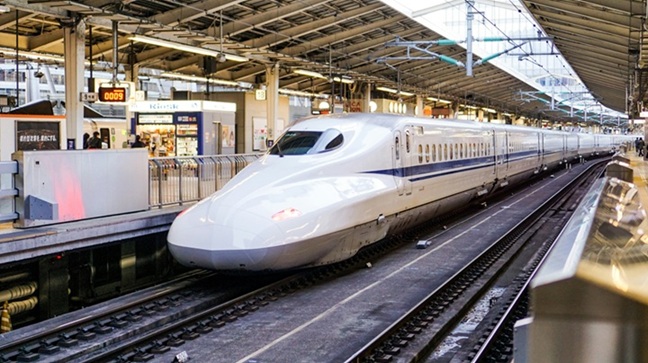
It is fast, smooth, comfortable, and iconic. Watching the bullet train arrive at the platform feels like one of those classic Japan moments many travelers imagine long before they arrive.
But first-time visitors often discover something surprising.
The Shinkansen is a train—but it does not work exactly like the regular trains you may already be using in Japan.
If you have already taken trains in Tokyo, Osaka, or other cities, you may assume the process will feel familiar. Tap your IC card, find the platform, get on, and go.
The Shinkansen is different.
The ticketing system can be different. The gates are different. Seat reservations matter more. Luggage rules can matter. And if you are using the Japan Rail Pass, understanding which trains are included becomes especially important.
In some ways, the Shinkansen feels less like an ordinary commuter train and more like domestic air travel—except faster, easier, and usually far less stressful.
Once you understand that difference, the system becomes much easier.
🎯 Quick Answer
The Shinkansen is Japan’s high-speed rail network for long-distance travel. Unlike regular city trains, it often uses separate ticket gates, dedicated platforms, reserved seating systems, and specific luggage rules. If you are using the Japan Rail Pass, some services are fully included, while others—such as NOZOMI—require an additional ticket.
For most travelers, the system is much easier than it first appears.
🚆 Is the Shinkansen the Same as Regular Trains?
Not really.
This is one of the first things travelers should understand.
If you have already read our broader guide on trains in Japan, you already know that regular city trains are often simple to use with an IC card such as Suica, PASMO, or ICOCA. Tap in, tap out, and move through the city.
The Shinkansen works differently because it is designed for long-distance intercity travel.
Think of local trains as everyday transportation.
Think of the Shinkansen as long-distance travel between major cities.
That difference changes the experience.
At large stations such as Tokyo Station, Shinagawa, Kyoto, or Shin-Osaka, the Shinkansen usually has its own dedicated platforms and separate gates. Even when connected to regular JR stations, the process feels distinct.
That surprises many first-time visitors.
🎫 IC Card, JR Pass, or Regular Ticket?
This is where confusion often begins.
IC cards are excellent for local transportation. They are simple, fast, and ideal for daily train travel within cities. Unlike local trains, you generally cannot simply tap your IC card and board long-distance Shinkansen services the same way. But many visitors assume the same tap-and-go system works exactly the same for the Shinkansen.
👉How to Use Trains in Japan: IC Cards, Shinkansen, and JR Pass Explained (2026 Guide)
👉JR Pass vs IC Card: Which Is Better for Japan Travel?
But many visitors assume the same tap-and-go system works exactly the same for the Shinkansen.
Not always.
For most long-distance Shinkansen trips, you will either purchase a dedicated ticket, make an online reservation, or use the Japan Rail Pass if eligible.
The Japan Rail Pass can be excellent for travelers making multiple long-distance journeys, but it is important to understand its limits.
This is one of the most common misunderstandings.
Many travelers assume the JR Pass automatically covers every Shinkansen.
It does not.
HIKARI and KODAMA services are generally covered by the standard JR Pass.
NOZOMI, however, works differently.
If you want to ride the faster NOZOMI service while using the JR Pass, you must purchase an additional special ticket.
The JR Pass alone is not enough.
This matters because route search tools often suggest NOZOMI as the fastest option, and travelers sometimes assume they can simply board with the pass.
That can create confusion at the station.
| Nozomi | Hikari | Kodama | |
| Ticket (case of JR Pass) | JR Rail Pass + additional ticket | JR Rail Pass | JR Rail Pass |
| Time to Osaka from Tokyo | 2.5h | 3h | 4h |
🚄 Tokyo to Osaka: Which Shinkansen Should You Choose?

If you are traveling between Tokyo and Osaka, you will usually see three main options: NOZOMI, HIKARI, and KODAMA.
Understanding the difference makes planning much easier.
NOZOMI is the fastest option. It stops at fewer stations and usually takes around 2 hours and 30 minutes between Tokyo and Shin-Osaka. This is the train many business travelers choose because speed matters.
HIKARI is slightly slower, usually taking around 3 hours. It stops at more stations than NOZOMI, but remains extremely fast by international standards. For many tourists using the JR Pass, this becomes the practical choice.
KODAMA stops at every station along the route. It is still efficient compared with trains in many countries, but much slower than the other two options, usually taking around 4 hours.
A simple way to think about them is this.
NOZOMI is the express option.
HIKARI is the balanced middle option.
KODAMA is the full local long-distance option.
For most visitors, the real decision is speed versus ticket flexibility.
🪑 Reserved Seats vs Non-Reserved Seats
Another common question is whether seating is assigned.
The answer depends on your booking.
Many Shinkansen trains offer reserved seating, which means your exact seat is assigned when you purchase your ticket.
For first-time visitors, this is often the easiest and least stressful option.
You know exactly where to sit, especially if traveling with family, luggage, or during busy periods.
Some services also offer non-reserved seating, where you simply board designated cars and find any available seat.
That flexibility can be useful, but if trains are crowded, you may need to stand or wait.
If convenience matters more than saving a little flexibility, reserved seats are often worth it.
🧳 Luggage Rules Matter
This surprises some travelers.
On city trains, luggage is usually just part of daily life.
On the Shinkansen, larger luggage requires more planning.
Normal suitcases and smaller bags are usually manageable.
But very large luggage on certain Shinkansen routes may require advance seat reservations that include oversized baggage space.
This is especially relevant for travelers carrying large international suitcases.
Many people discover this rule only after arriving at the station. That is not the best time. Checking luggage rules in advance saves stress. If your suitcase is very large, especially full-size international luggage, check oversized baggage rules before travel.
🍱 Can You Eat on the Shinkansen?
Yes.
And many travelers are relieved to hear that.
Unlike city commuter trains, eating on the Shinkansen is generally normal.
In fact, it is part of the experience.
Many travelers buy ekiben, the famous boxed meals sold at train stations, specifically for the journey.
A long-distance train ride with an ekiben and a window seat is one of those classic Japan travel experiences people genuinely enjoy.
As always, basic courtesy matters. Strong smells or messy behavior are best avoided.
But eating itself is completely normal.
🤫 Etiquette on Board
The Shinkansen is comfortable, but it is still shared public space.
That means some social expectations apply.
Phone calls are generally avoided in seating areas. Quiet conversation is normal, but the atmosphere tends to be calmer than many travelers may expect.
This is not about intimidating rules.
It is simply how comfortable shared travel tends to work in Japan.
Watching what others do makes expectations clear very quickly.
🌏 Easier Than Flying
At first, the Shinkansen may sound complicated.
Tickets, reservations, luggage rules, different train types—it can seem overwhelming.
But once you understand the basic logic, it becomes remarkably simple.
In many ways, it is easier than flying domestically.
No airport-style security stress. No early airport arrival. No complicated boarding zones.
Just arrive, find your platform, board, and go.
That simplicity is one reason so many travelers end up loving it.
🇯🇵 Conclusion
Using the Shinkansen for the first time may feel confusing, but it quickly becomes one of the easiest and most enjoyable ways to travel in Japan.
The most important thing to remember is that it is not just another local train.
It is long-distance high-speed travel with its own rules, systems, and conveniences.
Understand whether you are using a regular ticket or JR Pass, know the difference between NOZOMI and HIKARI, plan for luggage if needed, and give yourself a little extra time at the station.
After that, the experience is usually smooth.
And once the train begins moving, you will understand why the Shinkansen is one of Japan’s most memorable travel experiences.
Have you ever taken a train journey that felt surprisingly enjoyable or dramatically different from trains in your own country? It would be fascinating to hear.
👉 Need help with IC cards, JR Passes, or local trains? Read our complete Japan train guide here.
・How to Use Trains in Japan: IC Cards, Shinkansen, and JR Pass Explained (2026 Guide)
・JR Pass vs IC Card: Which Is Better for Japan Travel?
・How to Get from Haneda & Narita Airport to Tokyo (Best Routes by Area)
🔗Planning a trip to Japan? Start here.
・Essential Travel Tools for Japan: Everything You Need for a Smooth Trip (2026 Guide)
・Best eSIM for Japan Travel: Stay Connected Without Stress
・Free Wi-Fi in Japan: Where to Find It & How to Connect (2026 Guide)
🔗Discover more about Japan
・Japanese Curry: Why Everyone in Japan Loves It (and How It’s Different from Indian Curry)
・What Is Japanese School Lunch? Why Kyushoku Is More Than Just Food (2026 Guide)