
🌏 Introduction
Japan is famous for its cherry blossoms, autumn leaves, and beautiful seasonal scenery. Yet if you ask many Japanese people which season holds the strongest memories, a surprising number would probably answer: summer.
This may seem strange at first. Japan’s summers are hot, humid, and often exhausting. Every year, news reports warn about heatstroke, and even people who grew up in Japan regularly complain about the weather. From a practical perspective, summer is probably one of the least comfortable seasons of the year.
And yet, many Japanese people still look forward to it.
The reason may have less to do with the weather and more to do with memory.
For many people, summer is connected to childhood. It is connected to school vacations, long evenings, neighborhood festivals, fireworks, and moments shared with family and friends. Long after people forget specific school lessons or daily routines, they often remember the feeling of a summer night.
That is one reason summer occupies a special place in Japanese culture.
It is not simply a season.
It is a collection of memories that return every year.
🎯 Quick Answer
Summer feels special in Japan because it is closely connected to shared cultural experiences such as festivals, fireworks, Bon Odori dances, and school vacations. For many Japanese people, these traditions create powerful memories that begin in childhood and continue throughout life, making summer feel nostalgic even decades later.
🏮 Summer Means Festival Season
One of the strongest symbols of summer in Japan is the local festival, or matsuri.
Throughout the country, neighborhoods, temples, shrines, and local communities organize festivals during the summer months. While every region has its own traditions, many festivals share a similar atmosphere. Streets become crowded with people, temporary food stalls appear, lanterns illuminate the evening, and communities gather outdoors long after sunset.
For children, these festivals often feel magical.
The ordinary streets they see every day suddenly become something completely different. Familiar places transform into lively spaces filled with lights, music, games, and food. The experience feels temporary, which may be part of its appeal. Everyone knows the festival will only last a short time, making the moment feel special.
Many Japanese adults still remember the foods they ate at summer festivals when they were young. Takoyaki, okonomiyaki, cotton candy, candied apples, and other festival treats often become part of childhood memory. The taste itself matters, but so does the situation in which it was experienced. Eating food outdoors at night, surrounded by music and excitement, feels very different from eating the same thing on an ordinary day.
Games are another important part of the experience. Activities such as goldfish scooping and target shooting have entertained generations of children. Even people who were not particularly successful at these games often remember trying them.
The details may seem small, but together they create memories that remain surprisingly vivid.
💃 Bon Odori and the Excitement Before It Begins
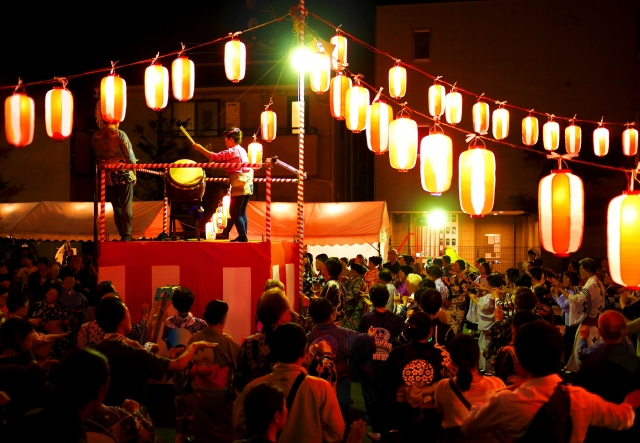
For many communities, Bon Odori is another important part of summer.
Unlike a typical festival, Bon Odori centers around dancing. People gather around a raised platform known as a yagura, music plays through the evening air, and participants dance in large circles around the center.
For visitors, the dances may appear simple. For many Japanese people, however, Bon Odori is connected to something deeper than the dance itself.
One of my strongest childhood memories is not actually the dancing. It is watching adults build the yagura before the event.
Days before the festival, people in the neighborhood would begin assembling the structure in the park. Every day it looked a little different. Little by little, it grew larger until it became the center of the upcoming celebration.
As children, we would watch the progress and become more excited with each passing day.
The anticipation was part of the event.
By the time the music finally started and people gathered to dance, summer already felt special.
Even today, hearing traditional Bon Odori music can instantly bring back memories from decades ago. Certain songs seem capable of transporting people directly back to childhood summers, reminding them of places, people, and emotions they had not thought about in years.
🎆 Fireworks Are More Than Entertainment
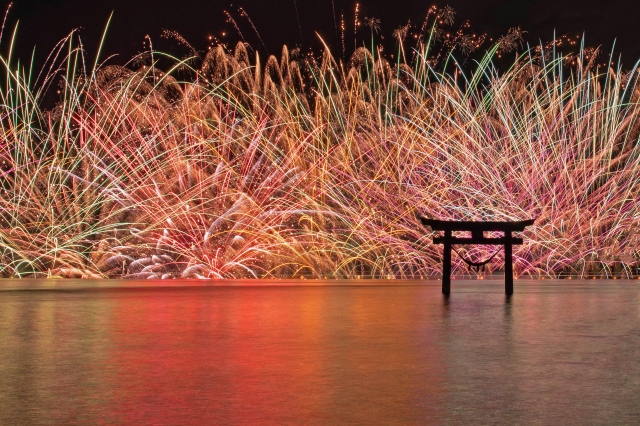
If festivals represent the social side of summer, fireworks may represent its emotional side.
Fireworks displays take place throughout Japan during the summer months, attracting enormous crowds. People arrive early to reserve viewing spots, families gather together, and couples often wear yukata to the event.
From a distance, fireworks may appear to be simply another form of entertainment.
But for many Japanese people, they feel like something more.
Part of the experience is visual. Large fireworks bloom across the night sky like giant flowers, appearing for only a moment before disappearing. Their beauty is temporary, which somehow makes them more memorable.
Part of the experience is physical.
The deep sound of a large firework does not simply reach your ears. It resonates through your chest and stomach. Even before seeing the explosion, people often feel it.
That sensation becomes part of the memory.
Years later, many people can still remember standing outside on a summer night, looking up at the sky while those sounds echoed around them.
👘 Summer Memories Change as We Grow
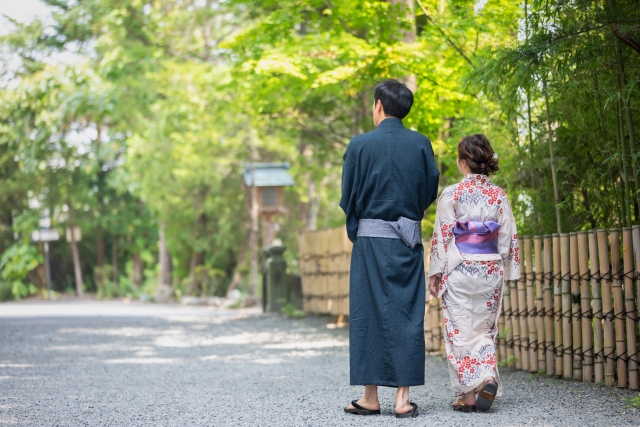
One reason summer remains meaningful throughout life is that its traditions evolve alongside us.
As children, many people experience summer through festivals, games, and family outings.
As teenagers, summer often becomes associated with friendships, school clubs, and first romances. Walking through a festival in a yukata with someone special creates a different kind of memory from childhood, but it becomes equally powerful.
As adults, many people return to the same festivals with their own children. The experience changes again. Suddenly, they are no longer the child buying snacks from a food stall. They are the parent creating memories for the next generation.
The festivals remain.
The fireworks remain.
The music remains.
What changes is the person experiencing them.
That continuity is one reason summer traditions feel so meaningful.
🌏 Why Summer Feels Nostalgic in Japan
Perhaps the most interesting thing about Japanese summer is that people often love it despite the heat.
The weather itself is not always pleasant. The humidity can be exhausting, and many people spend the season searching for shade and air conditioning.
Yet summer remains beloved.
That suggests something important.
People may not love summer because it is comfortable.
They may love it because of what it represents.
Summer is connected to childhood freedom, school vacations, family gatherings, festivals, fireworks, and experiences shared with friends. Every year, familiar sights, sounds, and smells bring those memories back.
The music of Bon Odori.
The smell of festival food.
The sound of fireworks.
The sight of people wearing yukata on a warm evening.
Together, these become a kind of cultural memory shared by millions of people.
🇯🇵 Conclusion
Summer in Japan is more than a season on the calendar.
For many people, it is a collection of memories that stretches across an entire lifetime.
Festivals bring communities together. Bon Odori connects generations through music and dance. Fireworks create moments of wonder that people remember for years. School vacations provide the time in which many of these experiences happen.
That is why summer often feels special in Japan.
Not because it is cooler, easier, or more comfortable than other seasons.
But because it is filled with memories.
And every year, when the music begins to play and the fireworks light up the sky, those memories return once again.
What traditions or events make summer special in your country? I’d love to hear how people around the world remember their summers.
Planning a trip to Japan? Start with our essential Japan travel guides here.
🗾:Essential Travel Tools for Japan: Everything You Need for a Smooth Trip (2026 Guide)
🔗Go deeper into Japan
・Why Is Summer Vacation in Japan So Different? School Life, Homework & Cultural Surprises
・How to Survive Summer in Japan: Heat, Humidity, and Practical Tips
・Why Do the Seasons Matter So Much in Japan? The Cultural Meaning of Seasonal Change