
.
🌏 Introduction
After a long day of sightseeing, few things feel better than soaking in hot water. Whether you’ve spent hours walking through Tokyo, climbing temple steps in Kyoto, or exploring mountain towns in rural Japan, your feet eventually begin asking for a break. Many travelers naturally think of returning to their hotel for a shower. Others decide to experience one of Japan’s oldest daily traditions instead—a visit to a public bath.
During my travels, I’ve enjoyed many different bathing cultures. In Finland, the sauna is an important part of everyday life. In Turkey, the hammam offers a completely different experience centered around steam and cleansing rituals. South Korea has its own public bath culture, while many Western countries associate bathing almost entirely with private bathrooms at home or in hotels. Every culture develops its own relationship with water, relaxation, and cleanliness. Japan simply happens to have developed one where sharing a bath with strangers has long been considered perfectly ordinary.
For first-time visitors, however, stepping into a Japanese sento can feel intimidating. Do you really take off all your clothes? Why are people carrying only a tiny towel? Why does everyone wash before entering the bath? Is the water really that hot? What happens if you have tattoos? These questions are completely normal. The good news is that once you understand a few simple customs, visiting a sento quickly becomes one of the most relaxing cultural experiences Japan has to offer.
One important point is worth understanding from the beginning. Not every public bath in Japan is the same. Many visitors use the word “onsen” for every hot bath they encounter, but Japanese people distinguish between several different types. An onsen uses naturally occurring hot spring water that meets legal mineral standards. A sento, on the other hand, is a neighborhood public bath that usually heats ordinary water. There are also modern super sento, which combine large bathing areas with restaurants, saunas, massage facilities, and relaxation spaces. Although the water itself may differ, the basic etiquette inside these facilities is remarkably similar. Once you learn the customs at one, you’ll feel much more comfortable visiting the others.
♨️ The First Step Begins Before the Bath
One of the charming things about traditional sento is that the experience begins before you even see the bath itself. After opening the entrance door, the first thing you’ll do is remove your shoes. Like many places in Japan, the bathing area is considered a clean indoor space, so outdoor shoes remain at the entrance. Traditional sento often have rows of wooden shoe lockers secured with old-fashioned wooden keys, something many visitors find surprisingly nostalgic. Even this small detail offers a glimpse into a style of everyday Japan that has quietly survived for generations.
After storing your shoes, you’ll pay the admission fee. In many traditional sento, this happens at a counter called the bandai, where an attendant welcomes guests and collects payment. Some modern facilities have replaced the bandai with ticket machines or reception desks, but the process remains simple. Public bath admission fees at sento are usually fixed by each prefecture rather than chosen individually by each bathhouse, making them surprisingly affordable compared with many tourist attractions. If you forgot to bring a towel, soap, or shampoo, there’s no need to worry. Most sento sell small towels and basic bathing supplies at the entrance, while many larger facilities offer convenient rental sets that allow travelers to visit without carrying anything except their wallet.
Before long, you’ll find yourself standing outside the changing room. For many international visitors, this is often the moment when nervousness begins to replace curiosity.
👕 Leaving More Than Your Clothes Behind
Inside the changing room, visitors separate into men’s and women’s bathing areas. Here comes the part that surprises many first-time guests.
Yes, everyone bathes completely naked.
There are no swimsuits, athletic shorts, or towels wrapped around the body. Everything, including underwear, stays inside the locker. At first, this idea feels uncomfortable to many people who come from cultures where public nudity is uncommon. I completely understand that feeling. The first time can seem intimidating simply because it is unfamiliar.
Yet something interesting happens after a few minutes.
You realize that nobody is paying attention to anyone else.
People are focused on washing, relaxing, or quietly enjoying their bath. Nobody is judging your appearance. Nobody is comparing bodies. The atmosphere is surprisingly calm and respectful. In many ways, removing your clothes also removes many of the social signals people carry through everyday life. Expensive suits, fashionable brands, job titles, and social status all disappear at the locker. For a short while, everyone simply becomes another person enjoying a hot bath.
If complete nudity feels deeply uncomfortable for you, there is absolutely nothing wrong with deciding that a sento may not be the right experience. Cultural experiences are meant to be enjoyable, not stressful. Japan offers countless ways to relax, and no visitor should feel obligated to force themselves into a situation that causes genuine anxiety.
Before leaving the changing room, take only a small face towel with you. Your larger bath towel, clothes, phone, camera, and personal belongings remain safely inside your locker. The small towel becomes surprisingly useful during your visit, although perhaps not in the way many visitors first expect.
🧼 The Most Important Rule of All
If there is one rule that every visitor should remember before entering a Japanese public bath, it is this:
The large bath is not where you wash your body.
It is where you relax after washing.
This single idea explains almost every piece of bathing etiquette you’ll see around you.
Choose an empty washing station equipped with a stool, handheld shower, faucet, and basin. Sit down before turning on the water. Washing while seated helps prevent water from splashing onto nearby guests and reflects the quiet consideration that characterizes many Japanese public baths. Take your time washing your hair and body thoroughly with soap, then rinse away every trace of foam before standing up.
You may notice experienced bathers leaning slightly forward while using the shower. This small habit helps keep water from spraying onto neighboring bathers. Nobody will expect perfection from a first-time visitor, but paying attention to those around you is always appreciated.
Only after your body is completely clean is it time to enter the bath itself.
🛁 Soaking in the Bath
After washing thoroughly, you are finally ready for what most people have been looking forward to from the very beginning: soaking in the bath. Before stepping into the water, however, there is one small custom that often surprises first-time visitors. The small towel you have been carrying should never be placed into the bath itself. Because the bath is shared by everyone, people avoid putting towels into the water, even if they have just been washed. You will often notice experienced bathers folding the towel and placing it on the edge of the bath or balancing it on top of their head. Many visitors assume this is simply a funny Japanese habit, but it is actually a practical solution to keeping the towel out of the water while still keeping it close at hand.
The next surprise is usually the temperature. Traditional sento baths are often much hotter than visitors expect, commonly around 42 to 44 degrees Celsius. If you are accustomed to warm hotel baths, the first step into a sento can feel almost shocking. There is no need to rush. Enter slowly, allowing your body to adjust little by little. After a minute or two, what first felt overwhelmingly hot often becomes deeply relaxing, and the warmth gradually reaches muscles that may have been tired after a full day of sightseeing. Looking around, you may notice people quietly sitting with their eyes closed, saying almost nothing at all. Unlike swimming pools or water parks, sento are places for calm conversation and peaceful relaxation rather than energetic activity.
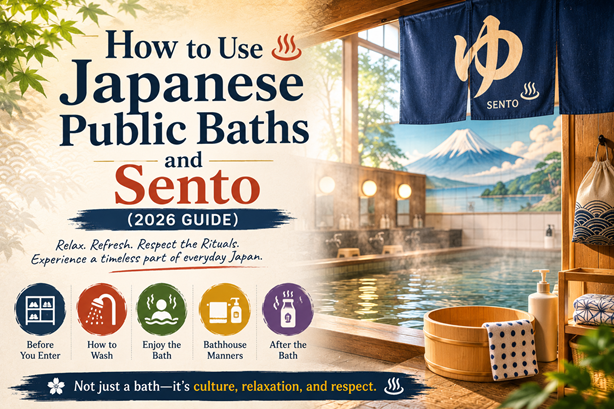
Many traditional sento also preserve another charming feature that has become an icon of Japanese bathing culture: the large mural painted on the wall behind the bath. Mount Fuji is by far the most famous subject, although some bathhouses display beautiful lakes, forests, or seasonal landscapes instead. These murals create the feeling of bathing outdoors even while remaining inside the building. Interestingly, this tradition developed mainly in sento rather than onsen, giving neighborhood bathhouses their own distinctive atmosphere that many Japanese people remember fondly from childhood.
As you relax in the hot water, you may begin to understand why public baths have remained part of Japanese daily life for so many generations. The experience is not simply about getting clean. That happened earlier at the washing station. The bath itself is about slowing down. For a little while, the outside world becomes less important than the simple comfort of warm water and quiet surroundings.
🚫 A Few Things to Know Before You Visit
Although visiting a sento is quite straightforward once you understand the basic customs, there are a few things worth checking before you go. The most common question from international visitors concerns tattoos. Traditionally, many bathhouses restricted entry to guests with tattoos because of historical associations with organized crime in Japan. Today, however, the situation is changing. Some sento and onsen continue to prohibit tattoos entirely, while others allow small tattoos if they are covered with special stickers, and an increasing number openly welcome tattooed visitors regardless of size or design. Policies vary from one facility to another, so it is always a good idea to check the official website before visiting rather than assuming every bathhouse follows the same rules.
Another point to remember is that the water may be significantly hotter than what you are accustomed to at home. If you begin feeling dizzy or overheated, simply step out of the bath, sit for a few minutes, and drink some water before returning if you wish. There is no expectation that everyone stays in the bath for the same amount of time. The experience should feel relaxing, never uncomfortable.
Photography is another important consideration. Because everyone is bathing without clothing, cameras and smartphones should remain inside your locker. Respecting the privacy of other guests is one of the most important parts of bathing etiquette, and most facilities prohibit photography throughout the bathing area.
Finally, remember that a sento is intended to be a peaceful shared space. Quiet conversation with friends or family is perfectly acceptable, but loud voices, splashing, or treating the bath like a swimming pool would disturb those around you. The atmosphere is remarkably relaxed, and most visitors naturally follow the mood created by everyone else.
🥛 The Perfect Ending to a Japanese Bath
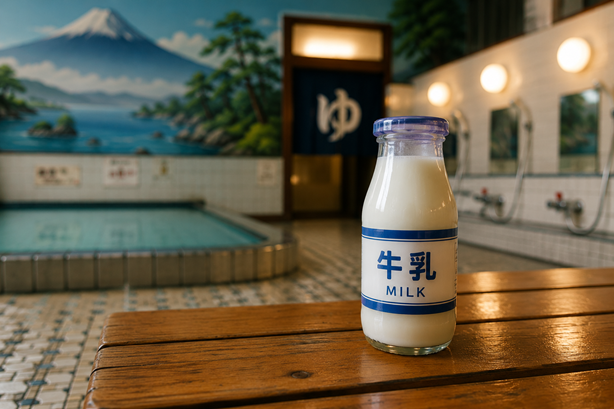
Many people think the experience ends when they leave the hot water, but regular visitors know there is still one final tradition waiting.
Before returning to the changing room, take a moment to use your small towel to wipe away most of the water from your body. This simple habit helps keep the changing room floor dry and comfortable for everyone using it after you. It is another small example of the quiet consideration that appears throughout everyday life in Japan.
After getting dressed, you will probably notice refrigerators or vending machines near the entrance filled with cold drinks. For decades, one drink has become almost inseparable from Japanese bath culture: bottled milk. Whether it is plain milk, coffee milk, or fruit-flavored milk, many Japanese people have fond memories of finishing a hot bath by enjoying an ice-cold bottle while standing in the lobby. If you watch carefully, you may even notice someone placing a hand dramatically on their hip before taking a long drink. It has become such a familiar image that it is almost a symbol of the sento experience itself.
Growing up in Japan, I never questioned this little tradition. After swimming, after visiting a sento with family, or after relaxing in a neighborhood bathhouse, reaching for a cold bottle of milk simply felt like the natural ending to the day. Looking back now, I realize that these small rituals are often the moments that stay with us the longest. Visitors frequently arrive expecting only a hot bath, but leave remembering the wooden shoe lockers, the Mount Fuji mural, the tiny towel balanced on someone’s head, and the refreshing bottle of milk enjoyed afterward.
🌏 Conclusion
At first glance, a Japanese sento may seem intimidating. Taking off your shoes, removing all your clothes, washing carefully before entering the bath, and following unfamiliar etiquette can feel like a great deal to remember. Yet once you understand the rhythm of the experience, the customs begin to feel surprisingly natural.
Living overseas taught me that every culture has developed its own way of relaxing and caring for both body and mind. Some gather in saunas, others visit steam baths, while many simply enjoy the privacy of a bath at home. Japan’s public bath culture is not better or worse than these traditions. It is simply another expression of the same human desire to slow down, recover from the day, and share a peaceful space with others.
Perhaps that is the most memorable lesson a sento offers. For a little while, everyone leaves behind their work, their schedules, their fashion, and even their phones. Surrounded by warm water and quiet conversation, strangers simply become people enjoying the same simple experience.
If you decide to visit a Japanese sento during your trip, don’t worry about getting every detail perfect. Be respectful, observe what the people around you are doing, and enjoy the experience with an open mind. You may arrive thinking you are simply taking a bath, but you will probably leave feeling that you have experienced a small yet unforgettable piece of everyday Japanese life.
🌏 Continue Exploring Everyday Life in Japan
If you enjoyed learning about Japanese public baths, you may also enjoy these practical guides that help you experience everyday life in Japan with greater confidence and understanding.
👉 How to Beat Jet Lag When Traveling to Japan (2026 Guide)
👉 How to Find the Right Exit at Japan’s Train and Subway Stations (2026 Guide)
👉 How to Use Coin Lockers in Japan: Sizes, Prices, and Travel Tips (2026 Guide)
👉 How to Buy Medicine in Japan: What Travelers Need to Know (2026 Guide)
👉 How to Use the Shinkansen in Japan: Tickets, JR Pass, Seats & Luggage (2026 Guide)