

🌏 Introduction
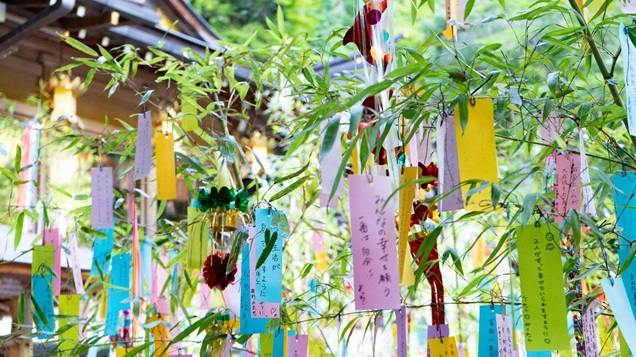
Every year as July approaches, something quietly begins to change across Japan. Bamboo branches appear at the entrances of shopping streets, train stations, schools, kindergartens, community centers, and even office buildings. Colorful strips of paper begin to flutter gently in the summer breeze, each carrying someone’s handwritten wish. Some are written by children hoping to become soccer players, teachers, or astronauts. Others are written by adults wishing for good health, success, or happiness for their families. Together they transform ordinary streets into places filled with hope, imagination, and quiet optimism.
This tradition is known as Tanabata, often called Japan’s Star Festival, and it is celebrated every year on July 7.
Growing up in Japan, I never questioned why we celebrated Tanabata. It was simply part of summer, just as naturally as hearing cicadas sing, eating watermelon on hot afternoons, or looking forward to fireworks festivals. Every July, my teachers would hand each student a small colorful piece of paper called a tanzaku. We carefully wrote our wishes, tied them to bamboo branches decorating our classroom, and spent the rest of the day reading the dreams our classmates had written. Some wished for perfect test scores. Others hoped to become professional baseball players or famous musicians. Looking back now, many of those dreams were wonderfully ambitious, and perhaps that was exactly the point. As children, nobody told us our dreams were unrealistic. For one day each summer, everyone was encouraged simply to hope.
Only after living overseas did I realize how unique this annual tradition really was.
People all over the world express hopes and dreams in different ways. Some light candles in churches. Others toss coins into fountains, make wishes while blowing out birthday candles, or write New Year’s resolutions at the beginning of January. Hoping for a better future is something people everywhere understand. What surprised me was not that Japanese people make wishes, but that almost every child in Japan grows up sharing the same tradition every July. It becomes a common childhood memory that quietly connects generations.
Perhaps that is why Tanabata feels so familiar to so many Japanese people.
It is not simply a festival.
It is part of growing up.
⭐ A Love Story Written Across the Night Sky
The origins of Tanabata come from a beautiful legend that has been told in Japan for centuries. According to the story, Orihime, the weaving princess represented by the star Vega, and Hikoboshi, the cowherd represented by the star Altair, fell deeply in love. They became so absorbed in spending time together that they neglected their responsibilities, causing problems in the heavens. As punishment, they were separated by the Milky Way and allowed to meet only once each year, on the seventh day of the seventh month.
Whether people believe the legend literally is not especially important today.
What matters is the message it carries.
It reminds us that meaningful reunions often require patience, effort, and hope. It also transforms something as ordinary as looking up at the night sky into an opportunity to remember a story that has been shared for generations. Even children who cannot yet identify Vega or Altair quickly learn that somewhere above them two stars are trying to find each other across the Milky Way.
That simple idea has always fascinated me.
The stars themselves never change, yet every summer we choose to look at them differently because of a story.
Perhaps that is one of the reasons Tanabata has survived for so many centuries.
Stories have a remarkable ability to make familiar things feel new again.
🎋 Why Bamboo?
One question many visitors ask is surprisingly simple.
Why bamboo?
After all, wishes could easily be written on paper and placed almost anywhere. Why does Tanabata always seem to involve long green bamboo branches decorated with colorful paper?
The answer lies partly in the symbolism of bamboo itself.
For generations, bamboo has been admired in Japan because it grows quickly, remains green throughout the year, and bends without breaking in strong winds. It represents resilience, vitality, and steady growth. Long before modern cities filled the landscape, bamboo forests were familiar parts of everyday life, and many people believed that their tall, straight stems connected the earth with the heavens. As colorful wishes flutter in the wind, it is easy to understand why people imagined bamboo carrying those hopes upward toward the stars.
As a child, I never thought about any of this.
I simply enjoyed tying my small piece of paper onto the nearest branch.
Looking back now, however, I appreciate how beautifully simple the tradition is.
A plant that continues growing toward the sky becomes the place where people quietly place their hopes for the future.
Sometimes the most meaningful traditions are also the simplest.
🏫 Why Almost Every Japanese Child Experiences Tanabata
One reason Tanabata remains such a familiar tradition in Japan is that it is introduced to children at a very young age. Long before they understand the legend of Orihime and Hikoboshi, children begin writing wishes on colorful strips of paper in kindergartens, nursery schools, and elementary schools. Teachers decorate classrooms with bamboo branches, classmates help one another tie their wishes to the leaves, and everyone spends time reading the dreams written by friends around them.
Looking back, I realize that these memories are far more important than I understood as a child.
Every July, writing a wish became something I simply expected. There was never any pressure to write something grand or extraordinary. Some years I hoped to become better at sports. Other years I wished to do well in school or hoped that my family would stay healthy. Like many children, my dreams changed every year, but the act of writing them down never disappeared.
Perhaps that is one of the quiet strengths of Tanabata.
It gently encourages children to think about the future.
Not through exams or competition, but through imagination.
Adults often become busy with work, responsibilities, and daily routines. Children, however, are naturally encouraged to dream. Tanabata quietly reminds us that taking a few minutes each year to think about our hopes may be just as meaningful for adults as it is for children.
🌍 It Was Only After Living Overseas That I Realized How Special It Was
When I lived abroad, I experienced many wonderful traditions in different countries. Christmas markets, Thanksgiving dinners, Canada Day celebrations, Independence Day fireworks, and local festivals all reflected the history and culture of the places where I lived. Every country has its own seasonal events that bring people together.
Yet every July, I found myself thinking about Tanabata.
Not because I believed my wishes would magically come true, but because I missed the atmosphere surrounding it.
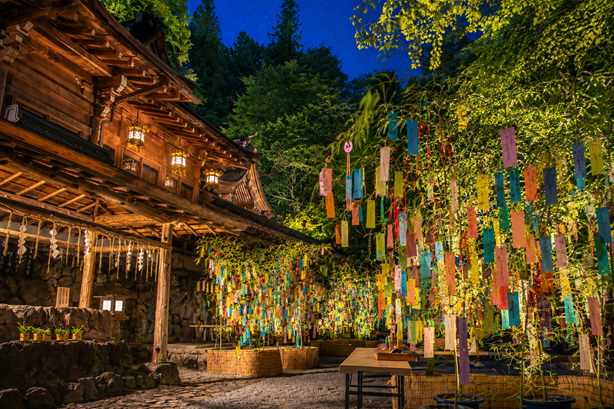
I missed walking through shopping streets decorated with bamboo branches covered in colorful paper.
I missed seeing children’s handwriting hanging beside the wishes of complete strangers.
I missed the quiet feeling that summer had truly begun.
Living overseas helped me notice something I had completely overlooked while growing up.
Tanabata was never only a school event.
It was part of the landscape.
Department stores displayed bamboo decorations near their entrances.
Railway stations sometimes invited passengers to write wishes.
Community centers organized small Tanabata events.
Even people who no longer actively celebrated still recognized the colorful decorations as a familiar sign that July had arrived.
Like many aspects of Japanese culture, I only realized how deeply it had become part of my own memories after spending time away from it.
✨ More Than Making Wishes, Tanabata Invites Us to Pause
Today, many people celebrate Tanabata without thinking too deeply about the ancient legend behind it.
Some simply enjoy the decorations.
Others participate because their children bring home colorful wishes from school.
Many people stop for a moment, smile at the bamboo branches displayed in shopping malls, and continue walking.
Perhaps that is perfectly enough.
Not every tradition needs to be explained in detail to have value.
What makes Tanabata meaningful is not whether every wish comes true.
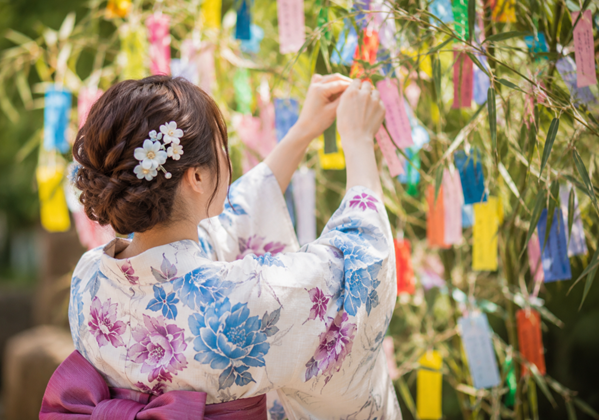
Rather, it offers one quiet moment each summer to pause, think about the future, and put our hopes into words.
In everyday life, we rarely stop to ask ourselves what we truly hope for. We spend most of our time solving today’s problems or planning tomorrow’s schedule. Tanabata gently interrupts that routine by inviting us to write down something simple but deeply personal.
That small act can be surprisingly powerful.
Sometimes writing a wish helps us recognize a dream we had almost forgotten.
Sometimes it reminds us of someone we hope will remain healthy.
Sometimes it simply makes us smile.
Perhaps that is why this tradition has continued for so many centuries.
The bamboo branches disappear after July 7.
The colorful paper is taken down.
Summer continues.
But the wishes themselves often remain with us much longer.
🇯🇵 Conclusion
Why do Japanese people celebrate Tanabata on July 7?
The answer is not simply because of an ancient love story or a beautiful seasonal decoration.
For many Japanese people, Tanabata is one of those traditions that quietly becomes part of childhood without anyone needing to explain why. We grow up writing wishes in school, seeing bamboo branches decorated throughout our communities, and looking forward to a festival that arrives every summer almost as naturally as the changing seasons themselves.
Only later, especially after spending time overseas, do many people realize how unique that shared experience really is.
Every culture has its own way of expressing hope.
Some people pray.
Some write New Year’s resolutions.
Some make wishes while blowing out birthday candles.
In Japan, every July 7, many people write their dreams on colorful paper and gently tie them to bamboo branches reaching toward the sky.
Perhaps Tanabata is not really about whether our wishes reach the stars.
Perhaps it is about taking one quiet moment each year to remember that hope itself is worth writing down.
And perhaps that is why, even as adults, many of us still smile whenever we see colorful strips of paper dancing gently in the summer wind.
🌏 Continue Exploring Japan’s Seasonal Traditions
If you enjoyed learning about Tanabata, you may also enjoy these articles exploring the traditions, festivals, and everyday customs that shape life throughout the Japanese seasons.
👉 Why Do Japanese People Walk Through Giant Grass Rings in June? (2026 Guide)
👉 Why Is the Summer Solstice So Quiet in Japan? (2026 Guide)
👉 Why Do Japanese People Carry an Umbrella Even When It Might Not Rain? (2026 Guide)
👉 Why Does Japan Change Clothes by the Calendar? Understanding a Unique Seasonal Tradition
👉 Why Do Japanese People Bow? Meaning, Types, and When to Do It (2026 Guide)