
🌏 Introduction
If you spend enough time in Japan, you may begin to notice something curious. On days when the weather forecast predicts only a slight chance of rain, many people still leave home carrying an umbrella.
Sometimes the sky is blue. Sometimes the forecast says there is only a 20 or 30 percent chance of rain. Yet train stations, schools, offices, and shopping streets are still filled with people carrying foldable umbrellas in their bags or holding clear plastic umbrellas in their hands.
For visitors from overseas, this can seem unnecessary. Why carry something all day if it might not rain at all?
As a Japanese person, I never questioned this habit growing up. Carrying an umbrella simply felt normal. Even today, if there is a possibility of rain, I usually take a foldable umbrella with me. When I lived overseas as an adult, I often kept a large umbrella in my car. Looking back, I have realized that this habit probably started when I was a child walking to school every day in Japan.
Like many Japanese children, I walked to school regardless of the weather. Rain was not an excuse to stay home. If rain was possible, I needed to be prepared. Decades later, that habit still remains.
Interestingly, this simple behavior reveals something deeper about Japanese daily life, childhood experiences, and the way many people approach preparation and responsibility.
☔ Growing Up Walking to School
One reason many Japanese adults carry umbrellas is surprisingly simple.
They grew up doing it.
Unlike some countries where children are frequently driven to school by parents, many Japanese children walk. Some walk only a few minutes. Others may walk twenty or thirty minutes each way. Many continue walking throughout elementary school.
Rain does not change this routine.
On rainy mornings, children put on raincoats, carry umbrellas, and head to school as usual. Parents often remind them to check the weather forecast before leaving home. Teachers remind students not to forget their umbrellas. Schools sometimes even keep spare umbrellas for unexpected situations.
After years of doing this, preparing for rain becomes automatic.
Carrying an umbrella is no longer a special decision. It becomes part of everyday life.
Even after students grow up and start commuting to work, many continue following the same habit they learned as children.
🚶 A Country Built Around Walking
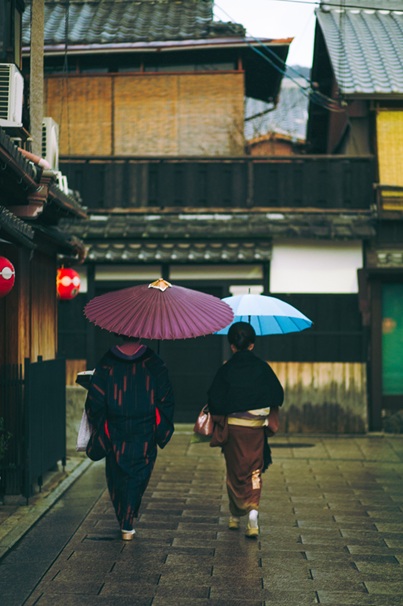
Another important factor is that daily life in Japan involves a surprising amount of walking.
Visitors often underestimate this.
Even if you use trains for most of your journey, there is usually walking involved before and after. You walk to the station. You walk between train platforms. You walk from the station to your office, school, restaurant, or hotel.
A short rain shower can quickly become inconvenient.
In countries where people spend much of their day moving directly between buildings and cars, sudden rain may be little more than a minor annoyance. In Japan, where millions of people spend significant time outdoors each day, being caught without an umbrella can be much more disruptive.
Because of this, carrying an umbrella often feels like common sense.
🌦️ Living With Unpredictable Weather
Japan’s weather also plays a role.
The country experiences distinct seasons, typhoons, sudden summer thunderstorms, and long rainy periods known as tsuyu.
Many Japanese people grow up learning that weather forecasts are helpful but not perfect.
A sunny morning can become a rainy afternoon.
Dark clouds can appear unexpectedly.
A brief summer thunderstorm can arrive with little warning.
As a result, many people prefer to prepare for the possibility rather than react after the rain begins.
This does not necessarily mean Japanese people are obsessed with weather forecasts. Rather, they become accustomed to treating weather as something that deserves attention.
Checking the forecast before leaving home is a daily habit for many people.
🎒 The Foldable Umbrella Culture
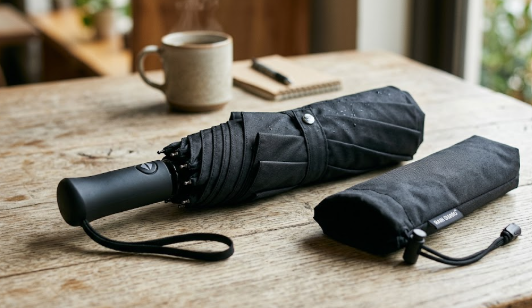
The popularity of foldable umbrellas is another uniquely practical aspect of life in Japan.
Small, lightweight, and easy to carry, foldable umbrellas fit neatly into backpacks, handbags, and briefcases. Many people simply leave one inside their bag permanently.
Because the umbrella is already there, carrying it requires almost no effort.
This changes the decision-making process.
Instead of asking, “Should I bring an umbrella today?” many people simply think, “My umbrella is already in my bag.”
Over time, carrying a foldable umbrella becomes as normal as carrying a wallet or smartphone.
🤝 Avoiding Inconvenience for Yourself and Others
There is also a cultural element involved.
Many Japanese people dislike causing unnecessary inconvenience.
Being soaked by rain can affect more than just the individual.
Wet clothing may make train rides uncomfortable. Water dripping onto floors can create messes. Arriving at work or school completely drenched can disrupt plans for the day.
Carrying an umbrella is often seen as a simple way to avoid these problems.
It reflects a mindset that values preparation and consideration.
This does not mean Japanese people are constantly worried about rain. Rather, they often prefer to prevent small problems before they happen.
🌏 What I Noticed While Living Abroad
Living overseas made me notice this habit more clearly.
Even when I no longer walked to school and spent much of my time driving, I still found myself preparing for rain.
I often kept a large umbrella in my car. Whenever clouds appeared, I felt more comfortable knowing it was available.
At first, I assumed everyone did the same thing.
Over time, I realized that many people approached rain differently.
Some simply accepted getting wet if rain arrived unexpectedly. Others relied on jackets or hoodies instead of umbrellas. Some checked the weather less frequently than I was accustomed to.
None of these approaches were wrong.
They were simply different.
The experience made me realize that my umbrella habit was not just about weather. It was connected to years of routines and expectations developed while growing up in Japan.
The child who walked to school with a foldable umbrella had quietly followed me into adulthood.
🇯🇵 A Small Habit That Reflects Everyday Life
Many cultural differences are found in major traditions, festivals, or ceremonies.
Others are hidden in ordinary routines.
Carrying an umbrella may seem like a small detail, but it reflects several aspects of daily life in Japan. It reflects a childhood spent walking to school. It reflects a society that relies heavily on public transportation and walking. It reflects attention to weather and seasonal changes. It reflects a tendency to prepare in advance rather than react at the last moment.
Most Japanese people probably never think deeply about why they carry an umbrella.
They simply do it.
That may be the most interesting part.
The habit feels so natural that it rarely attracts attention until someone experiences life in another country and realizes not everyone behaves the same way.
🎯 Conclusion
Why do Japanese people carry an umbrella even when it might not rain?
The answer is not simply because Japan receives a lot of rain. It is also connected to childhood routines, walking culture, public transportation, seasonal awareness, and a practical mindset that values preparation.
For many Japanese people, carrying an umbrella is not an extraordinary precaution. It is simply part of everyday life.
Just as children learn to check the weather before leaving for school, many adults continue doing the same thing decades later.
Sometimes the umbrella is never needed.
Sometimes it stays folded in a bag all day.
But if the rain suddenly arrives, they are ready.
And perhaps that simple idea—being prepared before a problem appears—says more about Japanese daily life than the umbrella itself.
🌏 Curious About Everyday Life in Japan?
Many ordinary habits in Japan reveal deeper cultural values and childhood experiences. Explore these related articles to better understand the routines, mindset, and traditions that shape daily life in Japan.
👉 Umbrella Etiquette in Japan: 7 Essential Rules Every Traveler Should Know (2026 Guide)
👉 Why Does Japan Change Clothes by the Calendar? Understanding a Unique Seasonal Tradition
👉 Why Does Summer Feel So Special in Japan? Festivals, Fireworks, and Bon Odori (2026 Guide)
👉 Why Is Summer Vacation in Japan So Different? School Life, Homework & Cultural Surprises