
🌏 Introduction
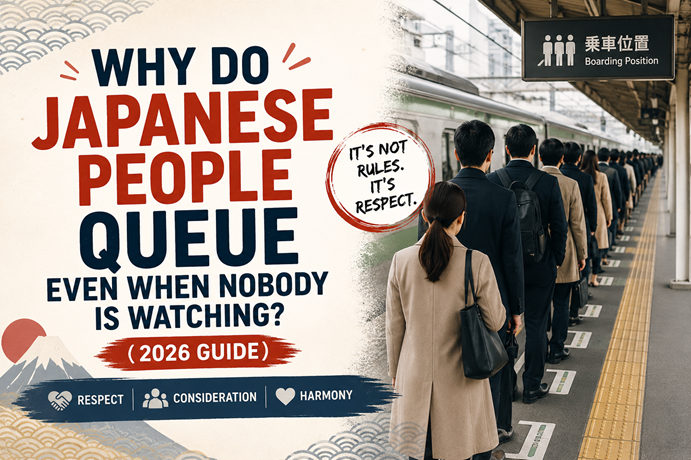
One of the first things many visitors notice in Japan is how naturally people form lines. Whether waiting for a train, boarding an elevator, buying lunch at a convenience store, or entering a popular attraction, people often stand quietly behind one another without anyone telling them where to go. There may be no security guard directing traffic, no ropes creating barriers, and sometimes not even a sign explaining where the line begins. Yet somehow, the queue forms almost automatically.
For many travelers, this leaves a strong impression.
It is tempting to conclude that this is something uniquely Japanese.
However, my own experience has taught me otherwise.
I have lived in and traveled through several countries, including the United Kingdom, Scotland, Germany, Canada, and the United States. In the UK, people patiently waited for buses and trains. In Scotland, queues formed naturally at stations and shops. In Germany, people respected their turn without much discussion. Canada felt very similar. Whether I was waiting at a supermarket, a coffee shop, or boarding public transportation, people generally understood that joining the end of the line was simply the normal thing to do.
Those experiences changed how I think about Japan.
Standing in line is not something that belongs only to Japan.
Many societies value fairness, patience, and respecting other people’s turn.
The more interesting question is not why Japanese people queue.
The more interesting question is why queues in Japan often seem to work so smoothly, even when nobody is watching.
🤝 Looking Back on My Own Experience
Growing up in Japan, I never considered standing in line to be anything unusual.
It was simply part of everyday life.
At school, we lined up before entering classrooms. We waited our turn before receiving school lunch. We stood in orderly rows during assemblies, sports festivals, evacuation drills, graduation ceremonies, and school trips. Even during simple classroom activities, teachers often asked students to line up before moving together.
Nobody explained that this was a special part of Japanese culture.
It was simply how things worked.
Because everyone around me did the same thing, I never questioned it.
Only after living overseas did I begin paying attention to how people organized themselves in public spaces. I expected every country to look completely different, but that was not what I found. In several countries where I lived, especially Canada, the United Kingdom, Scotland, and Germany, people also formed orderly lines in many situations. That experience reminded me that queuing itself is not uniquely Japanese.
At the same time, I noticed subtle differences.
In Japan, people often seem to recognize an invisible line almost instantly. Someone arrives, looks around for a moment, quietly joins the back of the queue, and everyone continues waiting without speaking. It is almost as if everyone already understands the same unwritten rules.
That quiet coordination fascinated me far more than the line itself.
🚉 Everyday Life Is Full of Small Queues
Once you begin paying attention, you notice how often Japanese people stand in line.
Train platforms have markings showing where passengers should wait before boarding.
Bus stops naturally become small queues.
Convenience stores place signs on the floor leading customers toward the cashier.
Department stores create waiting areas during sales.
Restaurants often ask customers to write their names on waiting lists before taking a seat.
Even elevators frequently develop orderly lines without anyone giving instructions.
What is interesting is not simply that people queue.
It is that the queue often feels like the easiest solution for everyone involved.
Nobody needs to negotiate.
Nobody has to remember who arrived first.
Nobody has to argue about fairness.
The line quietly solves those questions before they become problems.
That creates a surprisingly calm atmosphere, even when many people are waiting together.
🏫 Perhaps It Begins Much Earlier Than We Realize
When people ask why Japanese adults naturally form orderly lines, I sometimes wonder if the answer begins long before adulthood.
It may begin in childhood.
Japanese schools involve an enormous number of shared activities.
Students clean classrooms together.
They serve lunch together.
They participate in school ceremonies together.
They practice disaster evacuation drills.
They move between classrooms as groups.
They wait for buses during school trips.
Many of these situations involve standing in line.
Children repeat these experiences year after year.
Eventually, waiting for one’s turn stops feeling like a rule.
It simply becomes normal.
That does not mean children are taught that queuing is morally superior to other ways of organizing people.
Rather, they become accustomed to the idea that waiting together usually helps everyone reach the same goal more smoothly.
As adults, many people continue doing something that has become second nature.
It no longer feels like following instructions.
It simply feels efficient.
🧠 Queuing Is Less About Rules Than About Trust
When visitors first notice Japanese queues, they sometimes assume people are simply following strict rules.
There is certainly some truth to that. Japan does have many written guidelines for public behavior, and schools often teach children the importance of respecting others.
But after thinking about it for many years, I have come to believe that queues in Japan depend less on rules than on trust.
When you stand at the end of a line, you trust that the people in front of you arrived before you.
You also trust that the people who arrive after you will stand behind you.
Nobody needs to check everyone’s position.
Nobody needs to argue.
Nobody needs to ask who was next.
Everyone quietly assumes that everyone else shares the same expectation.
That shared understanding allows even long lines to move surprisingly smoothly.
Of course, no society is perfect. Occasionally someone makes a mistake, misunderstands where the queue begins, or accidentally walks ahead of someone else. Yet most of the time, these situations are resolved calmly because people generally assume good intentions rather than bad ones.
Perhaps that quiet trust is one of the reasons visitors often describe Japan as feeling orderly.
🚇 Even the Environment Helps People Queue
Another reason queues function so smoothly in Japan has nothing to do with personality.
It has to do with design.
If you look carefully around train stations, airports, supermarkets, and convenience stores, you will notice that many public spaces are designed to make waiting easy.
Train platforms often have markings showing exactly where passengers should stand before the train arrives.
Convenience stores place floor markings that naturally guide customers toward the cashier.
Airports use ropes and clear signs that reduce confusion.
Escalators often have obvious waiting areas.
Even amusement parks, museums, and popular restaurants frequently organize waiting spaces before crowds become too large.
These small design choices reduce uncertainty.
Instead of wondering where the line begins, people immediately know where to go.
Good infrastructure quietly supports good behavior.
That does not mean every Japanese person naturally enjoys standing in line.
Most people would probably prefer not to wait at all.
The point is that the environment makes waiting easier, clearer, and less stressful.
When the system itself reduces confusion, people are more willing to cooperate.
🌍 Different Cultures Solve the Same Problem Differently
One lesson I learned while living overseas is that every society has developed its own way of organizing public life.
Some cultures rely heavily on orderly queues.
Others place greater value on conversation, flexibility, or personal interaction.
Neither approach automatically makes one society more polite than another.
They simply reflect different histories and different expectations.
That is why I hesitate whenever I read articles claiming that orderly queuing exists only in Japan.
It simply does not match my own experience.
In Canada, I often stood patiently in line at coffee shops and supermarkets.
In the United Kingdom and Scotland, waiting your turn felt completely natural.
Germany was much the same.
People generally respected the order in which others had arrived, and most interactions remained calm and predictable.
Those experiences reminded me that fairness is a value shared by many societies, even if it is expressed in slightly different ways.
Perhaps what feels distinctive in Japan is not the existence of queues themselves but how consistently they appear in everyday situations.
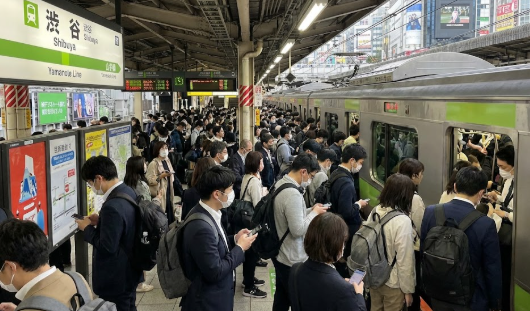
Whether buying lunch at a convenience store, boarding a commuter train during rush hour, waiting for an elevator, or entering a popular festival, standing in line often feels like the default solution.
That consistency creates an impression that visitors notice immediately.
😊 Everyone Wants to Reach Happiness a Little Faster
Whenever I think about waiting in line, I often return to one simple idea.
Nobody enjoys waiting.
Whether we are buying coffee, catching a train, entering a museum, or ordering lunch, everyone hopes to finish a little sooner.
Perhaps that is exactly why queues exist.
Standing in line is not about making people wait longer.
It is about giving everyone the fairest chance to reach the same goal.
If everyone tries to move ahead at once, progress usually becomes slower for everyone.
If everyone accepts a simple order, the entire group often reaches the destination more efficiently.
In that sense, waiting in line is less about patience than cooperation.
People temporarily accept a small inconvenience because they believe the overall result will benefit everyone.
That idea extends beyond queues.
It appears in traffic, public transportation, schools, workplaces, and many other parts of daily life.
The line itself is only the visible expression of something larger.
🇯🇵 Conclusion
Why do Japanese people queue even when nobody is watching?
The answer is probably not that Japanese people enjoy waiting.
It is also not because Japan is the only country where orderly queues exist.
My own experiences living in Canada, the United Kingdom, Scotland, and Germany taught me that many societies value fairness and patiently wait their turn.
What makes Japan interesting is how naturally this behavior fits into everyday life. From childhood, many people grow up participating in group activities where waiting for others becomes part of daily routines. Public spaces are thoughtfully designed to support orderly movement, and people generally trust that others will follow the same unwritten expectations.
Perhaps that is why queues often form so effortlessly.
They are not simply the result of strict rules.
They are the result of countless small habits, shared expectations, and quiet trust built over many years.
In the end, standing in line is a surprisingly simple act.
Yet it reveals something meaningful about how people choose to share public spaces with one another.
🌏 Continue Exploring Everyday Japan
If you enjoyed discovering why queues work so naturally in Japan, you may also enjoy these articles exploring the everyday habits, values, and customs that shape life in Japan beyond the tourist attractions.
👉 Why Do Japanese People Carry Handkerchiefs Everywhere? (2026 Guide)
👉 Why Do Japanese People Carry an Umbrella Even When It Might Not Rain? (2026 Guide)
👉 Why Are Clothes Often Dried Outside in Japan? (2026 Guide)
👉 Why Do Japanese People Sleep on Trains So Easily? The Hidden Trust Behind Everyday Commuting
👉 Why Do Japanese Students Clean Their Own Classrooms? The Lesson Behind School Cleaning Time