
🌏 Introduction
Getting sick or injured while traveling is something nobody wants to think about. Unfortunately, it happens more often than many travelers expect. A long flight, changes in weather, unfamiliar food, jet lag, allergies, exhaustion from sightseeing, or simply bad luck can leave visitors dealing with headaches, sore throats, stomach problems, minor injuries, or cold symptoms during their trip.
I have lived and traveled in several countries, and one thing I have learned is that becoming sick away from home feels very different from becoming sick in your own country. When you are at home, you usually know exactly where to go. You know how the healthcare system works. You know which medicine you normally buy. You understand the language, the customs, and the process.
When you are overseas, everything feels more complicated.
Personally, I have always been hesitant to visit a hospital in a foreign country unless absolutely necessary. It is not only the language that makes people nervous. Medical systems differ from country to country. Procedures are different. Insurance systems are different. Even the way people describe symptoms can be different. That uncertainty often creates additional stress when you are already feeling unwell.
Because of that, many travelers prefer to start with over-the-counter medicine when dealing with minor symptoms. Fortunately, Japan is generally a very convenient country for buying medicine, and visitors can usually find what they need without too much difficulty.
Understanding where to buy medicine, what to expect, and when to seek professional medical help can make your trip much less stressful if health issues arise.
💊 Can Tourists Buy Medicine in Japan?
The simple answer is yes.
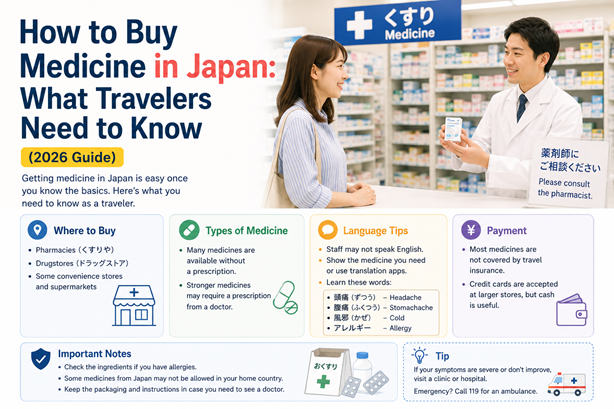
Tourists can purchase many common over-the-counter medicines in Japan without any special paperwork. If you have a headache, a mild cold, seasonal allergies, minor digestive issues, or small cuts and scrapes, there is a good chance you can find products that help.
Japan has a large and well-developed retail pharmacy network. In most cities and tourist destinations, pharmacies and drugstores are easy to find.
Many visitors are surprised by how common these stores are.
In busy urban areas, it often feels like there is a drugstore on every major street.
Even smaller towns usually have at least one nearby.
This accessibility makes it much easier to deal with minor health issues before they become major problems.
🏪 The Best Place to Buy Medicine in Japan
Although some medicines can be found in supermarkets and convenience stores, the easiest place for travelers to shop is usually a drugstore.
Japanese drugstores combine many functions into a single store. In addition to medicine, they often sell cosmetics, toiletries, snacks, drinks, health products, daily necessities, and personal care items.
Major chains include
・Matsumoto Kiyoshi
・Welcia
・Sugi Pharmacy
・Cocokarafine
・Sundrug
,and several others.
Even if you do not recognize the names, they are easy to identify because they usually have large signs and bright storefronts.
For travelers staying in major cities such as Tokyo, Osaka, Kyoto, Yokohama, Nagoya, or Fukuoka, finding a drugstore is rarely difficult.
Many locations are open late into the evening, and some operate twenty-four hours a day.
This can be extremely helpful when symptoms appear unexpectedly at night.
🌡️ What Types of Medicine Can You Buy?
Japanese drugstores sell a wide variety of over-the-counter products.
Visitors can usually find medicine for headaches, fever reduction, sore throats, coughs, seasonal allergies, stomach discomfort, diarrhea, constipation, motion sickness, minor injuries, and skin irritation.
Bandages, disinfectants, cold packs, masks, thermometers, and other healthcare supplies are also widely available.
One thing travelers should remember is that medicine packaging may look unfamiliar.
Even when the active ingredients are similar to products sold in your home country, the brand names may be completely different.
For this reason, using a translation app can be extremely helpful.
Many travelers use smartphone translation tools to compare ingredients or explain symptoms to pharmacy staff.
Fortunately, Japan is a highly organized country, and medicine sections are generally well categorized.
🧑⚕️ Why Some Medicines Are Kept Behind the Counter
Visitors from North America, Europe, or Australia are sometimes surprised that certain medicines are not freely available on store shelves.
Japan classifies some products differently than other countries.
As a result, some medicines require consultation with a pharmacist before purchase.
This does not necessarily mean the medicine is dangerous.
It simply means that a pharmacist must be available to answer questions and confirm appropriate use.
You may occasionally notice products displayed behind counters or inside locked cases.
In these situations, simply ask a staff member for assistance.
Many pharmacies have procedures designed to help customers complete the purchase quickly and safely.
🌏 Language Challenges and How to Handle Them
One concern many visitors have is language.
Will anyone speak English?
The answer depends on the location.
In major tourist areas, larger stores sometimes have English-speaking staff or multilingual product information. In smaller cities and rural areas, English support may be limited.
However, this situation is usually much less intimidating than travelers imagine.
Translation apps have become remarkably effective.
Showing symptoms through a translation app often solves most communication problems.
Many Japanese pharmacy employees are also accustomed to assisting foreign visitors and will often do their best to help, even if communication requires some creativity.
Patience, simple language, and a translation app can go a long way.
🚑 When Medicine Is Not Enough
Although over-the-counter medicine can be very helpful, there are situations where professional medical care is necessary.
Severe symptoms should never be ignored.
Difficulty breathing, chest pain, serious injuries, loss of consciousness, severe allergic reactions, unusually high fever, or symptoms that continue to worsen should be treated as medical emergencies.
In those situations, seeking professional medical assistance is the correct decision.
Many travelers hesitate because they worry about language barriers or unfamiliar healthcare systems.
That hesitation is understandable.
I have felt the same concern myself while living overseas.
However, serious medical situations are exactly when professional care becomes most important.
Japan’s healthcare system is modern and highly developed, and emergency services are available when needed.
🚕 Why It Helps to Know This Before You Need It
One of the most stressful parts of becoming sick while traveling is making decisions while you already feel unwell.
When you have a fever, a headache, or stomach pain, even simple tasks can feel difficult.
That is why I believe it helps to understand your options before problems occur.
Knowing that drugstores are widely available provides peace of mind.
Knowing that common medicines can usually be purchased easily reduces anxiety.
Knowing when to seek professional medical assistance makes decision-making easier if symptoms become more serious.
Preparation does not guarantee that nothing will go wrong.
But it does make unexpected situations much easier to handle.
🇯🇵 Conclusion
Buying medicine in Japan is usually much easier than many visitors expect. Drugstores are common, well-stocked, and convenient, making them an excellent first stop for travelers dealing with minor health problems. Whether you need cold medicine, allergy relief, pain medication, bandages, or other basic healthcare supplies, there is a good chance you can find what you need quickly and easily.
As someone who has lived and traveled abroad, I understand why people often feel nervous about dealing with health issues in another country. Different languages, different customs, and unfamiliar systems can make even small problems feel larger than they really are.
Fortunately, Japan offers plenty of resources to help visitors stay healthy and comfortable during their trip.
Most importantly, remember that you do not have to face these situations alone.
A little preparation, a nearby drugstore, and an understanding of your options can make all the difference.
🌏 More Essential Japan Travel Guides
If you are preparing for a trip to Japan, these practical guides can help you travel more comfortably and confidently.
👉 What Should You Do If You Get Sick or Injured in Japan? A Practical Guide for Travelers (2026 Guide)
👉 What Should You Do With Your Luggage in Japan? Storage, Delivery, and Travel Tips (2026 Guide)
👉 How to Use Coin Lockers in Japan: Sizes, Prices, and Travel Tips (2026 Guide)
👉 How to Use Public Toilets in Japan: What Surprises Foreigners Most (2026 Guide)
👉 How to Use ATMs in Japan: A Complete Guide for Foreign Travelers (2026)