
🌏 Introduction
When people think about school life, they often focus on classrooms, homework, sports, or friendships. Food may not be the first thing that comes to mind.
But in Japan, school lunch can be one of the most memorable parts of childhood.
Many countries have some form of school meal system, so the idea itself is not uniquely Japanese. But the role that school lunch plays in Japan often feels a little different. It is not simply about feeding children during the day. It is also connected to education, routine, responsibility, social interaction, and even long-lasting childhood memories.
In Japan, nearly all elementary school students experience school lunch, and the participation rate remains very high in junior high school as well. For many children, this means eating school lunch almost every weekday for years. That kind of repetition turns ordinary meals into shared memories.
Even as adults, many Japanese people still talk about their favorite school lunch dishes.
I certainly do.
I still remember loving agepan (fried sweet bread), seasoned rice dishes like takikomi gohan, and fried fish served at school. Some meals became so memorable that I asked my parents to make them again at home. Looking back, it is funny how deeply certain lunch memories stayed with me.
That emotional connection is part of what makes Japanese school lunch so interesting.
Because kyushoku is not simply food.
It is part of growing up.
🎯 Quick Answer
Japanese school lunch, known as kyushoku (給食), is much more than a daily meal. It is part of the education system, designed not only to provide balanced nutrition, but also to teach children about food, manners, responsibility, and social life.
For many students in Japan, school lunch becomes one of the most familiar and memorable parts of childhood.
🍱 What Is Kyushoku?
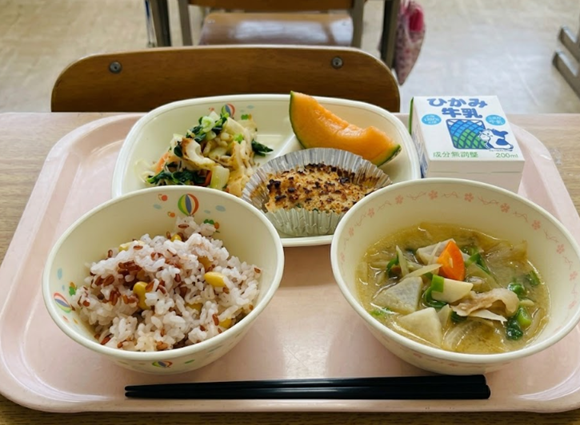
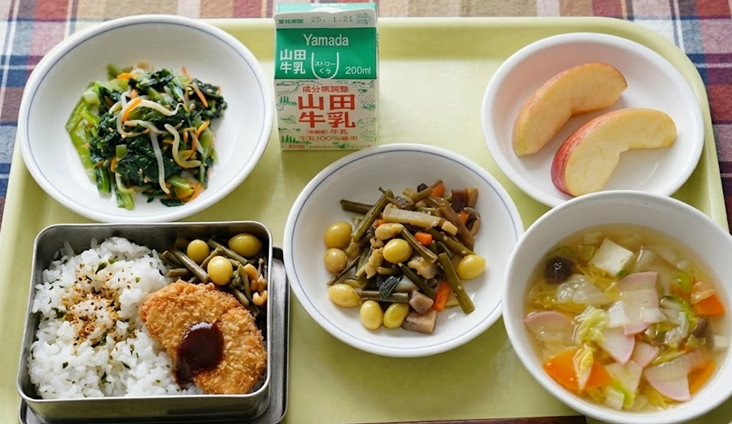
Kyushoku simply means school lunch, but in practice, it represents a broader educational system rather than just a meal service.
In Japan, school lunch is extremely common in elementary schools and still widely available in junior high schools. While high schools vary much more depending on the school, younger students often grow up with school lunch as a normal part of daily life.
The meals are not random cafeteria food designed only to fill stomachs.
Menus are carefully planned, often by professional nutritionists, with detailed attention paid to nutritional balance. Calories, vitamins, protein, vegetables, and overall dietary health are considered as part of the process.
The goal is practical but also educational.
Children are not only being fed.
They are being introduced to healthy eating habits and a broader understanding of food.
🥗 More Than Nutrition: Food Education
One of the most interesting parts of Japanese school lunch is the educational role it plays.
In Japan, food education—or shokuiku (食育)—is considered an important part of childhood learning. School lunch becomes one practical way to support that.
This can include learning about ingredients, where food comes from, nutritional balance, farming, food production, distribution, and responsible consumption.
That may sound formal, but in practice, it often becomes part of everyday awareness.
Children begin to understand that food does not simply appear on a plate.
Someone grew it.
Someone transported it.
Someone prepared it.
Someone planned it.
That broader awareness shapes how food is understood.
This is one reason school lunch in Japan feels different from simply “getting lunch at school.”
The meal itself becomes part of education.
👨🍳 Students Participate in the Process
Another distinctive part of Japanese school lunch is that students are involved in the daily routine.
Children do not usually cook the food themselves, of course, but they often take responsibility for serving, preparing the classroom for lunch, distributing trays or dishes, cleaning up afterward, and following shared routines.
This matters.
Lunch is not simply handed to passive consumers.
Students participate.
In many schools, children wear simple serving uniforms such as white coats, caps, and masks when helping distribute food to classmates. For many people in Japan, this image is instantly recognizable.
The routine also teaches practical social habits.
Students learn greetings before and after eating, table manners, cooperation, responsibility, and respect for shared spaces.
These lessons may seem small individually, but repeated daily over years, they become normal habits.
That consistency is powerful.
🏫 Eating Together in the Classroom
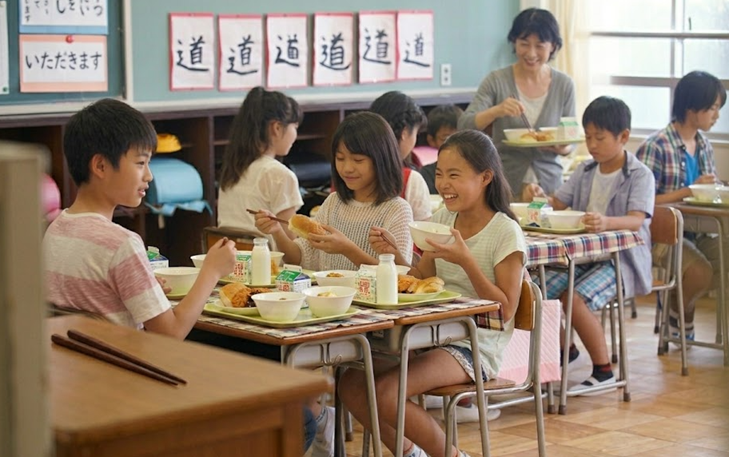
In some countries, school lunch happens in cafeterias.
Japan often works differently.
Many elementary and junior high school students eat lunch inside their usual classroom with their classmates, in the same space where they study every day.
That creates a different atmosphere.
Lunch becomes part of classroom life rather than a separate institutional experience.
Children talk, laugh, eat together, and continue building social relationships in a familiar environment.
That shared routine helps explain why school lunch becomes such a strong collective memory.
It is not just about the food.
It is about the people you ate with.
🗾 Regional Differences Make It Even More Interesting
Another fascinating aspect of Japanese school lunch is regional variation.
Because local governments and school systems manage school lunches differently, menus often reflect regional food culture and local ingredients.
This means children in different parts of Japan may grow up with very different lunch memories.
One region may emphasize seafood.
Another may feature local vegetables or traditional dishes.
Seasonal ingredients may also appear.
That local character makes school lunch culturally richer than a single national menu system.
It also explains why adults sometimes compare childhood lunch memories with surprising enthusiasm.
Someone may say, “We always had this dish.”
Another person from a different prefecture may have never seen it.
That difference becomes part of the conversation.
💭 Why Adults Still Talk About It
This may be one of the most charming parts of the topic.
Japanese adults often remember school lunch vividly.
That says something.
Most people do not spend much time nostalgically discussing ordinary weekday lunches unless those meals meant something emotionally.
Part of that comes from repetition.
If you eat something almost every school day for years, naturally it becomes part of memory.
But there is also something more personal happening.
School lunch becomes tied to childhood friendships, routines, jokes, favorite dishes, and small everyday experiences.
I still remember the foods I loved most.
Agepan was always exciting.
Certain rice dishes felt special.
Fried fish was something I genuinely looked forward to.
And sometimes those meals followed you home, when you asked your parents to recreate them.
That emotional afterlife is what makes school lunch culturally interesting.
🌍 Not Unique, But Distinctive
Of course, Japan is not the only country with school meal systems.
Many countries provide lunch at school in different forms.
The interesting part is not the mere existence of school lunch.
It is the role it plays.
In Japan, school lunch often functions as nutrition, education, routine, social experience, and practical life training all at once.
That combination gives it a distinctive place in childhood.
Not better.
Just different in emphasis.
🇯🇵 Conclusion
Japanese school lunch may look simple from the outside.
Just children eating lunch during the school day.
But for many people, it represents much more.
It is where food education becomes practical. It is where children learn responsibility, manners, and shared routines. It is where regional food culture quietly appears in everyday life. And for many adults, it becomes one of those surprisingly vivid memories that remain long after childhood ends.
For me, certain dishes still come back instantly.
A simple fried bread.
A favorite rice dish.
The excitement of seeing something you loved on the day’s menu.
Food has a powerful relationship with memory.
School lunch in Japan is one example of that.
Did your school have memorable lunches, or is there a childhood food you still remember today? It would be fascinating to hear what meals shaped childhood memories in different countries.
🔗Discover More About Japanese School Culture
👉 Why Is Japanese Sports Day Such a Powerful Childhood Memory? Understanding Undokai (2026 Guide)
👉 What Is a Japanese School Trip? Why Shūgaku Ryokō Becomes a Lifetime Memory (2026 Guide)
👉 Why Is Summer Vacation in Japan So Different? School Life, Homework & Cultural Surprises
👉 Why Do Japanese Students Spend So Much Time in School Clubs?
👉 Why Do Japanese Students Clean Their Own Classrooms? The Lesson Behind School Cleaning Time
👉 Why Do Japanese Schools Have Entrance Ceremonies? (2026 Guide)
👉 Why Do Japanese Schools Have Swimming Classes? (2026 Guide)
👉 Why Do Japanese Children Walk to School by Themselves? (2026 Guide)
👉 School Uniforms in Japan: More Than Just a Dress Code (2026 Guide)
🔗Explore more of Japan
・Why Are Lost Items Returned in Japan? The Culture of Honesty Explained (2026 Guide)
・Why Do Japanese People Wear Masks? The Cultural Meaning Behind It