

✈️ Introduction: That Strange Feeling When You Finally Arrive in Japan
Every international airport has a smell. It is difficult to describe exactly where it comes from because it is probably a mixture of everything—the air conditioning, humidity, carpets, restaurants, cleaning products, people, and perhaps even the air outside entering every time a door opens. Yet after traveling enough, you begin to notice that airports somehow feel different from one another. Arriving at an airport you have visited many times can bring back memories almost immediately, while stepping into an unfamiliar terminal for the first time can make the fact that you have entered another country suddenly feel very real.
I have experienced immigration and customs procedures in many countries, and even after doing it repeatedly, I have never completely become comfortable with that strange period between landing and actually entering the country. There is excitement because the flight has finally arrived, but there is also tension. You follow signs toward immigration, wait in line with your passport, wonder what questions you might be asked, collect your luggage, and then face customs before you can finally walk into the arrivals hall. For someone arriving in Japan for the first time at Narita, Haneda, Kansai, or another international airport, that mixture of excitement and nervousness may feel especially strong. You have finally reached Japan, but your trip has not quite begun yet.
The good news is that entering Japan does not need to be frightening or confusing. Most travelers will complete the process without difficulty. The best way to reduce unnecessary anxiety is surprisingly simple: understand what will happen before your plane lands, complete the information you can prepare in advance, and know what is actually inside your luggage. Japan has strict rules for certain foods, medicines, drugs, plants, cash, counterfeit goods, and other items, and something that is perfectly legal or ordinary in your home country may be restricted in Japan. Customs is therefore not something travelers need to fear, but it is something they should prepare for.
🛂 Immigration and Customs Are Not the Same Thing
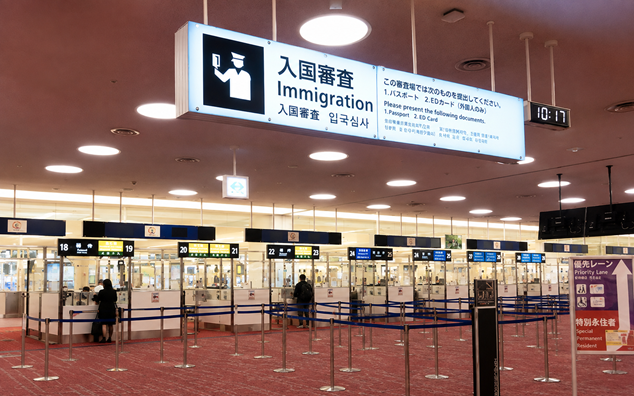
One of the easiest ways to make arrival less confusing is to understand that immigration and customs perform different jobs. Immigration is primarily concerned with you: your passport, your status for entering Japan, and whether you meet the requirements for entry. Customs is primarily concerned with what you are bringing into Japan. There are also separate quarantine systems for certain animal and plant products, which is why food can become more complicated than travelers sometimes expect.
The normal arrival experience therefore has a logical sequence. After leaving the aircraft, you follow the signs toward immigration and complete the entry procedure. You then collect checked luggage from baggage claim before proceeding through customs. Depending on what you are carrying and the airport system you use, your experience may involve electronic procedures or interaction with a customs officer. Japan Customs requires arriving passengers to declare their accompanied and unaccompanied articles, and it recommends electronic declaration through Visit Japan Web.
Understanding this distinction is particularly useful when preparing documents. A traveler sometimes thinks, “I already completed immigration information, so customs must be finished too.” They are separate procedures, even though Visit Japan Web makes preparing for both much more convenient.
📱 Complete Visit Japan Web Before Your Flight
If you want to remove one unnecessary source of stress before arriving in Japan, complete Visit Japan Web before departure. It is the official Digital Agency service for online arrival procedures, including immigration clearance and customs declaration.
Japan Customs specifically recommends using Visit Japan Web for electronic customs declarations. Once the required information has been entered, travelers can use the generated 2D code as part of the airport procedure. Electronic customs declaration gates are currently available at seven major international airports: New Chitose, Narita, Haneda, Chubu Centrair, Kansai, Fukuoka, and Naha. Even when electronic declaration is used, however, Customs may still inspect baggage when necessary.
If this is your first trip to Japan and you are not sure how to register, I recommend completing the process before you board rather than trying to understand everything after a long international flight. I have prepared a separate step-by-step Visit Japan Web guide explaining the registration and arrival process, so open that guide while preparing for your trip and then return here to check what you can actually pack in your luggage.
👉 Visit Japan Web Guide:
How to Use Visit Japan Web: Skip Paper Forms and Save Time at the Airport (2026 Guide)
There is one new point that is particularly important in 2026. Japan Customs issued a warning in May about fake websites impersonating Visit Japan Web and third-party sites charging travelers for assistance with electronic customs declarations. The official Visit Japan Web service is free, and Japan Customs does not charge travelers a fee simply to make the required electronic customs declaration on arrival.
That means preparation should make arrival easier, but make sure you are preparing through the real government service rather than paying an unofficial website that appeared in a search result or advertisement.
🧳 What Can You Bring Into Japan? The Rules at a Glance
The most important thing to understand before packing is that “I can legally buy this at home” does not mean “I can legally bring this into Japan.” Every country sets its own import, health, agricultural, pharmaceutical, and customs rules. Japan is no exception. Some everyday products require no special thought, some need to be declared, some are permitted only under certain conditions, and others should not be brought into the country at all.
The table below provides a practical overview for travelers, but medicines, plants, animal products, and cannabis-related products can involve detailed rules that depend on ingredients, quantities, origins, and documentation. If your item falls into one of those categories, always check the relevant Japanese government guidance for your specific product before departure rather than relying only on a general travel article.
| Category | Item | What Travelers Should Know |
|---|---|---|
| 🚫 Prohibited / Controlled | Narcotics, cannabis, stimulants and other controlled substances | Japan prohibits or strictly controls numerous narcotics, cannabis products, stimulants, psychotropic substances and related items. Something legal elsewhere may still be illegal in Japan. |
| 💊 Medicine | Prescription and OTC medicines | Many personal medicines can be brought in within specified quantities, but the rules depend on the medicine, ingredient and amount. Some require advance Import Confirmation or other permission. |
| 🥩 Animal Products | Meat, ham, sausage, bacon, jerky and similar products | Most travelers cannot bring these into Japan because required government inspection certificates are difficult to obtain for personal-use products. Cooking, vacuum packing or airport purchase does not automatically make them acceptable. |
| 🍎 Plants & Produce | Fruits, vegetables, plants and seeds | Depending on the item and country of origin, import may be prohibited or require plant quarantine and documentation. |
| 🌿 Cannabis-Related Products | THC/CBD products | Japanese requirements may be different from those in the country where the product was purchased. Do not assume an overseas-legal CBD product is acceptable in Japan. |
| 👜 Counterfeit Goods | Fake branded goods and other IP-infringing products | Articles infringing intellectual-property rights are prohibited from import. |
| 🍷 Duty-Free | Alcohol | For travelers aged 20 or older, the allowance is generally three bottles, calculated as approximately 760 ml each. |
| 🚬 Duty-Free | Tobacco | For travelers aged 20 or older, the allowance includes 200 cigarettes; separate limits apply to cigars, heated tobacco and other tobacco products. |
| 🌸 Duty-Free | Perfume | Up to 2 ounces, approximately 56 ml. |
| 🛍️ Duty-Free | Other Purchases | Generally ¥200,000 in total overseas market value, subject to detailed calculation rules and exceptions. |
| 💴 Declaration Required | Cash, checks, securities and similar means of payment | If the combined amount exceeds ¥1,000,000 or equivalent, a declaration is required. |
| 🪙 Special Declaration | Gold bullion / gold products | Gold products must be indicated on the customs declaration; additional requirements apply when carrying more than 1 kg of gold over 90% purity. |
Japan Customs currently sets the adult duty-free allowance at three 760 ml bottles of alcoholic beverages, 200 cigarettes, 50 cigars, 10 individual packages of heat-not-burn tobacco or 250 grams of other tobacco products, subject to rules when combining tobacco categories, plus two ounces of perfume. For other articles, the basic allowance is a total overseas market value of ¥200,000, although individual items and low-value items are treated according to additional calculation rules. Alcohol and tobacco allowances do not apply to people under 20.
This table makes the rules look relatively simple, but several categories deserve much closer attention because they repeatedly surprise international travelers.
🥩 That Pack of Beef Jerky Can Be More Complicated Than You Think
Food is one of the easiest places to make an innocent mistake. Imagine buying a package of local sausage while traveling, receiving beef jerky as a gift, or purchasing a nicely packaged meat product at an overseas airport. It is sealed, commercially produced, perhaps vacuum-packed, and clearly intended for personal consumption. It feels natural to assume that bringing it into Japan should be fine.
That assumption can be wrong.
Japan’s Animal Quarantine Service states that most animal products cannot be brought into Japan without the required inspection certificate issued by the exporting country’s government, and obtaining such certificates for ordinary personal-use products is generally difficult. Importantly, these rules can apply even when the product was bought in a shop or airport, is intended as a gift, has been heat-treated, or is vacuum-packed. Examples include jerky, ham, sausage, bacon and other processed meat products.
This is not simply a customs preference. Animal quarantine exists to reduce the risk of introducing livestock diseases such as African swine fever, foot-and-mouth disease, and avian influenza. Japan’s Animal Quarantine Service can question arriving travelers about meat products in their baggage and inspect, disinfect, or dispose of items as necessary.
So when packing for Japan, do not use “sealed” as a substitute for checking the rule. Do not assume that “cooked” means permitted, and do not assume that buying something at an airport duty-free shop automatically makes it acceptable at your destination. The country where you bought the product and the country you are entering are governed by different rules.
For most ordinary tourists, the simplest approach with meat products is also the least stressful: if you do not clearly know that the product meets Japan’s import requirements and has the necessary certification, leave it behind.
💊 Bringing Medicine Into Japan Requires More Than Checking the Brand Name
Medicine is another category where travelers should prepare before flying, especially if they take prescription medication regularly. The important point is not to panic and assume that ordinary medicine cannot be brought into Japan. Many medicines for personal use can be brought in without advance Import Confirmation when they remain within specified quantities. According to Japan’s Ministry of Health, Labour and Welfare, the general thresholds include up to a one-month supply of prescription medicine and up to a two-month supply of many other drugs and quasi-drugs, with separate rules for external medicines, injectable drugs and other categories. Controlled narcotics, stimulant raw materials and prohibited substances are governed by additional rules.
The mistake to avoid is relying only on a familiar brand name.
Medicine sold under a familiar name in one country may have different ingredients or formulations elsewhere. Some cold medicines, pain medicines, sleep medicines, ADHD medications, anxiety medicines and other products can contain ingredients subject to Japanese restrictions or special procedures. Therefore, an article that simply says “Sudafed is illegal” or “all medicines containing codeine are prohibited” would be too simplistic to rely on. The ingredient, concentration, quantity, classification and intended use can matter.
The safest principle is:
Check the active ingredient, not only the name on the box.
If you take regular medication, do this before the day of your flight. Check the Ministry of Health, Labour and Welfare’s current information, determine whether the quantity you are bringing falls within the personal-use limits, and confirm whether Import Confirmation or another procedure is required. If your medication is essential to your health, this is something to research while planning the trip, not while standing at airport security.
Japan Ministry of Health: Information for Travelers Bringing Medicines Into Japan
This is also a good example of why customs preparation should be part of travel preparation. Most people spend far more time deciding which shoes to pack or where to eat their first bowl of ramen than checking the ingredients in medication they have used for years. Yet the familiar item is sometimes the one that deserves the most attention when crossing an international border.
🌿 Be Especially Careful With Cannabis, THC and CBD Products
Cannabis-related products require particular caution because laws have changed rapidly around the world. Products containing cannabis-derived ingredients may be legally sold in parts of North America, Europe, and elsewhere, and CBD products in particular can be marketed so casually that travelers may stop thinking of them as something that could create a border problem.
Japan Customs lists cannabis and various narcotic and controlled substances among prohibited imports. The important practical lesson for a tourist is therefore not to assume that a product’s legal status in the place where it was purchased follows that product onto an international flight.
CBD requires more careful language than the old rule sometimes repeated in English travel information that simply distinguishes products according to whether they came from particular parts of the cannabis plant. Japan’s cannabis regulation changed in recent years, and THC residual limits and product classifications matter under the current framework. That means simplistic advice such as “CBD is legal as long as it comes from the stalk or seed” should not be used as a 2026 travel rule.
For an ordinary visitor, the safest principle is much easier to understand: if you cannot confidently verify that your CBD or cannabis-related product complies with current Japanese law and current Japanese THC limits, do not bring it into Japan. A label saying “legal,” “THC-free,” or “CBD” in another country is not a Japanese import authorization.
This is one of those situations where leaving an unnecessary product at home can remove an enormous amount of potential stress from your arrival.
👜 “It’s Only for Me” Does Not Automatically Make a Counterfeit Legal
Another rule that can surprise travelers concerns counterfeit goods. Someone may have bought a fake designer bag, wallet, watch, clothing item, or other product overseas and assume there is no customs issue because it is already being used personally and will never be sold in Japan.
Japan Customs lists articles that infringe intellectual-property rights among goods prohibited from import.
The larger lesson is the same one we have already seen with food, medicine, and cannabis-related products: personal use does not automatically override import law. International travel means the rules change when you cross the border. Something you bought openly in another country may still be restricted when you enter Japan.
Most travelers will never encounter this issue, but it is worth understanding before packing rather than discovering it while standing in front of a customs officer after a long flight.
🍷 Duty-Free Does Not Mean Unlimited
The phrase “duty-free” can also cause confusion because travelers sometimes interpret it as meaning that anything purchased at an airport duty-free store can enter another country without tax or restrictions. In reality, duty-free allowances are limits set by the destination country.
For travelers aged 20 or older entering Japan, the current allowance includes three bottles of alcoholic beverages, calculated at 760 ml per bottle. Tobacco allowances include 200 cigarettes, 50 cigars, 10 individual packages of heat-not-burn tobacco, or 250 grams of other tobacco products, with additional rules when different tobacco categories are combined. Perfume is allowed duty-free up to two ounces, or approximately 56 ml. Other articles generally receive a total overseas market value allowance of ¥200,000.
There is an important detail in that ¥200,000 rule. Japan Customs explains that when the total exceeds ¥200,000, items within the allowance can be selected in the traveler’s favor and duty imposed on the remainder, but an individual article worth more than ¥200,000 does not receive a partial ¥200,000 exemption. For example, Japan Customs gives the example of a ¥250,000 bag being taxable on the entire ¥250,000 value. Items with an overseas market value under ¥10,000 are also treated separately under the allowance calculation.
So if you spent heavily during a trip before arriving in Japan, or you are bringing expensive new goods, do not simply assume that everything in your suitcase qualifies automatically as personal luggage.
And if you are unsure whether something should be declared, asking Customs is far better than deciding to hide it.
💴 Carrying More Than ¥1 Million Is Not a Crime—But It Must Be Declared
Another rule that sounds more alarming than it actually is concerns cash. Carrying a large amount of money into Japan is not automatically prohibited. The key requirement is declaration.
If you enter Japan carrying means of payment with a combined value exceeding ¥1,000,000 or the equivalent in foreign currency, you must submit a declaration to Customs. The rule covers cash in Japanese and foreign currencies as well as items including checks, traveler’s checks, promissory notes and securities.
So the correct message is not “You cannot bring more than one million yen into Japan.” You can. But once you cross the reporting threshold, you have an additional legal obligation.
Gold also deserves special attention. Japan Customs currently instructs passengers carrying gold bullion or gold products to answer “Yes” to the relevant customs-declaration question regardless of quantity, weight, value, or whether the item is new. If a traveler carries more than one kilogram of gold with purity above 90%, an additional Declaration of Carrying of Means of Payment, etc. is required. Depending on the quantity and value, general import procedures may also become necessary.
For most ordinary tourists, neither rule will ever matter. But for the travelers to whom it does apply, knowing it before departure matters a great deal.
🛬 What Happens When You Reach Customs?
By the time you arrive at Customs, you may have been awake for many hours. You have already gone through immigration, waited at baggage claim, checked your phone, found your suitcase, and perhaps started thinking about the train into Tokyo or the first meal you want to eat. This is exactly when people can become nervous if an officer asks a question or requests to inspect a bag.
There is no reason to treat a baggage inspection itself as evidence that you have done something wrong. Japan Customs explicitly notes that baggage may still be inspected even when a traveler has completed an electronic declaration through Visit Japan Web.
If you are asked what you are carrying, answer normally. If an officer asks you to open your suitcase, follow the instructions. If you have something and genuinely do not know whether it should be declared, saying that you are unsure is much better than attempting to conceal it.
The goal before traveling is therefore not to memorize every paragraph of Japanese customs law. It is to recognize the categories that deserve attention and check them before departure.
Medicine.
Food.
Plants.
Cannabis-related products.
Expensive purchases.
Large amounts of cash.
Gold.
Anything else that seems unusual enough that you have already wondered, “Can I really bring this into Japan?”
If you have asked yourself that question, checking the official rule before boarding is usually worth the few minutes it takes.
Customs is not something you need to be afraid of. It is something you need to be prepared for.
And once that preparation is finished, there is only one last part of the journey left: walking through the gate and finally realizing that you are really in Japan.
🍎 Fruits, Vegetables, Plants, and Seeds Can Also Be Restricted
Meat products are not the only foods that can cause problems when entering Japan. Fruits, vegetables, plants, seeds, flowers, and other plant products are controlled separately through Japan’s plant quarantine system. This is another area where common sense based on everyday shopping does not necessarily match border rules. An apple bought at an airport, fruit packed as a snack for the flight, seeds purchased as souvenirs, or plants carried as gifts may look completely harmless, but agricultural products can carry insects, diseases, and other organisms capable of damaging crops and ecosystems.
Japan’s Plant Protection Station explains that plants brought into Japan must generally undergo import inspection regardless of quantity or intended use, while some plants and plant products are prohibited entirely depending on the item and country or region of origin. Many products also require a phytosanitary certificate issued by the exporting country’s plant-protection authority.
For an international traveler, the difficult part is that there is no useful rule as simple as “fruit is prohibited” or “seeds are allowed.” The answer depends on what the item is and where it came from. Even two similar-looking fruits may be treated differently depending on origin and plant-health restrictions. Processed foods can also fall under different rules from fresh agricultural products.
This is why it is better to check a specific product before flying rather than make assumptions at the airport. If you are carrying fresh fruit, vegetables, seeds, plants, or other agricultural products and have not confirmed the Japanese requirements, do not hide them among your clothes and hope they will be ignored. Ask the appropriate quarantine staff or declare what needs to be declared.
For most tourists, there is also a very simple alternative: Japan has no shortage of food. Leaving uncertain fresh agricultural products behind is usually easier than beginning your first hour in Japan with a quarantine problem.
🍪 Does This Mean You Cannot Bring Food Into Japan?
No. This is an important distinction because an article about prohibited meat and agricultural products can accidentally leave readers thinking that Japan prohibits travelers from carrying food altogether.
It does not.
Many ordinary processed foods and snacks can be brought into Japan, depending on their ingredients and the applicable rules. Cookies, candy, chocolate, tea, coffee, and many other commercially processed products are not automatically prohibited simply because they are food. The difficulty arises when products contain regulated animal ingredients, fresh plants, fruits, vegetables, meat products, or other ingredients subject to quarantine restrictions.
The package therefore matters less than what is actually inside it.
This is particularly relevant for souvenirs. Imagine visiting several countries before Japan and gradually filling your suitcase with local food. There may be chocolate from one country, tea from another, cookies from somewhere else, and a package of sausage bought at a market. To the traveler, these are all simply “souvenirs.” To Japanese border authorities, they can fall under completely different regulatory categories.
The chocolate and cookies may present no issue, while the sausage could require animal quarantine documentation that an ordinary tourist does not possess.
The easiest habit is therefore to look through your food before the final flight to Japan and ask what each product actually contains. That five-minute check can save considerably more time after landing.
🥪 Don’t Forget the Food You Didn’t Intend to Bring
There is another surprisingly easy mistake: accidentally carrying food off the aircraft.
After a long international flight, you may have a sandwich, fruit, or another food item left from a meal. Perhaps you put it into your carry-on because you were not hungry and thought you might eat it later. By the time the aircraft lands, you have forgotten about it completely.
Then you walk into Japan carrying it.
Japan’s quarantine authorities specifically warn travelers that regulated products can include food from aircraft meals. The fact that an airline served something before landing does not automatically mean that the remaining food can legally be taken through the Japanese border.
This is such a small detail, but it perfectly illustrates why customs problems do not always begin with people deliberately trying to bring something unusual into another country. Sometimes the traveler simply forgot there was a sandwich in the side pocket of a backpack.
Before leaving the aircraft, check what you are carrying. Before customs, think again about what is in your bags.
Preparation does not need to be complicated.
🧾 When in Doubt, Declare Rather Than Hide
One of the most useful ideas for reducing customs anxiety is also one of the simplest: being unsure about an item is not the same thing as doing something wrong.
You might genuinely not know whether a particular food needs quarantine inspection. You may be carrying medication and have documentation but still be uncertain about the procedure. You may have bought expensive goods overseas and not know exactly how the duty-free calculation applies. You might simply misunderstand a question on the declaration.
Ask.
Trying to conceal something because you are nervous turns uncertainty into a much more serious situation. Asking an officer because you are uncertain gives the authorities the opportunity to tell you what procedure applies.
This is especially important for travelers who do not speak Japanese. You do not need perfect Japanese to explain that you have something in your luggage and are unsure about it. A simple explanation such as, “I have this food in my bag. Do I need to declare it?” communicates the important point: you are not trying to hide it.
The same principle applies to the customs declaration itself. Read the questions carefully rather than automatically selecting answers because you want to leave the airport quickly. After a ten- or twelve-hour flight, it is understandable that you want the formalities to end. But another minute spent checking your declaration is preferable to discovering later that you misunderstood what was being asked.
📱 Visit Japan Web Helps, but It Does Not Replace Knowing What You Packed
This brings us back to Visit Japan Web, because it is important to understand what the service does and what it does not do.
Visit Japan Web can make the arrival procedure smoother by allowing you to prepare information for immigration and customs electronically before reaching Japan. It does not make prohibited goods permissible, and completing a digital customs declaration does not guarantee that your luggage will not be inspected. Japan Customs explicitly states that baggage inspection may still take place when using electronic declaration.
Think of Visit Japan Web as preparation for the procedure, not permission for the contents of your suitcase.
That is why these two articles work together. If you have not yet completed the arrival registration, use my detailed guide to prepare Visit Japan Web before your flight, then return to this customs guide and check your luggage while the rules are still fresh in your mind.
👉 Visit Japan Web:
How to Use Visit Japan Web: Skip Paper Forms and Save Time at the Airport (2026 Guide)
Doing both before departure changes the experience at the other end of the flight. Instead of landing and suddenly wondering what forms you need, whether your medication is permitted, or whether the food in your suitcase should be declared, you already know what you are carrying and what you need to do.
That preparation matters even more after a long flight than it does while sitting comfortably at home.
🌍 “But It’s Legal in My Country” Is Not a Customs Rule
Perhaps the single most useful mindset for international travel is understanding that legality does not travel with you.
This applies far beyond Japan.
A medicine available over the counter in one country can be controlled in another. A food routinely carried across one border may be restricted at another. Cannabis products that can be legally purchased in parts of North America or Europe can create serious legal problems elsewhere. Agricultural products that appear completely harmless may be prohibited because a country is protecting itself against a particular pest or livestock disease.
None of this means one country’s rules are inherently better or worse. Countries have different agricultural environments, health regulations, drug laws, customs systems, histories, and policy priorities.
I have traveled through many countries, and the more borders you cross, the more obvious this becomes. There is no universal international suitcase.
The contents have to make sense for the country you are entering.
This is particularly important when Japan is not the first destination on your trip. Perhaps you spent several weeks in Southeast Asia before flying to Tokyo. Maybe Japan comes after a trip through Europe. You might have visited the United States or Canada first and bought medicines, foods, or CBD products that were entirely ordinary there.
Before the final flight to Japan, mentally reset your luggage.
You are now entering Japan under Japanese rules.
🛍️ Souvenirs, Gifts, and New Purchases Still Count
Another common misunderstanding involves gifts. Travelers sometimes assume that customs duty applies primarily to commercial imports or goods intended for resale. But your duty-free allowance can also matter when you are carrying goods purchased overseas as presents or personal purchases.
Japan Customs currently provides a general duty-free allowance for other goods of ¥200,000 in total overseas market value, subject to its calculation rules. Goods for personal use and gifts can therefore still matter when determining your allowance.
This may not concern a traveler arriving in Japan for the first time with ordinary clothing and personal belongings. It becomes more relevant for residents returning to Japan after shopping overseas, people carrying expensive gifts, or travelers bringing newly purchased luxury goods into the country.
There is also a difference between belongings you already use personally and new goods acquired abroad, which is another reason not to reduce customs rules to the idea that “everything in my suitcase is personal, so nothing matters.”
If you have purchased an unusually expensive item before entering Japan, keep the receipt or another record of its value. It can make explaining the purchase much easier if Customs asks about it.
Again, the objective is not to make travelers suspicious of their own suitcases. It is simply to avoid the assumption that putting something inside luggage makes customs rules disappear.
🏨 What About Items You Plan to Send to Japan Separately?
Some travelers arrive with everything they own in their suitcases. Others ship luggage, personal belongings, or purchases separately. Japan Customs treats these unaccompanied articles as part of the customs process, and travelers who have items being sent separately need to indicate this when entering Japan and follow the applicable procedures.
This can be relevant to people moving temporarily to Japan, international students, long-term visitors, returning residents, and travelers who send large luggage ahead rather than carrying everything through the airport.
For ordinary tourists, however, luggage becomes a much more immediate issue after customs. Japan’s trains and stations are convenient, but moving large suitcases through crowded stations can be exhausting, particularly immediately after a long flight.
If you are wondering whether to carry everything yourself, send your suitcase to your hotel, or store it somewhere before check-in, I have a separate guide explaining luggage storage and delivery in Japan, including the options that make arriving much easier.
👉 What Should You Do With Your Luggage in Japan? Storage, Delivery, and Travel Tips (2026 Guide)
And if you only need somewhere to leave your bags for several hours, Japan’s station coin lockers can be extremely useful.
👉 How to Use Coin Lockers in Japan: Sizes, Prices, and Travel Tips (2026 Guide)
The customs gate is therefore not really the end of your arrival preparation. It is the point where border procedures finish and the practical part of traveling in Japan begins.
🌅 Arriving Early? You Don’t Have to Waste Your First Morning
This is especially relevant for travelers whose international flights arrive early in the morning. You may clear immigration and customs at 6:30 or 7:00 a.m., only to realize that your hotel check-in is not until 2:00 or 3:00 in the afternoon.
That does not mean spending half the day sitting in an airport.
If you are staying at a hotel that night, many hotels will hold your luggage before check-in even though your room is not yet available. Depending on your plans, luggage delivery and station lockers provide additional options. Once the bags are gone, the first morning in Japan can become part of the trip rather than dead time between the airport and hotel.
You could visit a temple or shrine before the daytime crowds arrive, have a Japanese breakfast, explore a morning market, find a coffee shop, or simply walk through a neighborhood while the city is waking up. After a very long flight, some travelers may prefer a bath or somewhere quiet to recover before doing anything ambitious.
I have written a separate guide specifically for this situation:
👉 What Should You Do If You Arrive in Japan Early in the Morning? (2026 Guide)
This is where all these pieces begin to connect. Visit Japan Web prepares you for immigration and customs. Understanding the customs rules prevents unnecessary problems with your luggage. Knowing what to do with your suitcase frees you from dragging it around all morning. And once those practical concerns are gone, your first few hours in Japan can finally become what you imagined when you booked the flight.
✈️ Before You Board the Flight, Open Your Suitcase One More Time
You do not need an enormous customs checklist taped to your suitcase. A much simpler habit works well: before leaving for the airport, look through what you are bringing from the perspective of the country you are about to enter.
If you take regular medication, have you checked its active ingredients and quantity against the current Japanese rules? If you packed meat, jerky, sausage, fruit, vegetables, seeds, or plants, have you checked the appropriate quarantine requirements? If you have a CBD or cannabis-related product, have you confirmed that it complies with current Japanese law rather than relying on the law where you bought it? If you made expensive purchases, do you understand the duty-free allowance? If you are carrying more than ¥1 million equivalent in cash and other covered means of payment, are you prepared to declare it? If you are carrying gold, have you checked the applicable declaration requirements?
Then look for the small things that are easiest to forget.
The snack you bought yesterday.
The medicine in the side pocket.
The sandwich you saved from earlier in the journey.
The souvenir someone gave you.
The bottle you bought at duty-free.
The product you bought months ago and have carried in your toiletry bag ever since.
Most travelers will find absolutely nothing concerning. That is exactly what you want. The purpose of checking is not to discover a problem. It is to arrive knowing there isn’t one.
Complete Visit Japan Web, keep your passport and necessary information accessible, and board the flight.
Then you can stop thinking about Customs for a while.
🛬 The Moment Between Landing and Arriving
Eventually, the cabin lights come on.
The aircraft descends.
Perhaps you see the Japanese coastline through the window. At Haneda, Tokyo may appear surprisingly close. At Narita, you may see fields and towns before reaching the runway. At Kansai, the airport itself seems to emerge from Osaka Bay.
The wheels touch the ground.
You have arrived in Japan.
Technically.
But emotionally, it may not feel complete yet.
You walk through the jet bridge and enter the terminal. There it is again—that airport air, that particular mixture of temperature, sound, light, and smell that tells you that you are somewhere else. Japanese signs appear beside English ones. Announcements sound different from those at the airport you left many hours earlier. People begin checking their phones. Some travelers walk quickly because they know exactly where they are going; others slow down at every sign because this is their first time here.
You follow the signs to immigration.
And then comes that strange international-travel tension.
You are excited, but not completely relaxed. You have traveled thousands of kilometers, yet there is still a border between you and the country outside the terminal.
I know that feeling well. I have lived in Canada, the United States, Mexico, and Thailand and traveled through Europe, the Middle East, India, Southeast Asia, and many other places. Immigration and customs procedures have become familiar to me, but the feeling has never completely disappeared. Every country is different, every airport feels different, and there is always that short period when you are neither quite on the journey anymore nor fully inside the destination.
Perhaps that tension is part of international travel.
You wait.
Your turn comes.
Immigration finishes.
Then you stand beside the baggage carousel and watch identical suitcases circle past. Finally, yours appears. You lift it down, place it on the cart, and head toward Customs.
If you prepared beforehand, there is little left to wonder about. You know what is inside the suitcase. You completed Visit Japan Web. You checked your medicine. You did not pack questionable meat products or agricultural items. You understand what needs to be declared.
Maybe you walk through quickly. Maybe an officer asks you a question. Maybe your bag is inspected.
That is all part of entering another country.
Then the final doors open.
🇯🇵 Now You Are in Japan
There is a particular moment at international airports that I have always liked. It happens after immigration, baggage claim, and customs, when you finally walk through the arrivals exit.
Before that door, you are still inside the machinery of international travel.
After it, the country begins.
At Narita, Haneda, Kansai, Chubu, Fukuoka, New Chitose, Naha, or another Japanese airport, you suddenly see people waiting for family and friends, signs for trains and buses, convenience stores, luggage counters, SIM and Wi-Fi services, currency exchange, hotel transportation, and all the practical pieces of Japan that were abstract ideas when you were planning the trip at home.
The tension disappears surprisingly quickly.
Now you have different questions.
How do I get to my hotel?
Should I take the train?
Where can I buy an IC card?
Do I need cash?
What do I do with my suitcase?
Where can I get internet?
And, perhaps most importantly after a long flight, where can I eat?
Those are much better questions to have.
Arriving in another country will probably always carry a little tension. I have experienced immigration and customs in many countries, and that feeling has never completely disappeared for me. But much of the anxiety comes from not knowing what will happen next. Prepare your Visit Japan Web information, check what is inside your luggage before you fly, understand the Japanese rules that apply to anything unusual you are carrying, and declare or ask about anything you are genuinely unsure of.
Then, when you finally walk through that last gate, you can leave the paperwork behind.
The airport smells different. The announcements sound different. The signs look different. Perhaps everything around you still feels slightly unfamiliar.
That is exactly what you traveled for.
You have arrived in Japan.

🔗 Continue Preparing for Your Trip to Japan
If you are getting ready to visit Japan, customs is only one part of making your arrival smooth. Before departure, start with my Visit Japan Web guide so you know how to prepare your immigration and customs information in advance, then read What Should You Do With Your Luggage in Japan? if you want to understand hotel storage, luggage delivery, and other ways to travel without carrying large suitcases everywhere.
👉 How to Use Visit Japan Web: Skip Paper Forms and Save Time at the Airport (2026 Guide)
👉 What Should You Do With Your Luggage in Japan? Storage, Delivery, and Travel Tips (2026 Guide)
👉 How to Use Coin Lockers in Japan: Sizes, Prices, and Travel Tips (2026 Guide)
👉 What Should You Do If You Get Sick or Injured in Japan? A Practical Guide for Travelers (2026 Guide)
👉 How to Buy Medicine in Japan: What Travelers Need to Know (2026 Guide)
👉 What Should You Do If You Arrive in Japan Early in the Morning? (2026 Guide)
👉 How to Stay Safe During an Earthquake in Japan (2026 Guide)