
🌏 Introduction
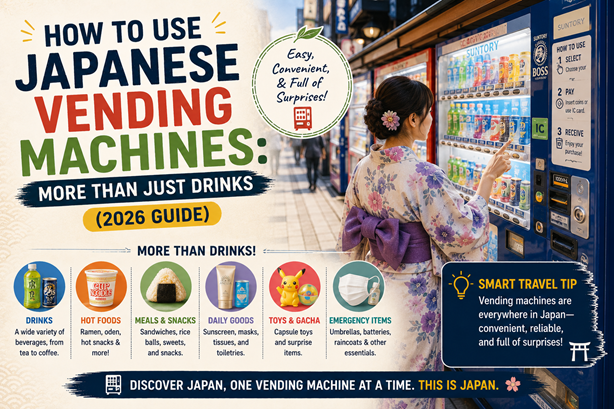
For many first-time visitors, one of the biggest surprises in Japan appears long before they visit a famous temple or ride the Shinkansen. It quietly stands on street corners, outside apartment buildings, beside train stations, near hiking trails, and even in the middle of quiet residential neighborhoods. It’s the humble vending machine.
I’ve seen vending machines in many countries, including the United States, Canada, Mexico, Spain, Thailand, and several others. Every country seems to have them in some form. Some are found in subway stations, airports, shopping malls, or office buildings, usually selling soft drinks or snacks. They’re convenient, but they often feel like an occasional service rather than something people rely on every day.
Japan feels different—not because vending machines are somehow “better,” but because they have become deeply woven into everyday life. They are simply another way people buy what they need. Just as convenience stores, supermarkets, cafés, and pharmacies each serve different purposes, vending machines have found their own place within Japan’s daily routine.
Growing up in Japan, I hardly noticed them.
They were simply part of the scenery.
On the way to school, there was one beside a small park. Near the local station, another stood next to a convenience store. During family road trips, we stopped at vending machines in highway service areas. After playing sports on hot summer afternoons, buying a cold bottle of tea or a sports drink became almost automatic. During winter, few things felt better than holding a warm can of coffee or corn soup while waiting for the train.
Only after living overseas did I realize how unusual this everyday landscape actually was.
Visitors are often amazed by how many vending machines they see, but the more interesting story isn’t their number.
It’s how naturally they fit into everyday Japanese life.
🥤 Much More Than Just Drinks
When people hear the phrase “Japanese vending machine,” they usually imagine colorful rows of bottled drinks.
That image is certainly accurate.
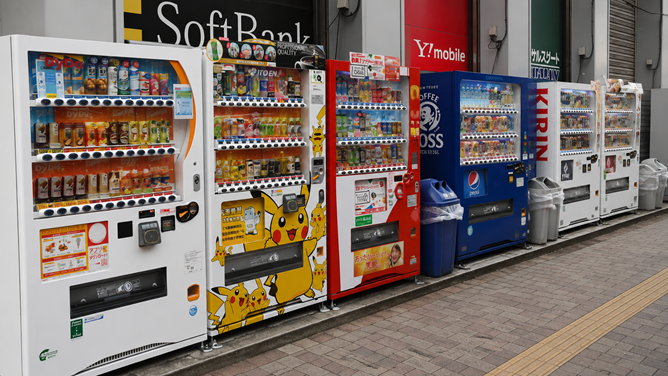
One of the first things many travelers notice is the incredible variety available inside a single machine. Instead of offering only a few soft drinks, Japanese vending machines often include bottled water, sparkling water, green tea, roasted barley tea, oolong tea, coffee, café latte, milk tea, fruit juice, sports drinks, energy drinks, cola, flavored soda, and seasonal beverages that change throughout the year.
Then there is something many visitors don’t expect.
The same vending machine often sells both cold and hot drinks.
During summer, blue labels usually indicate chilled beverages, while during colder months, red labels identify drinks served warm. A can of hot coffee on a chilly morning or warm corn soup after an evening walk may sound unusual to some visitors, but in Japan these have become familiar parts of everyday life.
For travelers arriving during winter, buying a hot drink from a vending machine can be surprisingly comforting.
For those visiting during July or August, an ice-cold bottle of water or tea often feels just as welcome after walking through Japan’s humid summer streets.
The changing seasons influence what appears inside vending machines, making them feel connected to everyday life rather than remaining exactly the same throughout the year.
🍜 You Can Buy More Than You Expect
Drinks may be the most common products, but they are only the beginning.
Depending on where you travel in Japan, you may discover vending machines selling far more unusual items.
Some offer ice cream during the summer.
Others sell cup noodles at highway rest areas or tourist destinations.
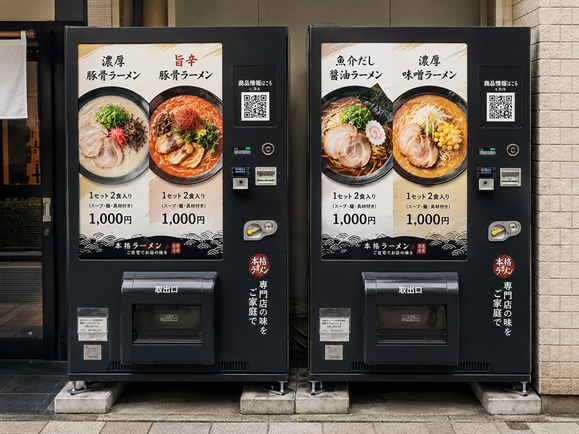
In certain locations, you’ll even find freshly prepared frozen meals, hamburgers, pizza, or regional specialties created by local businesses.
During rainy seasons, vending machines outside stations sometimes sell umbrellas for people caught unexpectedly in the rain. Others provide face masks, batteries, handkerchiefs, neckties, or other everyday necessities that someone may suddenly realize they need on the way to work or while traveling.
Tourist areas occasionally introduce vending machines selling souvenirs, local snacks, books, postcards, or specialty products unique to that region.
This doesn’t mean every vending machine offers everything.
Quite the opposite.
Most machines remain focused on a small selection of products designed for the people who regularly pass by. The variety simply reflects the different needs of different neighborhoods.
A machine near an office district may emphasize coffee and energy drinks.
One beside a hiking trail might focus on water and sports drinks.
Another outside a tourist attraction could highlight regional souvenirs.
Instead of following one nationwide formula, vending machines quietly adapt to the communities around them.
That flexibility is one reason they continue to feel useful rather than repetitive.
💳 Paying Is Easier Than Many Visitors Expect
Another pleasant surprise for many travelers is how simple payment has become.
Although carrying some cash is still useful while traveling in Japan, many vending machines today accept much more than coins.
Of course, inserting coins or banknotes remains an option, especially in older machines.
However, modern vending machines frequently allow purchases using transportation IC cards such as Suica, PASMO, and other compatible cards used across Japan. If you’ve already been using your IC card for trains, buses, or convenience stores, there’s a good chance you can simply tap it against the reader to buy a drink within seconds.
Many newer machines also support major credit cards and a growing number of cashless payment services, making the buying process even easier for visitors who prefer not to carry large amounts of cash.
For travelers, this means vending machines often become one of the quickest and easiest places to buy a drink without needing to visit a store or wait in line.
♻️ Don’t Forget the Recycling Bins
After buying a drink, many visitors notice another convenient feature nearby.
Next to many beverage vending machines, you’ll often find recycling bins designed specifically for empty drink containers. These bins usually separate plastic bottles, cans, and sometimes glass bottles, making recycling easier for both local residents and travelers.
If you’re visiting Japan for the first time, it’s worth paying attention to the labels before throwing something away. The bins beside vending machines are generally intended for drinks purchased there rather than for general household trash. Wrappers, food containers, or other rubbish should usually be disposed of elsewhere.
Growing up in Japan, I hardly thought about this because it was simply part of everyday life. Buying a drink, finishing it while walking or waiting for a train, and placing the empty bottle into the appropriate recycling bin became a routine repeated countless times.
For visitors, however, this small habit offers another glimpse into how everyday systems quietly support daily life.
🌏 A Different Role in Different Countries
One question I am sometimes asked is whether Japan simply has “more” vending machines than other countries.
After living in Canada and the United States and traveling through cities such as New York, Chicago, Mexico City, Toronto, London, Barcelona, and Bangkok, I don’t think the most interesting difference is the number itself.
The more meaningful difference is the role they play.
Every country develops its own way of making everyday life convenient. In many places, people naturally stop at supermarkets, cafés, gas stations, or convenience stores whenever they want a drink or a quick snack. Those businesses become part of daily routines because they fit the local lifestyle and urban environment.
Japan has developed a slightly different balance.
Convenience stores remain extremely popular.
Supermarkets are essential.
Cafés are everywhere.
Drugstores sell a surprising range of food and drinks.
Vending machines simply become another option among all of these.
They are not replacing other businesses.
They quietly complement them.
That is why seeing a vending machine outside a station, beside a park, or along a residential street doesn’t feel unusual to people living here.
It simply feels practical.
🚶 Small Moments Throughout the Day
When people think about Japanese vending machines, they often focus on unusual products or impressive technology.
For me, the more memorable stories are much simpler.
I remember buying a cold bottle of barley tea after baseball practice on an incredibly humid afternoon.
I remember warming my hands with a can of hot coffee while waiting for a train during winter.
I remember stopping during family road trips to buy drinks at service areas before continuing our journey.
None of these moments were particularly exciting.
Yet they quietly became part of everyday life.
Looking back now, I realize vending machines often appeared during small pauses in the day.
Before catching the next train.
After finishing a long walk.
While waiting for friends.
During a short break at work.
They were rarely the destination.
They simply made ordinary moments a little more comfortable.
Perhaps that is why they have become such a familiar part of the Japanese landscape.
💡 A Few Simple Tips for Travelers
If you’re visiting Japan, using a vending machine is usually very straightforward.
Take a moment to look at whether drinks are marked as hot or cold, especially during autumn and winter when both options are available in the same machine. If you already have a Suica, PASMO, or another compatible IC card, check whether the machine accepts contactless payment—it can often be even faster than using cash. After finishing your drink, look nearby for the recycling bins and separate your bottle or can according to the labels provided.
Most importantly, don’t be afraid to try something unfamiliar.
Many seasonal drinks appear only for a limited time, and local teas or coffees can be an enjoyable way to experience a small part of everyday life in Japan. Even if you don’t recognize every label, choosing something new is often part of the fun.
🇯🇵 Conclusion
Japanese vending machines are often introduced as one of the country’s most unusual attractions, but after growing up here, I see them a little differently.
They are not remarkable because they are everywhere.
They are remarkable because they quietly support ordinary life.
Whether someone is buying a cold bottle of water after walking through Tokyo in August, a hot can of coffee on a winter morning in Sapporo, or an umbrella after unexpected rain, vending machines provide simple solutions to everyday situations without asking people to change their routines.
Living overseas helped me appreciate this even more. Every country develops its own everyday systems based on its history, cities, and lifestyle. In some places, cafés fill that role. In others, supermarkets or convenience stores become the natural stop for a quick purchase. Japan simply happens to include vending machines as one more piece of that everyday infrastructure.
Perhaps that is why visitors remember them so clearly.
Not because they sell extraordinary products.
Not because they represent futuristic technology.
But because they reveal something about how daily life works.
Sometimes the easiest way to understand a country isn’t by visiting its most famous landmark.
Sometimes it’s by buying a simple drink on an ordinary street corner and realizing that even the smallest everyday experiences have their own story.
🌏 Continue Exploring Everyday Life in Japan
If you enjoyed learning about Japanese vending machines, you may also enjoy these practical guides that make everyday travel in Japan easier and more enjoyable.
👉 How to Find the Right Exit at Japan’s Train and Subway Stations (2026 Guide)
👉 How to Handle Typhoons in Japan: A Traveler’s Guide (2026 Guide)
👉 Suica vs Welcome Suica vs PASMO: Which IC Card Should Tourists Choose? (2026 Guide)
👉 Why Do Japanese Children Walk to School by Themselves? (2026 Guide)
👉 How to Use Public Toilets in Japan: What Surprises Foreigners Most (2026 Guide)