
🌏 Introduction
Some places make you hungry.
Others make you excited.
Japan’s depachika somehow does both at the same time.
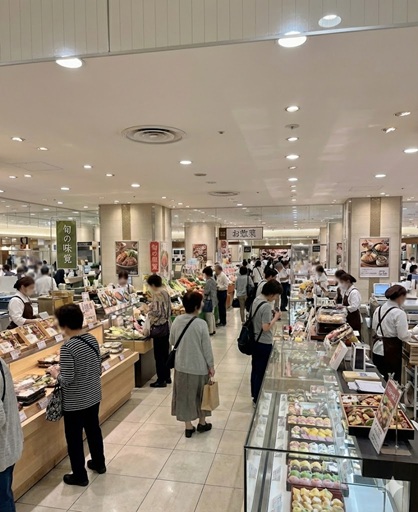
If you have never experienced one, the word may sound mysterious. Depachika is short for “department store basement” (depaato chika), referring to the food halls located in the basement floors of Japanese department stores.
But that definition does not really explain what it feels like.
Because for many people, a depachika is much more than a place to buy food.
For me, walking into a depachika instantly changes my mood.
Even if I was not planning to buy anything, I suddenly feel excited.
There is a strange sense of entering a special world—almost like stepping into a dream built entirely around food.
Beautiful desserts.
Perfectly arranged sushi.
Warm fried foods.
Seasonal gifts.
Elegant packaging.
The smell of freshly prepared meals.
It feels endless.
And that may be the real mystery.
Why does a basement food floor feel more exciting than many tourist attractions?
🎯 Quick Answer
Japan’s depachika feels special because it combines high-quality food, visual beauty, seasonal culture, convenience, and a unique shopping atmosphere.
It is not simply a supermarket or food court.
For many people, it feels like a curated food experience where everyday shopping becomes something closer to entertainment.
🏬 What Exactly Is a Depachika?
At first glance, a depachika might seem similar to a supermarket food section.
But the experience is quite different.
A typical depachika is located in the basement of a department store and contains a wide range of food vendors.
You may find prepared meals, sweets, bakery items, traditional Japanese foods, imported products, seasonal specialties, gift foods, and premium ingredients all in one place.
But what makes it different is not simply variety.
It is presentation.
Food is displayed with extraordinary care.
Even ordinary things can look elevated.
A simple lunch box may feel luxurious.
A fruit jelly may look like jewelry.
A fried croquette may somehow appear elegant.
This transforms shopping into something emotional, not purely practical.
✨ Why It Feels So Special
This is the heart of the experience.
Because logically, it is still just food shopping.
So why does it feel different?
Part of it is atmosphere.
Lighting is carefully designed.
Displays are visually appealing.
Staff presentation feels polished.
Packaging often looks gift-worthy.
Even when crowded, there is a sense of structure rather than chaos.
The result is a shopping environment that feels intentional.
And emotionally, that matters.
For me, depachika does not feel like a place where I am simply buying dinner.
It feels like a place where food is being celebrated.
That subtle emotional shift changes everything.
🍱 More Than Everyday Food
One of the fascinating things about depachika is the range.
You can buy practical dinner items.
But you can also find foods that feel special occasion-worthy.
This creates an interesting emotional mix.
It is both ordinary and extraordinary.
A busy office worker might stop by to pick up dinner.
Someone else may be buying carefully selected sweets as a gift.
Another person may simply be wandering, tempted by whatever smells best.
This flexibility is part of the appeal.
It serves daily life, but never feels entirely ordinary.
🌸 Seasonal Food Culture Lives Here
If you want to understand Japan’s relationship with seasonality, depachika is a surprisingly good place to look.
The products change constantly.
Cherry blossom-themed sweets in spring.
Cooling desserts in summer.
Autumn chestnut treats.
Winter comfort foods.
Even packaging changes.
This makes the experience feel alive.
It reflects something broader in Japanese food culture: the idea that food is connected not only to taste, but to time.
You are not simply buying dessert.
You are buying this season’s dessert.
That creates emotional urgency.
And perhaps that is part of what makes depachika so addictive.
👀 A Place to Browse, Even Without Buying
One of the strangest things about depachika is that you do not necessarily need to purchase anything to enjoy it.
Just walking through can be entertaining.
Looking at beautifully arranged food becomes part of the experience.
Watching other shoppers choose carefully.
Smelling fresh bread or fried foods.
Seeing something unexpected.
This browsing culture matters.
Not every enjoyable place needs a ticket.
Sometimes the pleasure comes simply from being surrounded by possibility.
That may explain why many people spend far longer in depachika than originally planned.
🎁 The Gift Culture Connection
Another reason depachika feels different is Japan’s strong gift culture.
Many foods are packaged beautifully enough to be given to others.
This makes the space feel more refined than ordinary grocery shopping.
In many cultures, food shopping is purely functional.
In depachika, food can also be social.
Thoughtful.
Ceremonial.
Buying food for someone else changes how the entire environment feels.
🥐 Not Just Japanese Food
Some visitors expect depachika to be exclusively traditional Japanese food.
That is not the case.
Part of the charm is variety.
You may find:
French pastries
Italian-inspired prepared foods
Japanese sweets
regional specialties
premium sandwiches
high-end fruit
beautiful boxed meals
The combination feels global but distinctly Japanese in execution.
💭 Why It Feels Addictive
The word “addictive” sounds dramatic, but many people understand the feeling.
The psychology makes sense.
Depachika combines:
visual stimulation
smell
variety
seasonal change
limited-time products
beautiful presentation
emotional anticipation
That is a powerful combination.
And unlike ordinary shopping, it rarely feels repetitive.
There is always something slightly different.
That unpredictability keeps the experience fresh.
🌏 Is This Unique to Japan?
Other countries certainly have premium food halls and specialty markets.
Japan did not invent the idea of beautiful food retail.
But depachika feels culturally distinctive in how many elements come together at once:
daily practicality
department store culture
seasonality
gift culture
presentation
prepared food quality
The exact combination feels unusually Japanese.
Not better.
Just distinct.
🇯🇵 Conclusion
A depachika is technically just a department store basement food floor.
But emotionally, it feels like much more.
For me, it feels like entering a food dream.
A place where dinner shopping somehow becomes exciting.
A place where even browsing feels satisfying.
A place where food is treated not just as something practical, but something worth celebrating.
And perhaps every culture has a place like that.
Is there a food market, store, or special shopping place in your country that instantly makes you excited? It would be fascinating to hear what food spaces people around the world love.
🔗Discover more about Japan
👉What Is Kakuchi? Japan’s Hidden Standing Bar Culture Inside Liquor Stores (2026 Guide)
👉The Day Japan Eats Unagi: A Summer Tradition Explained (2026 Guide)
👉Why Do Japanese People Care So Much About Seasonal Foods? (2026 Guide)
👉Why Does Japanese Food Come With Rice, Soup, and Side Dishes? (2026 Guide)
👉Why Is Japanese Food Presentation So Beautiful? (2026 Guide)
👉Why Are Japanese Convenience Store Desserts So Popular? A Sweet Part of Everyday Life (2026 Guide)
👉What Is an Izakaya? Japan’s Casual Drinking & Food Culture Explained (2026 Guide)