

🚆 Before You Board: Understanding the Unspoken Rules of Japanese Trains
If you are visiting Japan for the first time, one of the first things you may notice is not something you see on a tourist map or in a guidebook.
It is the atmosphere on the train.
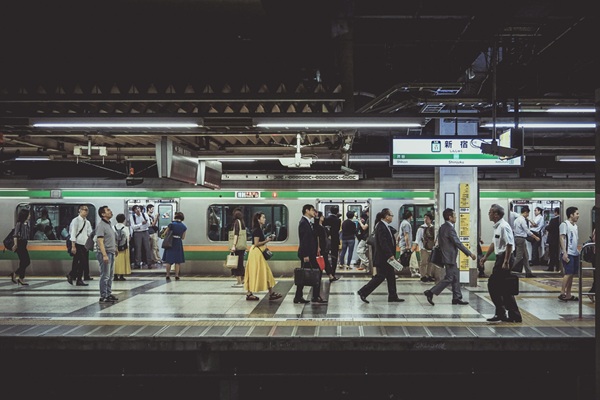
A crowded train in Tokyo can contain hundreds of people, yet the carriage may feel surprisingly calm. People are talking, but usually at a relatively low volume. Passengers are checking their phones, reading, sleeping, or listening to music. People line up before boarding, and those already on the train are generally allowed to get off before anyone enters.
For a visitor, this can feel different from public transportation in other countries.
The important thing to understand, however, is that Japanese train etiquette is not really about memorizing a long list of strict rules. It is more about understanding how people share a limited public space.
Japan’s railway system carries enormous numbers of passengers every day. In such a crowded environment, small actions can have a surprisingly large effect on the people around you. Speaking loudly, blocking a doorway, keeping a large backpack on your back, or taking a phone call may seem like minor behaviors, but they can make a shared space considerably less comfortable.
That is why Japanese train etiquette is closely connected to a broader idea of consideration.
You do not need to behave exactly like a Japanese passenger. You do not need to be afraid of making a mistake. And you certainly do not need to remain completely silent throughout your entire journey.
You simply need to understand the basic rhythm of public transportation in Japan and be aware of the people around you.
This guide explains the 10 essential Japanese train etiquette rules that first-time visitors should know, including talking, smartphones, headphones, queues, backpacks, luggage, priority seats, eating, and the common mistakes tourists make.
More importantly, it explains why these behaviors matter, because understanding the reason behind Japanese train etiquette makes it much easier to follow naturally.
🎯 Quick Answer: What Is Japanese Train Etiquette?
The simplest way to understand Japanese train etiquette is this:
Be aware of the people around you and avoid unnecessarily disturbing them.
That means keeping your voice reasonably low, putting your phone on silent, avoiding phone calls inside the carriage, allowing passengers to get off before boarding, and managing your backpack or luggage so that it does not interfere with other people.
It also means understanding that context matters.
Eating on a crowded local commuter train is generally not appropriate, while eating an ekiben on a Shinkansen is a normal part of long-distance travel. Standing near a train door may be unavoidable when a train is crowded, but blocking the doorway when passengers need to exit is inconsiderate.
In other words, Japanese train etiquette is not simply a collection of “yes” and “no” rules.
It is about reading the situation.
Once you understand that principle, most of the etiquette becomes surprisingly easy.
🔇 1. Keep Your Voice Down
One of the most noticeable aspects of Japanese train etiquette is the relatively quiet atmosphere.
On a local train, especially in a large city, you will often see passengers sitting quietly even when the carriage is full. Some are looking at their phones, some are reading, some are sleeping, and others are simply looking out of the window.
This does not mean that nobody talks.
Japanese passengers do have conversations on trains. Friends may talk together, families may speak to one another, and coworkers may discuss something during their journey. The difference is usually the volume.
A normal conversation between two people is very different from a loud conversation that can be heard across the entire carriage.
For visitors, this is one of the easiest cultural differences to notice. If you are traveling with friends or family, you do not need to stop talking altogether. Simply lower your voice and be conscious of how far your conversation carries.
The quieter atmosphere also explains why loud behavior can feel particularly noticeable. When everyone around you is speaking quietly, even a relatively ordinary voice can suddenly seem loud.
So the rule is not really “silence.”
It is consideration of volume.
📱 2. Put Your Phone on Silent and Avoid Phone Calls
Using your smartphone on a Japanese train is completely normal.
In fact, Japanese passengers use their phones constantly. They check messages, browse websites, watch videos, read social media, check train information, and use navigation apps.
The important difference is how the phone is used.
Before boarding, it is a good idea to put your phone on silent or use the setting commonly associated with Manner Mode in Japan.
Phone calls are generally avoided inside train carriages, particularly on local trains.
If someone calls you, you can decline the call and send a message instead. If the call is genuinely urgent, it is better to wait until you reach a station or another appropriate place where you can speak without disturbing the people around you.
This may seem like a small cultural difference, but it reflects an important aspect of Japanese public-space etiquette.
When you make a phone call, everyone around you can hear one side of a conversation that they never chose to participate in. In a relatively quiet carriage, that can become surprisingly intrusive.
So you do not need to put your phone away.
Just keep it quiet.
🎧 3. Use Headphones Without Disturbing Others
Headphones are common on Japanese trains, and listening to music, podcasts, or videos during a journey is perfectly normal.
The important thing is to make sure that the sound does not leak out.
This can be particularly noticeable on quiet trains. You may think your headphones are at a comfortable volume because you cannot hear anything outside them, but the person sitting next to you may hear the music clearly.
Keeping the volume at a reasonable level is therefore both a matter of courtesy and a practical way to remain aware of your surroundings.
There is another reason not to turn your headphones up too loudly.
Japanese trains and stations make frequent announcements about upcoming stations, transfers, delays, platform information, and other changes. If your headphones are too loud, you may miss an announcement that is actually important to your journey.
So good headphone etiquette benefits both you and the passengers around you.
🚶 4. Queue at the Platform and Let People Get Off First
If there is one train etiquette rule that visitors should learn immediately, this is probably it.
Let passengers get off before you get on.
At many Japanese railway stations, you will see markings on the platform showing where passengers should wait. People generally form lines beside the train doors rather than crowding directly in front of them.
When the train arrives, the doors open and passengers inside get off. Only after they have finished exiting do the waiting passengers board.
This simple system keeps the flow of people moving.
It is especially important during busy periods, when hundreds of passengers may be trying to board or leave the same train.
If you stand directly in front of the door and try to enter before everyone has exited, you create a bottleneck. Passengers have to squeeze around you, and the entire process becomes slower.
The best approach is simply to stand to the side of the doorway, wait, and follow the flow.
You will quickly notice that other passengers do the same.
🚪 5. Do Not Block the Doors
Sometimes you cannot avoid standing near the doors.
A crowded train may leave very little personal space, and if you board late, you may find yourself standing directly beside the entrance.
That is not a problem.
The problem is refusing to move when people need to get off.
When the train reaches a station, pay attention to the passengers around you. If people are trying to leave, move to the side or, when necessary, step onto the platform temporarily to allow them to exit.
You can then get back on once the flow has cleared.
This may seem like an unnecessary inconvenience, but it is actually one of the simplest ways to make crowded trains work.
The doorway is where passengers enter and exit. If one person blocks it, everyone behind them is affected.
This is another reason Japanese train etiquette is closely connected to the idea of shared space.
You are not only deciding what is convenient for yourself.
You are also affecting everyone trying to use the same space.
🎒 6. Be Careful With Your Backpack
A backpack is convenient when you are traveling around Japan, but it can become surprisingly uncomfortable for other passengers on a crowded train.
When you wear a backpack on your back, you may not realize how much additional space it occupies. You also cannot easily see what is happening behind you.
On a crowded train, your backpack may press against another passenger or make it difficult for people to move through the carriage.
For this reason, passengers often move backpacks to the front of their body when trains become crowded. On trains where appropriate storage is available, they may also place bags on overhead racks.
This is especially useful during busy commuting periods in large cities.
The point is not that backpacks are forbidden.
They are not.
The point is to reduce the amount of space you occupy when the train is crowded.
It is a small adjustment that makes a noticeable difference.
🧳 7. Think Carefully About Large Luggage
Travelers visiting Japan often carry suitcases, and there is nothing wrong with bringing luggage onto trains.
The challenge comes when a large suitcase meets a very crowded train.
Japan’s major cities can have extremely busy commuter periods, particularly on weekday mornings and evenings. The original version of this article highlighted approximately 7:30–9:30 AM and 5:00–8:00 PM as periods when travelers with large luggage may encounter especially crowded conditions.
These times should not be treated as a universal rule for every railway line, because crowding varies by city, route, station, and day. But the broader advice is useful: if you have flexibility, avoid taking large luggage onto the busiest commuter trains.
This is not only about etiquette.
It is also about your own comfort.
Trying to move a large suitcase through a packed station can be exhausting. Finding space on a crowded train can be difficult, and you may spend the entire journey worrying about whether your luggage is blocking someone.
When possible, consider traveling outside the busiest periods, using luggage delivery services, or choosing a route and train that gives you more space.
For Shinkansen travel, also check the current rules for oversized baggage before you travel, because certain large suitcases may require specific arrangements.
💺 8. Respect Priority Seats
Most Japanese trains have designated priority seats, commonly known as yūsen-seki.
These seats are intended primarily for passengers who may need them more than other travelers, including elderly people, pregnant women, people with disabilities, and passengers with small children.
If a priority seat is empty, practices can vary, but the most important principle is simple: be prepared to give it up when someone who needs it boards.
One reason this matters is that not every need is visible.
You cannot always tell whether someone has a disability, medical condition, injury, or another reason they may need to sit.
This is why it is better to remain aware of the people around you rather than assuming that only visibly elderly passengers need priority seating.
Priority seats are not about making ordinary passengers feel guilty.
They are a practical way of making public transportation more accessible.
If you see someone who clearly needs the seat more than you do, offering your seat is one of the simplest forms of consideration you can show on a Japanese train.
📵 9. Follow Smartphone Guidance Around Priority Seats
You may notice additional instructions about smartphone use around priority seating areas.
The exact policies can differ between railway operators and can change over time, so visitors should always follow the current signs and announcements displayed on the train they are using.
These instructions are related to concerns about passengers who use certain medical devices.
For a visitor, there is no need to memorize the detailed technical background of every railway company’s policy.
Simply look at the signs.
If the train asks you to turn your phone off in a particular area or situation, follow the instruction.
This is a useful principle for Japanese public transportation in general.
When you see a clear local instruction, follow the instruction rather than assuming that the rule is identical everywhere in Japan.
🍱 10. Can You Eat on Japanese Trains?
This is one of the most common questions international visitors have.
The answer depends on the train.
Eating a full meal on a crowded local commuter train is generally not considered good etiquette. There is very little space, people may be standing close together, and the smell of food can affect passengers who are not eating.
But the situation is quite different on long-distance trains.
Eating and drinking on the Shinkansen is generally accepted, and enjoying an ekiben, or railway bento, during a long journey is a familiar part of Japanese train culture.
This difference is important because it shows that Japanese etiquette is not simply a collection of absolute rules.
The same action can be appropriate in one context and inappropriate in another.
Eating an ekiben while traveling from Tokyo to Kyoto on the Shinkansen is very different from opening a strong-smelling meal on a packed commuter train in Tokyo during rush hour.
The question is therefore not simply:
“Can I eat on a Japanese train?”
A better question is:
“Is this the appropriate environment for eating?”
That way of thinking will help you understand many other aspects of Japanese etiquette as well.
🤫 Why Are Japanese Trains So Quiet?
Now we come to the part that makes Japanese train etiquette particularly interesting.
Why are Japanese trains so quiet?
It would be easy to say that Japanese people are simply taught to remain silent on trains.
But that explanation misses something important.
The quieter atmosphere is connected to the idea that public space is shared space.
When hundreds of strangers occupy the same train carriage, individual behavior affects everyone else.
Your conversation can be heard by the people sitting nearby. Your phone call becomes part of their environment. Your backpack can take up someone else’s space. Standing in a doorway can slow down dozens of passengers.
In this sense, train etiquette is not really about controlling individual behavior.
It is about reducing unnecessary disturbance.
That is why quietness can be understood as a form of consideration rather than simply a rule.
The original article makes this same connection between quiet trains, shared public space, and avoiding disturbance.
And once you understand that idea, many of the other rules suddenly make sense.
🏙️ Why Shared Space Matters So Much
Japan’s cities are densely populated, and trains are an essential part of everyday life.
Millions of people use railways to commute to work, go to school, meet friends, shop, and travel.
Many of these people will never know each other’s names.
They are strangers sharing the same limited physical space.
In that environment, small acts of consideration become important.
You do not need a conversation with the person next to you to cooperate with them.
You simply let them get off before you board.
You move your backpack.
You lower your voice.
You step away from the door.
You give up a priority seat when someone needs it.
These actions are small, but when millions of people repeat them every day, they create a particular kind of public environment.
This is one of the reasons Japanese train etiquette is worth studying as part of Japanese culture.
It is not merely about trains.
It reveals something about how people navigate shared spaces.
⚠️ Common Mistakes Tourists Make on Japanese Trains
Most tourists who make train etiquette mistakes in Japan are not trying to be rude.
They simply come from transportation cultures with different expectations.
One of the most common mistakes is speaking at the same volume that would be perfectly normal in a restaurant or on public transportation in another country. In a quiet Japanese carriage, that voice can seem surprisingly loud.
Another common mistake is taking a phone call inside the train. Using the phone itself is not the problem; the audible conversation is.
Visitors may also forget to let passengers off before boarding or may stand directly in front of the doors while people are trying to exit.
Large backpacks can become another issue, particularly during crowded periods, because the wearer may not realize how much space the bag occupies.
Eating on a local train can also be misunderstood. The fact that eating is normal on the Shinkansen does not mean that eating a meal is equally appropriate on every commuter train.
None of these mistakes requires panic.
If you notice that you have made one, simply adjust your behavior.
Lower your voice. Move your bag. Step aside. Let people pass.
That is usually enough.
👀 The Best Way to Learn Japanese Train Etiquette
If you are nervous about remembering all these rules before your trip, there is actually a very easy solution.
Watch what other passengers do.
When you arrive at a platform, look at where people are standing.
When the train arrives, watch how passengers board.
Notice how people handle their bags.
Listen to the announcements.
Look at the signs around priority seats.
Pay attention to whether the train is crowded or relatively empty.
You will quickly begin to understand the rhythm.
This is particularly useful because not every situation is identical. A weekday commuter train in Tokyo is different from a quiet regional train. A local subway is different from a Shinkansen. A crowded rush-hour carriage is different from a nearly empty afternoon train.
Good etiquette therefore requires a little situational awareness.
You do not need to memorize hundreds of rules.
You need to understand the basic principle and observe the environment.
🌏 Japanese Train Etiquette Is About Context
One of the biggest misunderstandings about Japanese etiquette is the idea that every behavior has a universal yes-or-no answer.
In reality, context matters enormously.
Talking is allowed, but loud talking may be inappropriate.
Eating is acceptable on some trains, but not necessarily on crowded commuter services.
Standing near the door may be unavoidable, but blocking it when passengers need to exit is not considerate.
Using a smartphone is completely normal, but making a phone call inside the carriage is generally avoided.
Sitting in a priority seat may be possible when it is empty, but you should be ready to give it up when someone who needs it boards.
This is why the best way to approach Japanese train etiquette is not to ask:
“What is forbidden?”
Instead, ask:
“What is appropriate in this situation?”
That question will take you much further.
🚅 Shinkansen Etiquette Is a Little Different
The Shinkansen is where many visitors encounter a more relaxed side of Japanese train culture.
Long-distance travel creates a different environment from a crowded commuter train.
Passengers sit in assigned or reserved seats, journeys can last several hours, and eating and drinking are normal.
This is where an ekiben can become part of the experience rather than a potential inconvenience.
You can enjoy a meal, have a drink, read, work, or look out at the Japanese landscape.
But the basic principles remain.
Avoid unnecessary noise, be considerate of the people around you, keep your belongings organized, and follow the rules for your particular train.
The Shinkansen is not an exception to Japanese train etiquette.
It is simply a different context in which some behaviors that would be inappropriate on a crowded local train become perfectly normal.
🧳 Traveling With Luggage on the Shinkansen
If you are traveling around Japan with a large suitcase, it is worth thinking about luggage before you arrive at the station.
Some Shinkansen services have specific arrangements for oversized baggage, and the rules can depend on the train and route.
Do not assume that every large suitcase can simply be placed anywhere.
Checking the current luggage requirements before your journey can save you from a stressful situation at the station.
This is also one reason our Shinkansen guide is useful for first-time visitors. Train etiquette is not only about behavior toward other passengers; it is also about understanding the practical rules that allow everyone to travel comfortably.
🌸 What Japanese Train Etiquette Really Tells You About Japan
Japanese train etiquette is interesting because the rules themselves are relatively simple.
Keep your voice down.
Do not take phone calls.
Queue properly.
Let people off before boarding.
Manage your bags.
Respect priority seats.
Eat in an appropriate setting.
None of these ideas is particularly complicated.
What is interesting is what happens when millions of people follow them consistently.
A train can carry a huge number of strangers without requiring constant communication between them.
People do not need to know one another.
They do not need to agree on everything.
They simply need to make small adjustments to their own behavior.
That is why Japanese train etiquette is more than a tourist checklist.
It is an everyday example of how a shared environment can function when people are conscious of the effect their actions have on others.
🧭 What Should You Remember as a First-Time Visitor?
You do not need to memorize every detail of Japanese train etiquette before you arrive.
If you remember the basic idea of “do not unnecessarily disturb the people around you,” you will already understand most of what matters.
Keep your voice at a reasonable level. Put your phone on silent and avoid phone calls inside the carriage. Use headphones without letting sound leak out. Wait in line and let people get off before boarding. Move your backpack when the train is crowded, and think carefully about how large luggage affects the people around you.
Respect priority seats and follow the instructions displayed near them. Do not assume that eating is equally appropriate on every train. On the Shinkansen, eating an ekiben is a normal part of long-distance travel, while a full meal on a crowded commuter train is a very different situation.
Most importantly, look around you.
If everyone is quiet, keep your voice down.
If everyone is lining up, line up.
If people are moving away from the doors, do the same.
If the train is crowded, reduce the space you occupy.
You do not need to be perfect.
You simply need to pay attention.
🏁 Final Thoughts: You Don’t Have to “Act Japanese”
The goal of learning Japanese train etiquette is not to make you feel that you have to behave like a Japanese person.
You are visiting Japan, and it is perfectly natural that you will not know every local custom.
The goal is simply to understand the environment you are entering.
Japanese trains are shared spaces. Because so many people depend on them every day, small acts of consideration matter.
When you keep your voice down, you are helping maintain a comfortable environment.
When you let passengers off before boarding, you are helping the flow of people.
When you move your backpack, you are giving someone else a little more space.
When you give up a priority seat, you are helping someone who may need it more than you.
And when you understand why eating is normal on a Shinkansen but not necessarily appropriate on a crowded commuter train, you are beginning to understand something deeper about Japanese etiquette: context matters.
So do not worry about being perfect.
Observe.
Listen.
Adjust.
And remember that the most important rule of Japanese train etiquette is not really a train rule at all:
Share the space with consideration for the people around you.
Once you understand that, Japan’s trains become much easier to navigate—and perhaps much more interesting to observe.
🔗 Continue Exploring Japan by Train
If you enjoyed learning about Japanese train etiquette, you may also enjoy these articles exploring how Japan’s railway system works, how travelers can use trains with confidence, and the culture behind everyday transportation.
👉 How to Use Trains in Japan: IC Cards, Shinkansen, and JR Pass Explained (2026 Guide)
👉 JR Pass vs IC Card: Which Is Better for Japan Travel?
👉 How to Use the Shinkansen in Japan: Tickets, JR Pass, Seats & Luggage (2026 Guide)
👉 Why Do Japanese People Sleep on Trains So Easily? The Hidden Trust Behind Everyday Commuting (2026 Guide)
👉 How to Visit a Japanese Shrine: A Complete Etiquette Guide for First-Time Visitors (2026 Guide)
👉 Tipping in Japan: Why You Don’t Need to Tip (Complete 2026 Guide)